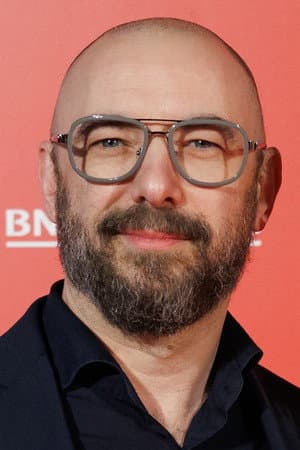
Michaël R. Roskam has spent much of his career probing the darker corners of human behavior, from the rural crime saga "Bullhead" to the Tom Hardy gangster drama "The Drop." Now the Belgian filmmaker is turning his attention to a curious footnote from the Second World War: a resistance operation that relied not on guns or explosives, but on forged newsprint. Roskam is developing a project he describes as a heist movie built around a fake-newspaper prank pulled off during the Nazi occupation, a story he sums up with a phrase that has become something of a guiding principle for the film - words are weapons.
The director discussed the project in broad terms during a recent conversation about his filmmaking interests, explaining why the material appeals to him after a run of brooding character studies. According to Roskam, the germ of the idea lies in the audacity of the deception itself. Resistance operatives, he noted, understood that undermining an occupying power could be achieved just as effectively through disinformation as through sabotage. Producing counterfeit editions of newspapers that the public trusted allowed them to slip false reports and demoralizing messages directly into the hands of readers, all while the real machinery of propaganda continued to grind away elsewhere.
A Prank With Real Stakes
What separates this episode from a mere historical curiosity, in Roskam's telling, is the operational precision it required. Faking a newspaper is not a matter of scribbling a few headlines. It demands access to printing equipment, paper stock, distribution networks and the expertise to mimic typography and layout so faithfully that readers - and, crucially, the authorities - would not immediately spot the forgery. In that sense, the director argues, the effort shares DNA with the classic heist film: a small crew, a tightly guarded plan, a ticking clock and the constant threat of discovery. The tension does not come from shootouts but from whether the ink will dry in time and whether the wrong person will glance too closely at page three.
Roskam has long been drawn to protagonists who operate at the edges of the law and who carry the psychological weight of their choices. His previous work often examines men whose lives are defined by a single decision that spirals beyond their control. The fake-newspaper story offers a similar dynamic on a collective scale. The people behind the forgery were not soldiers in any conventional sense; they were printers, writers and couriers whose weapons were type and paper. Their courage was quiet, and their success depended on remaining invisible.
Why Now
The timing of the project is unlikely to be accidental. Questions about the reliability of information, the spread of manufactured narratives and the power of media to shape public belief have rarely felt more urgent. Roskam is careful not to reduce the story to a simple parable about modern politics, but he acknowledges that the parallels are difficult to ignore. A population fed a steady diet of official messaging, and a resistance movement that seeks to hijack that messaging from within, reads differently in an era of viral misinformation than it might have a generation ago.
The filmmaker also seems interested in the moral ambiguity at the heart of the scheme. Propaganda is propaganda, whether wielded by an occupier or by those fighting back. Roskam has suggested that the film will not shy away from that discomfort, presenting the forgers as flawed people making difficult choices under extreme pressure rather than as unimpeachable heroes. That approach fits with his established reputation for refusing easy sentimentality.
A Genre Heist With a Historical Spine
Structurally, Roskam appears to be treating the material as a thriller first and a history lesson second. He has spoken about the mechanics of the deception - the logistics, the near misses, the personalities involved - as the engine that drives the narrative. The heist framework gives the story momentum and a clear set of stakes, while the wartime setting supplies atmosphere and consequence. It is a combination that has proven durable in cinema, though Roskam's sensibilities suggest something gritted and tense rather than glossy.
No casting, production timeline or distribution details have been confirmed, and the project remains in development. Roskam has not indicated whether he will shoot in Belgium or elsewhere, nor has he named collaborators. For now, the film exists primarily as an idea the director is eager to explore, one that sits at the intersection of his abiding interests: crime, deception and the psychological toll of operating in the shadows.
What seems clear is that Roskam sees the story as more than a historical anecdote. For him, the fake-newspaper operation is a reminder that information has always been a battleground, and that the most effective weapons are sometimes the ones that leave no visible wound. Whether audiences will embrace a wartime thriller built on printing presses rather than gunfights remains to be seen, but the director's track record suggests he is not interested in telling the story the obvious way.
Source: The Hollywood Reporter