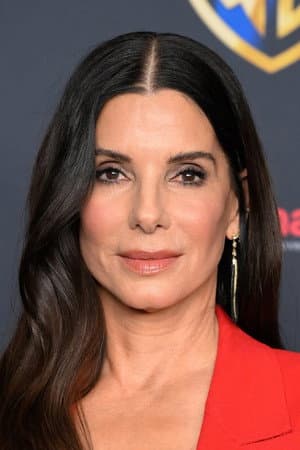
Sandra Bullock is opening up about the rougher edges of her early career, recalling a period when she found herself reading for parts that had little to do with her talent and everything to do with what a casting session was willing to put her through.
In a new interview, the Oscar-winning actress described a stretch of auditions in which she felt she was being paraded in front of men with questionable intentions rather than being considered as a serious performer. Her phrasing was blunt: she said she spent that time "auditioning for every pervert" in the business.
The recollection has quickly become one of the more talked-about anecdotes from the conversation, not because it reveals anything new about how Hollywood worked in the 1980s and 1990s, but because of how plainly Bullock frames the experience now. She is not asking for sympathy. She is describing a workplace norm that she survived, and she names it without hedging.
A Line Drawn in the Room
The specific incident Bullock recounted involved a request that made her decide on the spot that the project was not worth pursuing. According to her account, she was asked to "drop my pants" as part of the audition process. Her response, as she tells it, was immediate and internal: "Not the role for me."
That moment appears to sit at the center of her story. It was not a dramatic confrontation or a public callout at the time. It was a quiet decision, made in a room where she held almost no leverage, to walk away from a part rather than accept terms that had nothing to do with acting. For a young performer trying to build a career, that kind of refusal carries real risk. Bullock's point seems to be that she made it anyway.
The actress has spoken before about the pressures of breaking in, but this account is more specific than most. It puts a name and a face to the kind of audition that many actresses have described in general terms for decades, and it does so without dressing the story up as a heroic stand. Bullock presents it as a practical calculation: this is not what I do, so this is not what I will do.
Why the Story Still Lands
What makes the anecdote resonate in 2026 is how familiar the underlying dynamic remains. Casting processes have been formalized in some corners of the industry, and intimacy coordinators have become standard on many productions, but the power imbalance between an unknown actor and a room full of decision-makers has not disappeared. Bullock's memory of being asked to "drop my pants" is not a relic of a distant era so much as a reminder of how recently such requests were treated as ordinary.
Her career trajectory adds weight to the telling. Bullock went on to become one of the most bankable stars of her generation, with a range that spans broad comedy, romantic drama, and serious prestige work, including an Academy Award for her lead performance in "The Blind Side." She has also produced films and built a reputation for protecting her private life while remaining candid about the parts of the business she finds absurd. That combination makes her a useful witness. She is not a newcomer with an ax to grind. She is a veteran describing the entry price she was once asked to pay.
The interview also underscores a shift in how these stories are received. In earlier decades, an actress who declined an audition on those grounds might have been labeled difficult or prudish. Today, the reaction tends to run the other way, with audiences and industry peers treating the refusal as the only reasonable response. Bullock's line, "Not the role for me," has the ring of a boundary rather than a complaint, and that framing may be why it has traveled so quickly.
A Career Built on Saying No
Bullock has never presented herself as a crusader. Her public persona leans toward self-deprecation and a certain distance from the machinery of fame. But the anecdote fits a pattern in her choices: a willingness to step away from projects that ask too much, and a career that has nonetheless flourished because of it. If there is a lesson in the story, it is not that refusing an audition guarantees success. It is that the refusal did not end her career, and that the roles she did take were the ones she could stand behind.
For an industry still negotiating how much control performers should have over their own bodies in professional settings, Bullock's recollection is less a revelation than a confirmation. The request she describes was real, she declined it, and she kept working. She tells it as a small moment. It reads as a defining one.
Source: The Hollywood Reporter