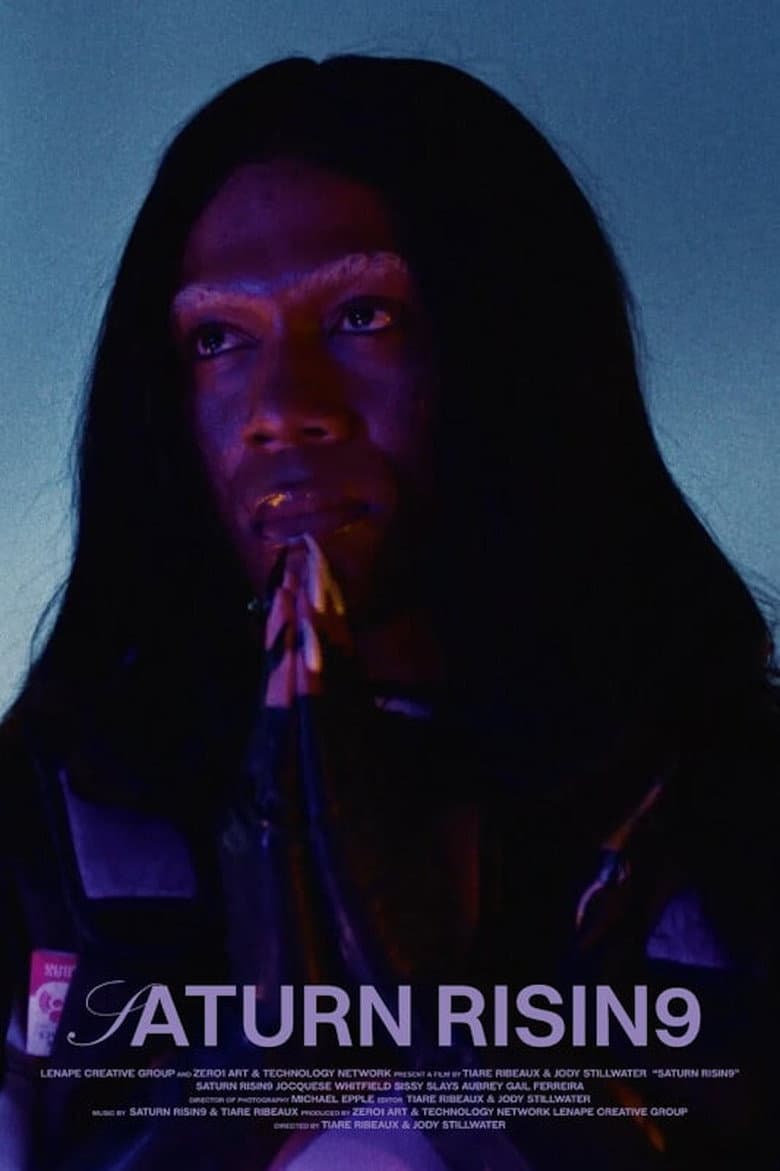
Saturn Risin9 was still healing from facial feminization surgery when the audition notice arrived. The "Club Kid" breakout had been told to expect a long recovery, a period of rest before reentering a profession that judges faces for a living. Instead, Risin9 read for a part a few weeks after going under the knife - a decision that, in a different era of Hollywood, might have been unthinkable.
Risin9 now points to that moment as a turning point, both personally and professionally. The performer describes auditioning while visibly midway through a transition, refusing to wait until the swelling subsided or the scars faded before stepping in front of a camera. For Risin9, the choice was less about defiance than about refusing to press pause on a career that had only just begun to accelerate.
The actor's rise has been closely tied to "Club Kid," the project that introduced Risin9 to a wider audience and made the performer one of the more talked-about new faces in queer cinema. That visibility has given Risin9 a platform to speak candidly about the industry's treatment of trans performers - and about what audiences, including straight ones, are ready to embrace.
A Career Interrupted, Then Resumed
Facial feminization surgery is a significant procedure, and the recovery period is typically measured in weeks and months rather than days. Conventional industry wisdom would have suggested Risin9 step back, let the healing finish, and reemerge with a clean slate. Risin9 rejected that script.
The decision to audition so soon after surgery reflects a broader frustration among trans performers, who often find themselves caught between being told they are too early in transition to be cast and too late to be considered fresh. Risin9's willingness to appear in casting rooms during an unfinished process chips away at that double bind. It also sends a message to other performers that a career does not have to wait for a body to arrive at some imagined final state.
Risin9 has spoken about the experience without self-pity, framing it instead as a practical matter of keeping momentum in an unpredictable business. The audition itself, whatever its outcome, became part of the performer's public story - a detail that resonates in an industry where trans actors are still frequently asked to justify their existence in a role.
A New Era for Queer Cinema
Risin9's comments arrive at a moment of visible change in queer cinema, as trans and gender-nonconforming performers move from the margins of casting notices into leading roles and festival conversations. The performer argues that this shift is not simply about representation for its own sake but about expanding what stories mainstream audiences are willing to pay attention to.
Central to Risin9's view is an observation about curiosity. Straight audiences, the performer suggests, want to see things they do not know about - lives and experiences outside their own. That appetite, if genuine, represents an opportunity for filmmakers who have long been told that queer stories are niche or commercially risky. Risin9's framing flips the usual industry logic: unfamiliarity is not a barrier to audience interest but the very thing that draws people in.
The perspective also pushes back against the assumption that queer cinema must explain itself to be palatable. Risin9's argument implies that audiences are capable of meeting trans stories on their own terms, without the characters serving as guides for viewers who need everything spelled out.
What Comes Next
Risin9's trajectory remains closely watched within the industry, where the performer's combination of candor and on-screen presence has made Risin9 a figure to follow. Whether the post-surgery audition leads to a specific role is, for now, secondary to what the moment represents: a performer declining to disappear during a transition and a business slowly recalibrating its expectations of who gets to work, and when.
For Risin9, the message to peers and to the industry alike is clear. A career in film does not have to wait for a neat, finished version of anyone. And the audiences, the performer believes, are already waiting to see what they have not seen before.
Source: Variety