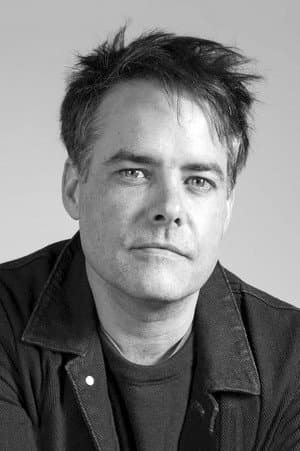
The Chilean director Sebastián Lelio, whose films moved between the intimate and the formally daring and who won an Academy Award for “A Fantastic Woman,” has died at 52. News of his death circulated widely on Saturday, drawing tributes from actors, producers and festival programmers who described him as one of the most sensitive and adventurous filmmakers to emerge from Latin America in the past two decades. No further details were immediately available.
Lelio built a reputation slowly and then suddenly, moving from well-regarded Chilean dramas to international art-house hits and finally to English-language productions with major stars. Through it all, his attention stayed on characters living at the edges of social acceptance - people whose inner lives were richer than the world around them was willing to admit.
An Oscar breakthrough with “A Fantastic Woman”
“A Fantastic Woman,” released in 2017, became the film that carried his name far beyond the festival circuit. The story of a transgender woman navigating grief and suspicion after the death of her older partner, it starred Daniela Vega in a performance that critics repeatedly singled out as the emotional center of the film. The movie won the Academy Award for best foreign language film, a landmark for Chilean cinema, and its victory gave Lelio a global platform.
The win was not merely symbolic. It arrived at a moment when trans stories were rarely told with such care on screen, and Lelio often spoke about the responsibility of casting a trans actress in the lead. The film went on to be widely discussed and debated, and it introduced audiences around the world to Chilean cinema on a scale few directors from the country had achieved.
A career shaped by intimacy and curiosity
Before that breakthrough, Lelio had already drawn attention with films including “Gloria,” a portrait of a middle-aged woman seeking pleasure and companionship in Santiago. The film won acclaim on the festival circuit and demonstrated his abiding interest in female protagonists whose lives were treated with humor and dignity rather than pity. He later returned to the character in an English-language remake starring Julianne Moore.
That remake was part of a gradual move into English-language filmmaking. In 2017 he directed “Disobedience,” an adaptation of Naomi Alderman’s novel about a woman returning to her Orthodox Jewish community in London and rekindling a relationship with a childhood friend. Starring Rachel Weisz and Rachel McAdams, the film presented a restrained, emotionally precise study of faith, desire and secrecy, and it became one of the more discussed independent releases of its year.
“The Wonder,” released in 2022, paired him with Florence Pugh in an adaptation of Emma Donoghue’s novel about a nurse sent to observe a young girl in a rural Irish community who is said to survive without eating. The film’s austere atmosphere and its interest in belief, observation and the stories people tell themselves fit neatly within Lelio’s broader body of work.
A filmmaker drawn to the interior life
Colleagues and critics often described Lelio’s approach as patient and observational. He favored long takes, naturalistic performances and stories that refused easy resolution. His characters tended to be women in transition - leaving marriages, questioning faith, grieving partners or asserting identities that others wanted to deny. The films rarely announced their themes loudly; instead they accumulated emotional weight through small choices and quiet confrontations.
That sensibility made him a natural fit for international co-productions without ever fully sanding down his distinctive voice. He worked in Spanish and English, in Chile, the United Kingdom and Ireland, but the films remained recognizably his: warm toward their subjects, alert to power imbalances, and suspicious of tidy endings.
Tributes began appearing quickly after news of his death broke, with collaborators and admirers recalling a director who was generous on set and serious about the craft. Festival organizers who had championed his work over the years noted the consistency of his vision across countries and languages.
Lelio leaves behind a body of work that spans more than a decade and a half of feature filmmaking, including early Chilean productions that remain less known internationally than his later successes. The full scope of his influence is still being assessed, but the films themselves - “Gloria,” “A Fantastic Woman,” “Disobedience” and “The Wonder” among them - stand as a coherent and deeply humane record of a filmmaker who believed that the most private struggles deserved the widest possible audience.
Source: The Hollywood Reporter