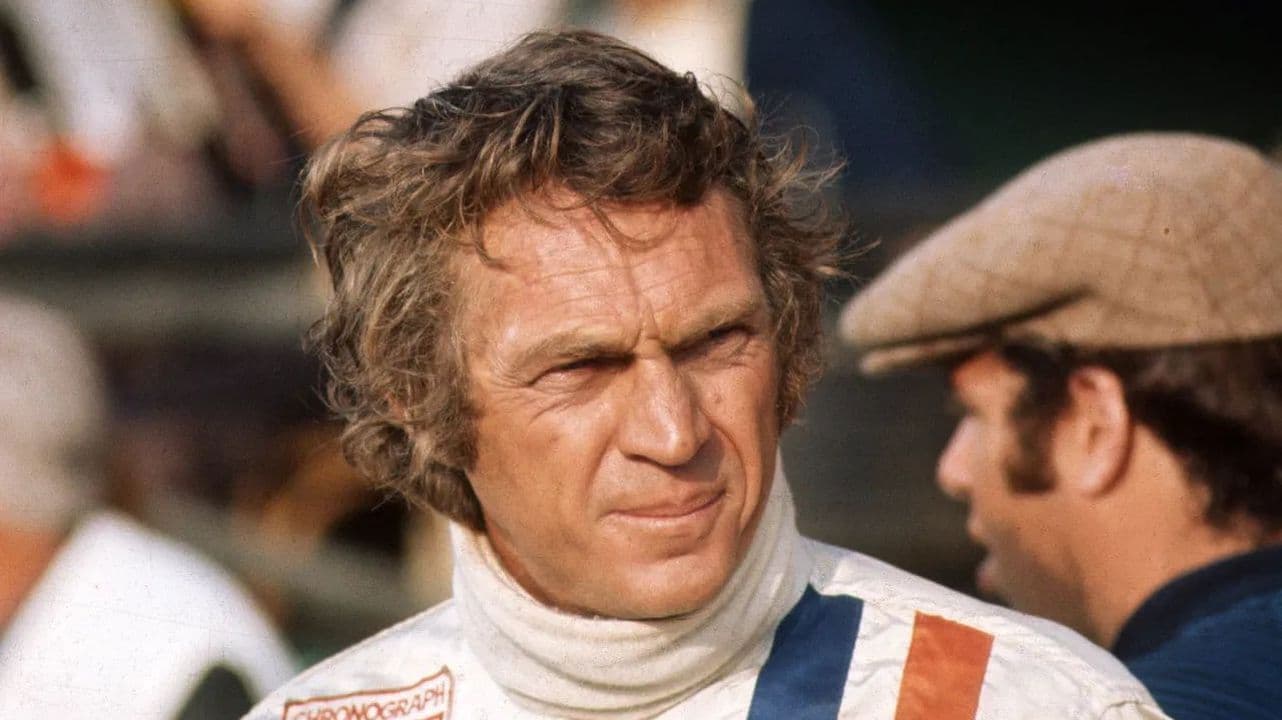
Steve McQueen has been gone for more than four decades, yet he remains one of the most imitated, referenced, and quietly influential figures in American popular culture. The actor, who died in 1980 at the age of 50, built a screen persona around restraint, physicality, and a kind of unforced cool that no marketing department could manufacture. That persona is enjoying renewed attention across film, fashion, and streaming, where a new generation is discovering the movies that made him a star.
The revival is not tied to a single release or anniversary. It is more diffuse than that, showing up in the durability of his most famous roles, in the steady circulation of his image on social media, and in the way contemporary actors talk about him when discussing what screen presence actually means. McQueen has become shorthand for a style of stardom that feels increasingly rare: minimal, watchful, and resistant to explanation.
A Career Built on Fewer Words
McQueen's breakthrough came in the late 1950s and 1960s, when he moved from television work into features and quickly established himself as something other than a conventional leading man. He was not a talker. His characters tended to reveal themselves through action, posture, and silence, whether he was playing a bounty hunter in a western series, a motorcycle racer, or a convict with a plan.
That approach reached its clearest expression in "Bullitt," the 1968 crime film that gave him one of his signature roles and one of the most famous car chases in cinema history. The sequence works not because of elaborate effects but because of McQueen's own driving and the movie's refusal to over-explain. It is a template for the kind of visceral, personality-driven action that later filmmakers have spent careers trying to recapture.
He followed that with "The Thomas Crown Affair," a stylish heist romance that showed his lighter, more playful register, and with "The Getaway," a brutal, pared-down thriller directed by Sam Peckinpah. McQueen could carry a film with almost no dialogue, and he knew it. His performances are full of small decisions - a glance, a shift in weight, a hand on a steering wheel - that do more narrative work than pages of script.
The Style That Outlived the Movies
Part of McQueen's ongoing relevance has little to do with acting. He remains a permanent reference point in men's fashion, associated with a specific and highly copyable look: slim tailoring, crewneck sweaters, Persol sunglasses, denim, and a general aversion to fuss. Designers and stylists return to him constantly because his wardrobe photographs well and because it suggests an attitude rather than a trend.
That visual legacy has made him unusually portable. He can be invoked to sell a watch, to frame a photo essay, or to illustrate an argument about authenticity in an era of heavily managed celebrity. His image carries a whiff of danger and independence that is difficult to fabricate and therefore highly valuable.
There is also the racing. McQueen was a genuine enthusiast and competitor, not a hobbyist posing for cameras, and his involvement in motorsport gave his public persona a credibility that no publicity tour could provide. That side of his life continues to fuel documentaries, books, and a steady stream of content aimed at people who care more about engines and risk than about red carpets.
Why He Reads as Modern Now
The current appetite for McQueen says something about the moment. Audiences and filmmakers have spent years pushing back against over-explained, franchise-driven storytelling, and McQueen's best work sits at the opposite end of that spectrum. He trusted the audience to keep up. He was comfortable being unknowable.
Contemporary stars who prize understatement - the ones who say less in interviews and more on screen - are often measured against him, whether or not the comparison is fair. He set a standard for a particular kind of American masculinity on film: self-contained, competent, and a little remote. Whether that standard is worth admiring is a question each viewer answers differently, but its influence is not in dispute.
None of this is nostalgia in the simple sense. Nostalgia implies a longing for something finished. McQueen's appeal keeps regenerating because the things he represented - economy, physicality, a refusal to perform eagerness - remain aspirational in a culture that often rewards the opposite. He is hot again because he never really cooled off. He simply waited for the rest of us to catch up.
Source: The Hollywood Reporter