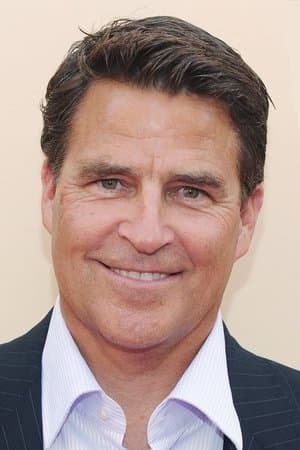
Ted McGinley has been chosen to provide narration for "Kings of the Beach," a documentary examining the rise of professional beach volleyball in the United States. The announcement positions the veteran actor as the voice of a project devoted to a sport whose leap from sandy California courts to national television made it one of the more unlikely success stories in American athletics.
McGinley brings a recognizable presence to the narrator's chair, though his role here will be heard rather than seen. Documentary narration asks for a different discipline than acting: the voice has to carry authority without overwhelming the material, and it has to guide an audience through archival footage and interviews without competing with them. For a story built on sun, competition and a distinctly Southern California subculture, the choice suggests a production that wants warmth and familiarity alongside credibility.
A Career Built on Television
McGinley's career has unfolded largely on the small screen, where he became a fixture across several decades of series television. He is closely associated with "Married... with Children," where he played Jefferson D'Arcy, and with "Hope & Faith," in which he starred opposite Faith Ford. His television résumé also includes "The Love Boat," "Dynasty" and "Doogie Howser, M.D.," along with a long list of guest appearances that have kept him visible to multiple generations of viewers.
That breadth is part of what makes him an interesting fit for a sports documentary. Beach volleyball's growth was driven in no small part by television, and a narrator who has spent his working life in that medium carries a certain thematic logic. His voice is likely to be familiar to audiences who remember the sport's televised heyday, which suits a film concerned with how the game reached living rooms across the country.
The Story of a Sport That Refused to Stay on the Sand
Beach volleyball's professional era took shape in Southern California, where players competed on public beaches for modest prizes before promoters and broadcasters recognized the sport's appeal. The two-man game had obvious attributes for television: compact rosters, continuous action, a compact court and an unmistakable visual setting. Athletes became personalities, rivalries developed, and the tour built a following that eventually carried the sport to the Olympic stage, where it debuted as a medal event in 1996.
Documentaries about beach volleyball tend to grapple with the tension between the sport's laid-back image and the fierce athleticism of its best competitors. The film's title points toward the figures who dominated the tour and helped define its culture during the years when prize money grew and sponsors arrived. Narration in such a film has to thread that needle, honoring the sport's easygoing spirit while taking seriously the training, strategy and physical demands that separate elite players from weekend enthusiasts.
Why the Narrator Choice Matters
For a documentary, the narrator is often the element that determines whether archival material coheres into a narrative. A skilled voice can make decades-old footage feel immediate and can bridge the gap between interviews with athletes, promoters and journalists who each remember the sport's evolution differently. McGinley's selection signals a production that intends to be accessible rather than academic, reaching viewers who may know the sport only from Olympics coverage or from the beach culture that surrounds it.
There is also a practical dimension. A familiar television presence can help a documentary attract attention in a crowded marketplace, where sports films compete for the same limited audiences as scripted features. Casting a narrator with broad recognition is one way to signal that a project is meant for general viewers, not just dedicated fans of the sport.
What Comes Next
Details about the documentary's release plans, length and distribution have not been announced, and the production has not disclosed a schedule for when McGinley's narration work will be recorded. Those specifics will likely shape how the film reaches audiences, whether through a theatrical run, a streaming platform or a festival premiere followed by wider availability.
What is clear is that "Kings of the Beach" now has a voice attached to it, and that voice comes from an actor whose career is woven into the history of American television. Whether the film leans on nostalgia for the sport's boom years or takes a more analytical look at how beach volleyball built and then sustained a professional circuit, McGinley will be the one guiding viewers through it. For a documentary about a game that became a television phenomenon, that feels like a fitting pairing.
Source: The Hollywood Reporter