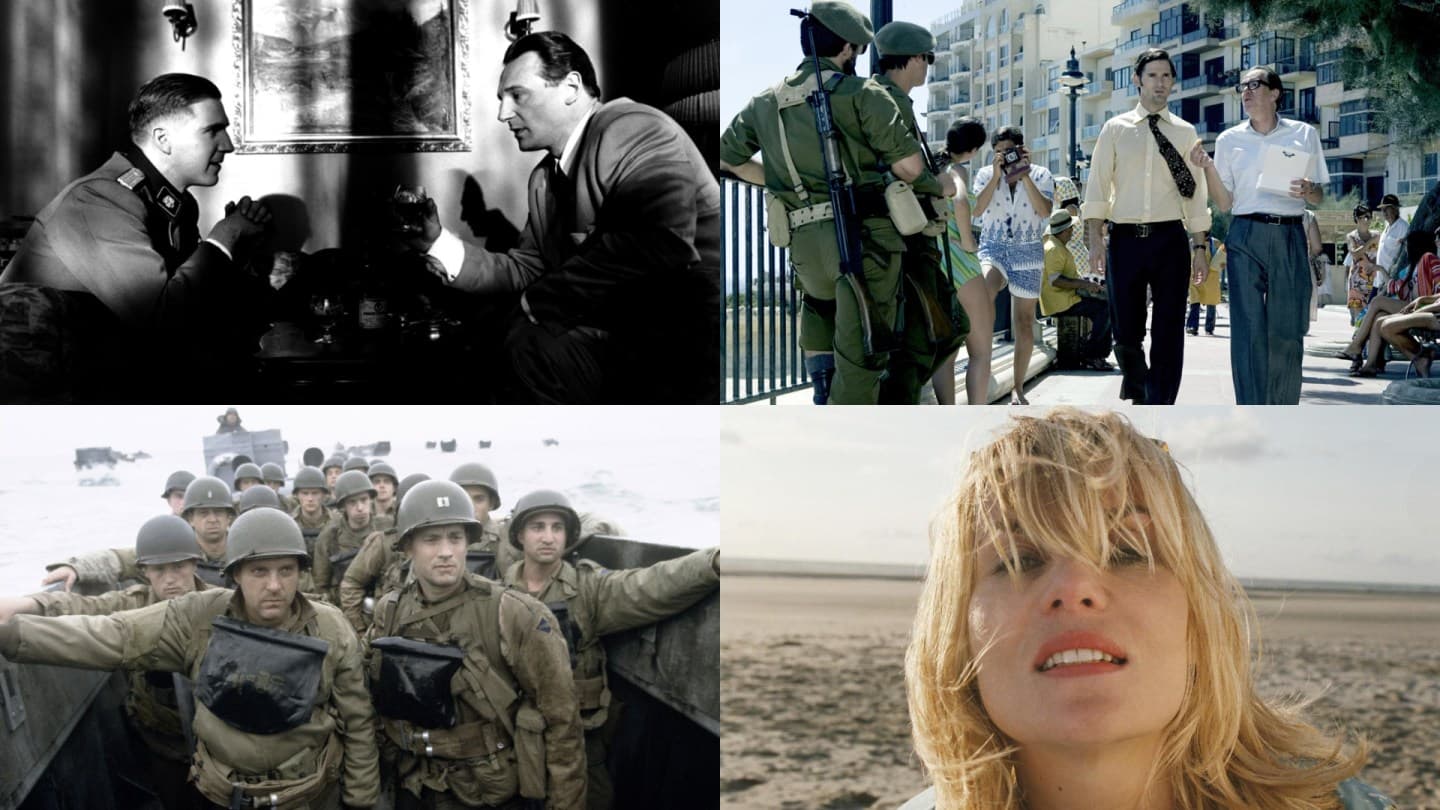
The Hollywood Reporter has turned its "Visionary" spotlight on Janusz Kaminski, the Polish-born cinematographer whose long partnership with Steven Spielberg has produced some of the most visually distinctive images in modern American cinema. The feature, titled "THR Visionary: 5 Janusz Kaminski Shots," selects five compositions from his career for close examination, offering readers a compact tour through a body of work that has helped define the look of mainstream Hollywood filmmaking for more than three decades.
Kaminski's story is, in many ways, the story of a single collaboration. Since "Schindler's List" in 1993, he has served as Spielberg's regular director of photography, building a visual vocabulary that shifts radically from project to project. Black-and-white reportage, saturated color, bleached highlights, and long unbroken camera moves have all passed through his lens, and the THR piece uses five individual frames as entry points into that range.
In selecting specific shots rather than offering a general survey, the magazine follows a format familiar to cinephiles: the single image as argument. A frame, isolated from the flow of a movie, can reveal how light, composition, and camera placement carry meaning. Kaminski has long been a favorite subject for that kind of scrutiny, in part because his work is so deliberately constructed and in part because it has been so widely seen.
A Partnership That Reshaped Studio Photography
When Kaminski joined "Schindler's List," he was stepping into a project whose subject demanded restraint. The decision to shoot in black and white, with handheld camera work and naturalistic lighting, gave the Holocaust drama an immediacy that stood apart from the polished period filmmaking of the era. The Academy of Motion Picture Arts and Sciences recognized the work with an Oscar for cinematography, and the film effectively launched one of the most durable director-cinematographer relationships in the industry.
What followed was a run of pictures in which Kaminski repeatedly reinvented his approach. "Saving Private Ryan" pushed handheld realism and desaturated color into the war film, earning him a second Academy Award. "A.I. Artificial Intelligence" wrapped its futurism in cool, diffused light, while "Minority Report" used blown-out highlights and a washed, grainy palette to suggest an overexposed near-future. "Munich" favored muted tones and tight framing; "Lincoln" worked in warm, low-lit interiors that evoked gaslight and shadow.
The five shots chosen by THR are not disclosed in the verified material accompanying the feature, but the exercise itself is telling. Kaminski's images tend to reward the freeze-frame: a silhouette against a window, a face half-lost to shadow, a landscape drained of color. His compositions often favor negative space and hard directional light, and he has spoken over the years about treating the camera as an active participant in a scene rather than a passive recorder.
A Career Beyond the Spielberg Orbit
Though the Spielberg films define his reputation, Kaminski's filmography extends well beyond that partnership. He shot "Jerry Maguire" for Cameron Crowe, bringing a warmer, more intimate register to the romantic comedy-drama. He worked with James L. Brooks on "How Do You Know," and he has taken on numerous other studio and independent projects across genres. That variety matters when considering a five-shot selection: the same eye that produced the stark monochrome of "Schindler's List" also crafted the sunlit, kinetic energy of "The Adventures of Tintin" and the period textures of "The Post."
Kaminski was born in Zbigniew Kaminski's Poland - in the city of Ziebice - and emigrated to the United States as a young man, studying film at Columbia College Chicago and later at the American Film Institute. That immigrant trajectory, from a Polish film education to the center of the American studio system, is part of what makes his career a natural subject for a "Visionary" profile. His technical command is matched by a willingness to take risks that can divide audiences - few cinematographers of his stature have committed so fully to abstraction and diffusion as he did on "A.I." and "Minority Report."
Why the Format Matters
THR's "Visionary" series treats cinematography as an art worth reading closely, and Kaminski is an apt subject for that treatment. In an era when streaming compression and small screens flatten many of cinema's subtlest visual choices, isolating individual frames restores attention to craft. The five-shot structure also implicitly makes a case about influence: Kaminski's methods - handheld intimacy, aggressive contrast, deliberate color grading - have been widely imitated by a generation of directors of photography working in both film and television.
For readers, the feature functions as both a primer and a prompt. It invites them to revisit familiar scenes with a different attention, to notice where the light falls and why, and to consider how much of what audiences remember as a director's vision is in fact the work of the person holding the camera. In Kaminski's case, that division of labor has been unusually productive, and the THR selection is a reminder that some of the most recognizable images in contemporary American movies came from a single, restless eye.
Source: The Hollywood Reporter