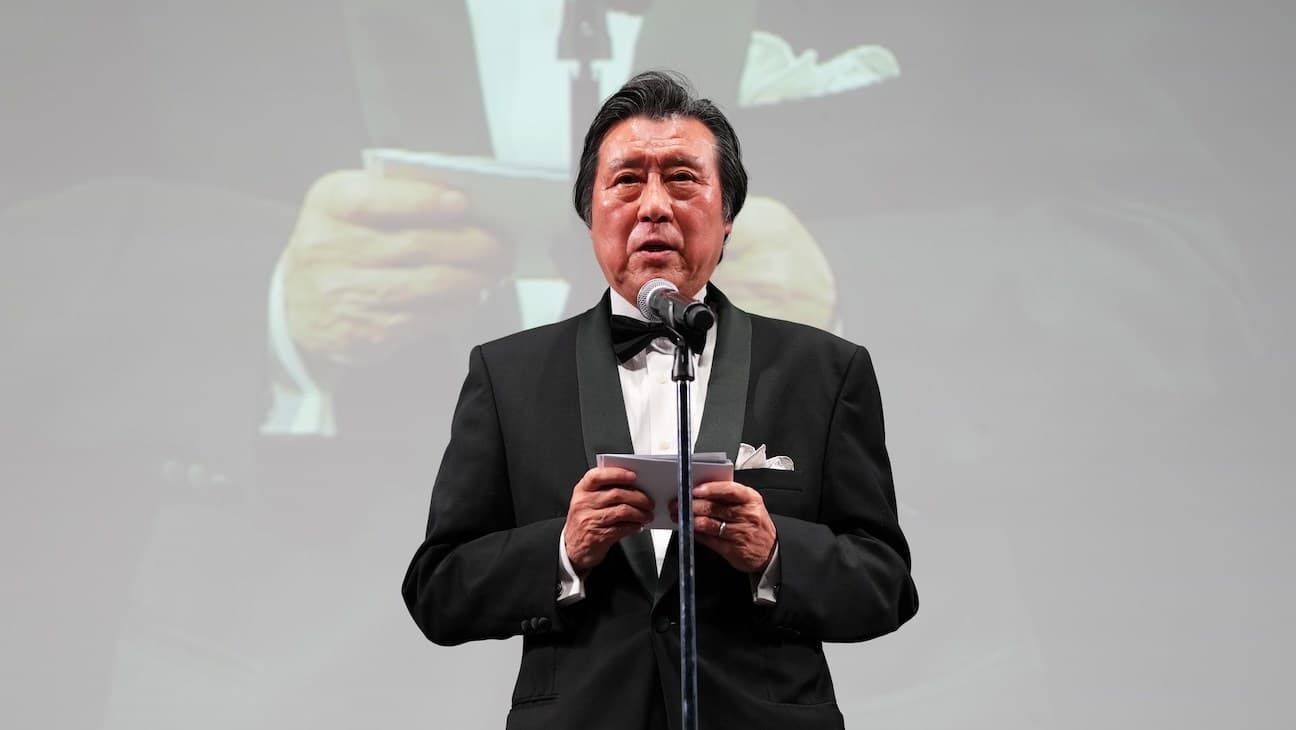
TOKYO - The Tokyo International Film Festival is getting a push from its leadership to think bigger, spend more freely and make far more noise on the world stage. Festival director Takeo Hisamatsu has laid out an agenda built around three interlocking goals: larger budgets, a livelier social and industry calendar, and a markedly higher international profile for Japanese cinema as a whole. Hisamatsu's argument is that a festival of Tokyo's scale cannot fulfill its mission on cautious financing and quiet programming alone, and that the country's film sector needs a flagship event that competes for attention as aggressively as its rivals in Busan, Cannes and Venice do.
Hisamatsu's call for more money is not simply a plea for a richer red carpet. The director frames funding as the foundation for everything else a major festival is expected to deliver: stronger programming, better support for visiting filmmakers and journalists, more ambitious retrospectives, and the infrastructure to host the kind of deal-making that turns a screening into a sale. In his view, a festival that operates on a shoestring sends a signal to the global industry that Japanese cinema is a low priority - an impression he wants to correct. The pitch lands at a moment when international festival competition has become fiercely expensive, with rivals in the region expanding markets, labs and year-round programs.
A Festival That Feels Like a Festival
Part of Hisamatsu's prescription is cultural as much as financial. He has argued for more parties, more gatherings and a more visible social scene around the festival, on the theory that buzz is built in rooms as much as in theaters. Festivals function as marketplaces of reputation: a well-attended reception can do as much for a young director's prospects as a favorable review. Hisamatsu appears to want Tokyo to reclaim the convivial, discovery-driven atmosphere that once defined the event for international guests, when the festival was a reliable stop for programmers and buyers looking to sample Japanese work alongside the global lineup.
That emphasis on atmosphere connects directly to his third goal. A festival with a lively social calendar and a well-funded program is, in his telling, the most effective promotional vehicle Japanese cinema has. The director wants Japanese titles to travel with more force - not only the prestige films that already secure foreign distribution, but the broader output of an industry that releases a huge volume of work each year, much of which never reaches an audience beyond Japan. A festival that draws the world's press, programmers and sales agents to Tokyo gives those films their best shot at an international life. Industry veterans have long noted that Japanese cinema's global reputation rests on a handful of auteurs even as the domestic industry produces far more than that reputation reflects; Hisamatsu's ambition is to close that gap.
The Challenge of Standing Out
The obstacles are considerable. The international festival circuit is crowded, and attention is finite. Tokyo competes not only with the major European events but with a rising generation of Asian festivals that have moved aggressively into industry programming, talent development and market activity. Sponsorship is harder to secure across the board, and public funding for culture faces scrutiny everywhere. Hisamatsu's appeal for greater investment will therefore need buy-in from corporate sponsors, government backers and the Japanese industry itself - a coalition that has not always moved quickly.
There is also the question of identity. Hisamatsu's vision implies a festival that is unmistakably Japanese in its hospitality and cultural framing while being fully global in its outlook. Achieving both requires curatorial confidence and the resources to execute. Whether his proposed expansion materializes will depend on how persuasively he can make the case that a bolder Tokyo festival pays dividends for the entire Japanese film ecosystem, not just for the ten days of the event itself.
For now, the director's message is clear: Tokyo has the films, the history and the location. What it needs, in his view, is the money and the will to act like a festival the world cannot afford to skip.
Source: The Hollywood Reporter