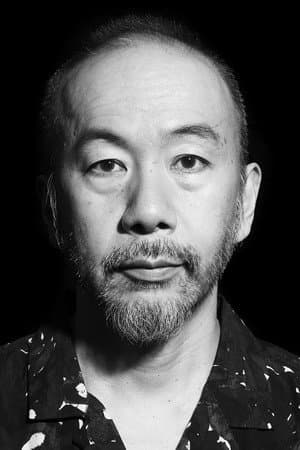
Shinya Tsukamoto has spent nearly four decades building a body of work on his own terms, and he shows no intention of changing course now. The director behind the 1989 cyberpunk landmark "Tetsuo: The Iron Man" remains one of Japanese cinema's most fiercely self-reliant filmmakers, financing much of his output independently and working with small crews far removed from the studio system. In recent remarks, Tsukamoto reflected on that independence and on a parallel pull that has shaped his later career: an enduring need to confront war on screen.
Tsukamoto's reputation rests on a filmography that is short on compromise and long on physical intensity. From the metallic body horror of "Tetsuo" to the psychological bruising of "A Snake of June" and the visceral boxing drama "Tokyo Fist," his films tend to be shot quickly, close to the body, and with a frugality born of necessity as much as philosophy. That approach has made him a cult figure abroad and a respected if sometimes uncomfortable presence at home, and it has kept him answerable to no one but himself.
Independence as a working method
For Tsukamoto, staying independent is less a marketing position than a practical condition of getting films made. He has long operated outside the traditional financing pipelines, often serving as his own producer and relying on a tight circle of collaborators. The result is a filmography that would likely never have survived a committee process: confrontational, formally restless, and indifferent to the rhythms of commercial release.
That self-sufficiency has also insulated him from the pressure to sand down his more abrasive instincts. Tsukamoto has spoken over the years about shooting with minimal equipment to keep costs and logistics from dictating the work, and he has continued to act in other directors' projects, including high-profile international productions, while returning to his own films on his own schedule. The independence, in other words, is not a stance he performs. It is the structure that allows the work to exist at all.
A career-long reckoning with conflict
More surprising to casual admirers of his body-horror roots is Tsukamoto's deep engagement with war as subject matter. That thread runs through films including "Fires on the Plain," his adaptation of Shohei Ooka's novel about a soldier's descent into survival and madness in the Philippines during the Second World War, and "Killing," in which a reluctant swordsman confronts the moral cost of violence in the final years of the Tokugawa shogunate.
Tsukamoto has explained the attraction in personal terms rather than political ones: war, for him, is the extreme test case for everything his cinema has always explored, namely the body under threat, the fragility of identity, and violence as both horror and compulsion. Having grown up in postwar Japan, he has described a sense of distance from the war generation alongside a conviction that its lessons must be carried forward as memory fades.
His handheld, immersive shooting style suits this material unusually well. Where conventional war films often reach for spectacle, Tsukamoto's camera stays pressed against faces and bodies, turning combat into something intimate and disorienting. It is a manner suited to his means as an independent filmmaker, but it also reflects a genuine belief that the experience of war is best conveyed at the scale of a single person.
An example for younger filmmakers
Tsukamoto's example carries weight beyond his own catalog. He emerged from Japan's independent and underground filmmaking scene, and he has consistently argued that limited resources need not limit ambition. For younger directors weighing whether to wait for institutional backing or simply start shooting, his career is a durable argument for the latter.
He has also stayed conspicuously active as an actor, appearing in international productions while continuing to develop his own projects. That dual life says something about how he views independence: not as isolation, but as the freedom to move between worlds without belonging fully to any of them.
Whether or not a new Tsukamoto film is imminent, his priorities remain clear. He has built a career on the conviction that a director's vision is worth protecting from interference, and on the belief that war, however painful to revisit, is a subject his camera cannot leave alone. In an industry that rewards caution, he remains a rare figure who has made a virtue of refusing it.
Source: Variety