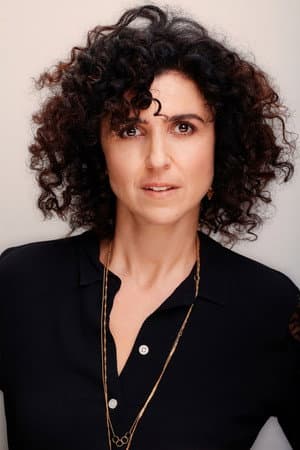
May el-Toukhy, the Danish filmmaker behind the acclaimed drama Queen of Hearts, stands as the only woman in competition at this year’s Venice Film Festival, a position she says highlights a persistent and uncomfortable truth about how the industry values its female auteurs. Speaking to reporters ahead of her latest film’s premiere on the Lido, el-Toukhy did not mince words about the disparity she sees not just in opportunity, but in the very language of critical and industry praise.
"I’ve never heard a female director being called a genius," el-Toukhy said, addressing the gender gap that has left her as the sole female competitor among a field of male peers. "I’ve heard it about so many men, often after their first or second film. But for women, we get called 'promising' or 'talented' or 'sensitive.' Those words don’t carry the same weight. They don’t open the same doors."
Her observation cuts to a deeper structural issue that extends far beyond a single festival lineup. While the number of female filmmakers has risen steadily over the past decade, el-Toukhy argues that the reception of their work remains filtered through a different lens. The term “genius” implies a kind of innate, almost mythic originality that is historically reserved for a masculine archetype. When applied to women, the praise often shifts toward craft or emotional acuity, a subtle but consequential distinction that shapes funding decisions, distribution deals, and retrospective canon-building.
The 2026 Venice competition slate, which features a broad array of established international names, provides a stark snapshot of that imbalance. Despite years of public pledges from festivals to improve gender parity, the math remains stubbornly lopsided. El-Toukhy’s solitary position is not an anomaly but rather a recurring pattern; in recent editions, female representation in competition has hovered at around one in five or fewer, even as the festival’s other sections, such as Horizons and the critics’ week, have shown more equitable programming.
For el-Toukhy, the problem is not merely about how many films are selected, but about the mythology that surrounds those selections. She pointed to the swift rise of young male directors who are anointed as visionaries after a single well-received outing, often receiving blank-check financing for their next, riskier project. The equivalent work by a female director, she suggested, tends to be met with more cautious language, more questions about likeability, and more scrutiny regarding box-office viability rather than artistic merit.
"There is a comfort in calling a man a genius because it absolves the system of needing to explain his success," she explained. "It’s seen as inevitable, as if he was born with that stamp. For a woman, there is always a question of how she got there, as if she must have benefited from a quota or a special initiative. That framing undermines the work before it’s even seen."
El-Toukhy’s own career trajectory illustrates the double-edged nature of international acclaim. Queen of Hearts, which premiered at Sundance in 2019, earned her an Oscar nomination for Best International Feature and was widely praised for its unflinching portrayal of a powerful woman’s destructive morality. Yet even with that prestige, she notes that the follow-up process was not met with the same automatic escalation of resources and creative freedom that she observes among her male counterparts.
Her presence at Venice this year is therefore freighted with meaning. While she is careful not to position herself as a symbol simply by virtue of her gender, she acknowledges the weight of carrying that representational burden alone. "I don’t want to be the token, but I also understand that if I decline the conversation, the conversation disappears," she said. "We have to keep saying it out loud, even when it’s uncomfortable."
The filmmaker’s remarks arrive at a moment when several European film institutions have introduced new funding requirements tied to gender parity, and when streaming platforms have begun to publish inclusion data. Yet the pace of change on the ground, at the level of festival juries and top-tier competition slots, remains glacial. El-Toukhy argues that the solution will not come from policy alone but from a fundamental shift in critical vocabulary and audience expectations.
"We need to allow female directors to fail spectacularly," she said, a wry smile underscoring the point. "Genius is not about being perfect. It’s about taking enormous swings. And right now, women are still being told to play it safe, to prove we can handle the basics before we get to attempt something grand."
As she prepares to present her work to the Venice audience, el-Toukhy remains pragmatic about the limits of any single moment. She does not expect her words to rearrange the industry overnight. But she hopes that by naming the gap so plainly, she might prompt a few critics, executives, and fellow filmmakers to examine their own assumptions about what a visionary looks like.
"I’ve been in rooms where a male colleague says something slightly provocative and everyone calls it bold," she said. "I’ve seen women say the same thing and get called difficult. Those labels stay with you. They affect whether you get asked back, whether your next script gets greenlit, whether your name gets mentioned in the same breath as the greats."
For now, el-Toukhy’s work will speak for itself in the competition hall. But her commentary ensures that the conversation around her film will extend beyond plot and performance to the very structures that allowed her to be the exception rather than the rule. Whether her presence signals a turning point or merely underscores the stagnant status quo remains an open question, one that the festival’s final awards ceremony may only partially answer.
Source: The Hollywood Reporter