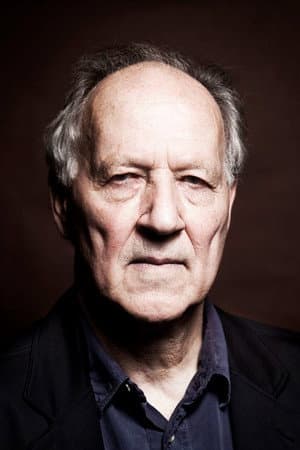
Werner Herzog's Donostia Award Film at San Sebastian
Director
Werner Herzog
Advertisement
Watch Werner Herzog's new film on his San Sebastian Donostia Award, blending cinema and honor in a unique documentary tribute.
BERLIN - Werner Herzog, the German filmmaker whose uncompromising visions have defined cinema for over five decades, will be honored with the Donostia Award at this year's San Sebastian Film Festival, organizers confirmed Thursday.
The 74-year-old director, who was born in Munich and whose career spans documentaries, features, and operas, will accept the festival's highest career accolade at a ceremony scheduled during the 74th edition of the Spanish festival, which runs from September 18 through September 26. The Donostia Award is the festival's lifetime achievement prize, previously given to the likes of Meryl Streep, Al Pacino, and Francis Ford Coppola.
In a statement released by the festival, Herzog said he was "deeply honored" by the distinction. The director is known globally for such features as Aguirre, the Wrath of God (1972), Fitzcarraldo (1982), and the taut POW drama Rescue Dawn, which is cited in festival materials alongside his legendary collaborations with actor Klaus Kinski. The festival also emphasized Herzog's enormous documentary output, which includes Grizzly Man (2005), Cave of Forgotten Dreams (2010), and the recent Fireball: Visitors from Darker Worlds (2020).
Herzog's career has always defied easy classification. He is a master of the so-called "documentary" form even when his films are laced with staged elements, and he has made forays into science fiction (The Wild Blue Yonder), horror (Nosferatu the Vampyre), and even a 3-D documentary about prehistoric cave paintings. Forget the conventional path, his work suggests; the world is stranger and more violent than most filmmakers care to admit.
The San Sebastian recognition lands at a particularly busy time for the director. Later this year, he will premiere the feature Theater of Thought at the film festival in Venice, a documentary about the human brain and the ethics of neural data. That project marks one of his rare direct interviews with the cutting edge of science - his companion piece Fireball examined meteorites and natural disasters. Herzog's restless energy has also extended to acting, with recent appearances in Star Wars: The Mandalorian (which he filmed in between directing projects) and a recurring role in the Jack Ryan series for Amazon.
Beyond the Mountains: A Career of Bold Escapades
Herzog's reputation for risk-taking began in earnest in the 1970s. For Fitzcarraldo, he hauled a full steamship over a muddy hill in the Peruvian Amazon, an ordeal that nearly killed crew members and resulted in multiple injuries. For Aguirre, he used his small budget to capture the brutalism of unchecked ambition in the jungle. That film, shot in the rain forest with a cast of men and a few monkeys, is now considered a touchstone of New German Cinema.
He has also consistently pushed the boundaries of what can be considered "film." He once walked from Munich to Paris to visit an ailing film critic, convinced that walking would win him her favor (she did not stay). He kept the production of Grizzly Man going even after hearing the star's own death by bear attack. These incidents are not just lore - they are method.
A Living Link to Cinematic Rebellion
The Donostia Award is not the only recent fuss over the director. In May, Amazon released the documentary The Fire Within: A Requiem for Katia and Maurice Krafft, which Herzog narrates about two French volcanologists who died in a 1991 eruption. And in late June, Herzog made headlines with a public exchange with filmmaker Ken Burns about the state of the modern documentary - a genre Herzog often calls "corporate-commissioned tourism."
Festival director José Luis Rebordinos described Herzog as "an essential fixture of modern cinema, a filmmaker whose imagination resists any kind of compromise." Rebordinos added that including Herzog in the same group as past Donostia recipients was a "milestone for the festival's history." Herzog's acceptance will be accompanied by a retrospective of his films, from his earliest shorts to recent work.
What's Next for the Director
Beyond Theater of Thought, Herzog continues to work on a variety of projects. He has been developing a feature about the life of French naturalist Jacques Cousteau, and has hinted at further collaborations with his frequent editor Joe Bini. He told a Swiss newspaper last month that he is not tempted by retirement, noting that "the world unfolds its secrets to those who are not afraid to stare at the sun." That quote sits well next to his filmography, which is full of men staring into vast, unforgiving distances.
For San Sebastian, the choice of Herzog is a bold one: it celebrates decades of auteurist passion rather than commercial success. Herzog's films have rarely been box-office hits, though Rescue Dawn remains his most accessible studio work. But the festival's decision to honor him reflects a desire to recognize the filmmaker as an artist first and a crowd-pleaser last.
Herzog will be present in San Sebastian for the award ceremony and will give a masterclass to the festival's audiences. The event is expected to draw a large number of international film professionals who have long considered Herzog an idol. It is not an exaggeration to say that no other living filmmaker has this blend of physical endurance, poetic restlessness, and sheer unpredictability. The Donostia Award, in that sense, is not just a trophy - it’s a testament to a body of work that has never flinched, even when the world around it was burning.
Source: The Hollywood Reporter
Advertisement
Advertisement