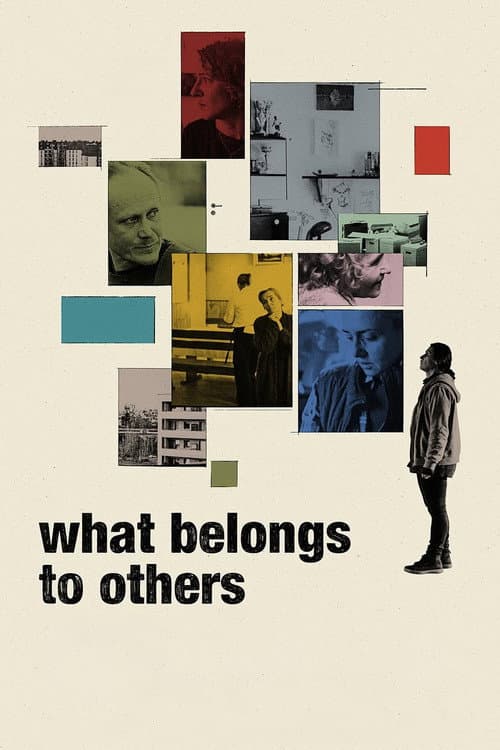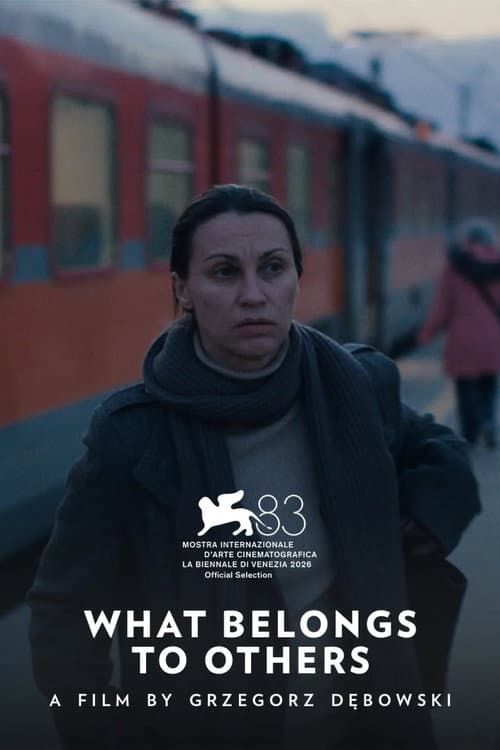
WARSAW, Poland - "What Belongs to Others," Grzegorz Dębowski's drama about a burglar who takes up residence in a dead man's apartment, claimed the top prize at the Warsaw Film Festival, capping a run that began with its September 10 release and now positions the Polish-language feature for a broader international life on the festival circuit.
The 104-minute film stars Monika Kwiatkowska as Kasia, a woman who supports herself by breaking into other people's homes. During one such job she discovers the body of a man, and rather than retreating, she decides to move into his apartment and piece together who he was. The premise places a criminal protagonist inside a stranger's private world, turning a routine burglary into an act of investigation and, in effect, self-reinvention.
Dębowski directed the feature, which is categorized as a drama and was produced within the Hollywood industry pipeline per the film's listed metadata. Alongside Kwiatkowska, the cast includes Robert Mania, Ewa Pająk, Martyna Rozwadowska and Jadwiga Grygierczyk.
The Warsaw prize arrives roughly five weeks after the film's initial release, giving the title a second, award-season platform at a moment when festival recognition often determines how far a smaller drama can travel. Audiences tracking the film through the TMDb database have logged a rating of 4 out of 10, a middling figure that contrasts with the jury's decision in Warsaw - a split that is not unusual for films built around morally ambiguous characters and slow-burn narrative structures.
A Story Built on Trespass and Discovery
"What Belongs to Others" rests on a premise that blends crime drama with a quieter, more existential question of identity. Kasia's decision to inhabit the home of a man she has just found dead is the kind of narrative pivot that forces the audience to sit with an uncomfortable moral position: the protagonist is simultaneously a criminal, a witness and a kind of unauthorized biographer.
Dębowski's direction, working in Polish, leans into that tension rather than resolving it. Draping the plot over the spare mechanics of a burglary keeps the film grounded even as its central character drifts into territory that has less to do with theft than with belonging - a word that appears explicitly in the title and functions as the film's organizing idea.
Kwiatkowska carries the film in the lead role, a substantial responsibility given that much of the story unfolds through a single character's decisions inside a space that is not hers.
What a Warsaw Win Means for the Film
The Warsaw Film Festival's top award is one of the most visible prizes on the Central European festival calendar, and a win there tends to function as a calling card for sales agents and programmers in Western Europe and North America. For a Polish-language drama with a modest-profile ensemble and no reported box-office figures to speak of, that recognition may matter more than it would for a heavily marketed studio release.
The timing is also favorable. With the film's theatrical window already opened in September, the Warsaw honor lands while the title is still close enough to its release to generate renewed attention rather than serving as a retrospective footnote. Distributors and festival bookers watching the European circuit will now have an explicit reason to revisit a film that a rating alone might have caused them to skip.
The Rating Gap and the Festival Signal
A 4-out-of-10 audience rating and a top festival prize are not contradictory facts so much as two different measurements. Festival juries respond to directorial intent, tonal control and thematic ambition; general audiences frequently respond to pace, clarity and emotional immediacy. Films centered on an unsympathetic or morally shifting protagonist often land precisely in this gap, admired by programmers while remaining divisive among casual viewers.
None of that determines the film's ultimate standing. If "What Belongs to Others" secures distribution in additional territories on the strength of the Warsaw award, the rating will be recalculated by a much larger and different audience. If it does not, the prize will remain the defining line in its record.
What Comes Next
No further festival bookings or release expansions have been confirmed from the available information. What is clear is that Dębowski's film now has a major award attached to its name, a Polish-language drama of just over an hour and three quarters that turns a grisly discovery into a study of how easily one person's life can be occupied by another.
For USA Film News readers, the takeaway is straightforward: "What Belongs to Others" is a festival-decorated drama worth tracking as it moves through the awards season, and its Warsaw win gives it a legitimate claim on attention well beyond its September release.
Source: The Hollywood Reporter