Zhang Yimou used the opening night of the Busan International Film Festival to offer the first public glimpse of his long-gestating adaptation of "The Three-Body Problem," the landmark science fiction novel by Cixin Liu that has already been adapted for television in China and streamed globally to considerable fanfare. The veteran director took the stage at the festival's star-heavy launch event to discuss the project, which remains one of the most anticipated Chinese-language productions in development.
Speaking to a packed house, Zhang framed the film as an attempt to bring Liu's dense cosmic speculation to the big screen in a way that honors the source material while remaining accessible to viewers who have never read the trilogy. He noted that the story's scope - spanning decades, continents and eventually the entire known universe - presents challenges unlike anything in his previous filmography, which has ranged from historical epics to martial arts spectacles.
A Story Rooted in Scientific Dread
The novel, the first installment in Liu's Remembrance of Earth's Past trilogy, opens with a mystery: hundreds of physicists have died under unexplained circumstances. Wang Miao, a Chinese nanomaterials expert, begins seeing a mysterious countdown in his eyes and is drawn into an investigation that leads him to a virtual reality game set on a disastrous planet orbiting three suns. He eventually learns that the game depicts a real civilization - one whose inhabitants intend to reach Earth within 400 years, bringing an existential catastrophe for humanity.
That premise, blending hard science fiction with thriller mechanics, has made the book a global phenomenon since its English translation helped propel Liu to international prominence. The story's genre identity is deliberately hybrid: mystery, science fiction and thriller elements interlock across a narrative that moves between present-day intrigue and cosmic-scale stakes.
Cast and Production Details
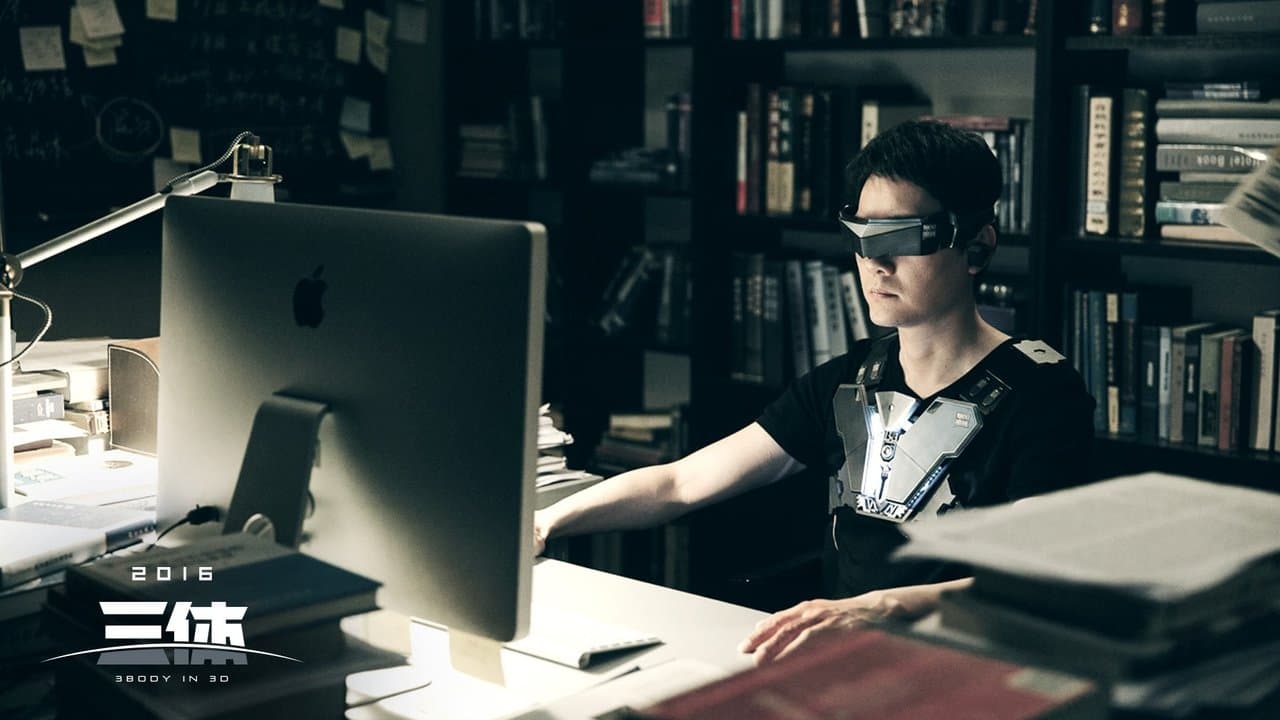
The film is directed by Fanfan Zhang, not to be confused with the Busan headliner himself. The cast is led by William Feng as Wang Miao, the nanomaterial specialist at the story's center. Zhang Jingchu plays Ye Wenjie, a pivotal figure whose history shapes the novel's central conflict. Tang Yan appears as Shen Yufei, Hans Zhang as Pan Han, and Du Chun as Wei Cheng. David E. Woodley takes the role of Mike Evans, with Darren Grosvenor and Chae Ri-eun, the latter playing a hacker, also among the credited performers.
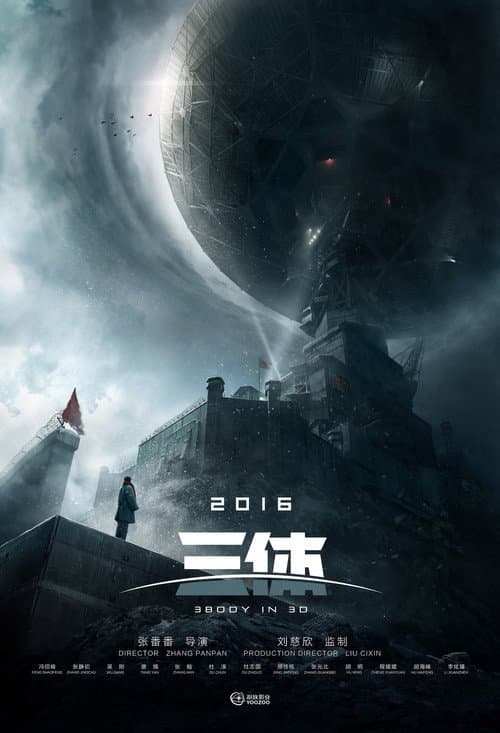
The production is a Chinese-language project classified under the Hollywood industry banner, with a runtime of 176 minutes - a substantial length that suggests the filmmakers intend to accommodate a significant portion of the novel's intricate plotting. A release date has not been announced.
Busan's Star-Packed Stage
The Busan International Film Festival has long served as a launching pad for ambitious Asian productions, and this year's opening ceremony drew a notably crowded roster of talent. Zhang's appearance lent the event a sense of event-scale gravity, positioning the adaptation as a calling card for Chinese genre filmmaking on the international circuit.
For Zhang, the project represents a departure into territory that few directors of his stature have attempted: a faithful, large-canvas rendering of a contemporary science fiction landmark. The novel's reputation rests partly on its willingness to think in spans of centuries and civilizations, and the question of how that translates to a single film - even one running nearly three hours - remains open.
The Broader Three-Body Landscape
The property has already proven its adaptability elsewhere. A Chinese television series based on the novel found a substantial audience, and a separate English-language streaming adaptation brought the story to viewers worldwide. Those projects have established a visual vocabulary for Liu's universe while also raising expectations for what a theatrical treatment might achieve.
That context cuts both ways. Audiences now arrive with preconceptions about how the three-sun virtual world, the countdown motif and the gradual reveal of an approaching alien civilization should look and feel. Zhang's challenge is to satisfy that familiarity while offering something cinematically distinct - an argument for the big-screen experience rather than a retread of what has already been seen at home.
Details about the film's visual approach, production timeline and distribution plans remain scarce. What is clear is that the Busan reveal has officially moved the project from speculation into the realm of active anticipation. For a story about a civilization facing annihilation on a 400-year horizon, the wait for a release date may feel considerably shorter - but no less keenly felt by the fans who have been tracking this adaptation since it was first whispered about.
Source: The Hollywood Reporter