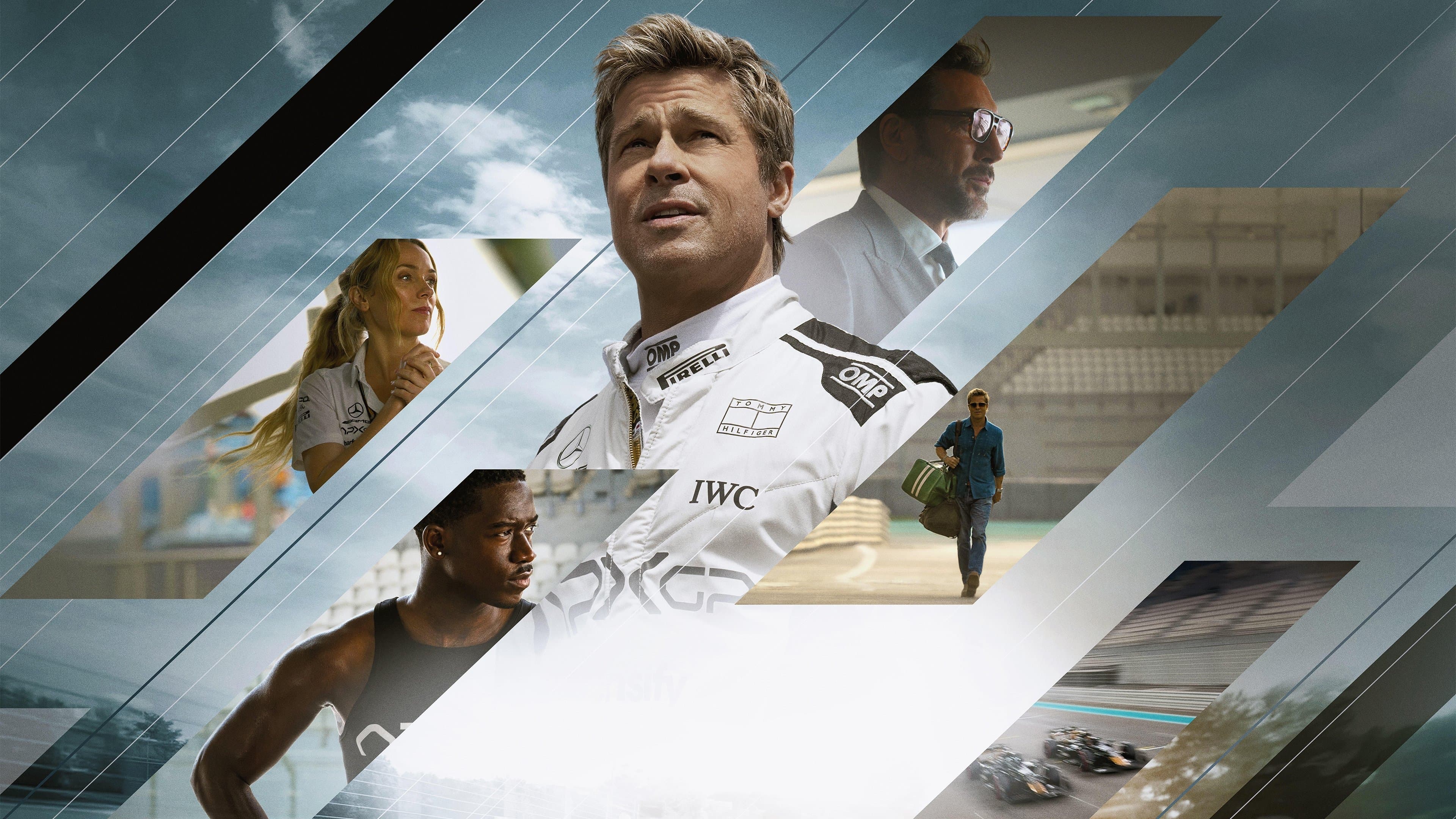
A year and a few months have passed since "F1" first roared into theaters on June 25, 2025, and the film has lost none of its velocity. Joseph Kosinski's racing drama, which pairs Brad Pitt with rising star Damson Idris, remains one of the more durable Hollywood releases of the past decade - a throwback to the era when a mid-budget star vehicle could still become a genuine cultural event. With a runtime of 156 minutes and a TMDb rating holding at 7.8 out of 10, it has settled into the rare category of films that satisfy both the popcorn crowd and the awards-season crowd.
The premise is deceptively simple. Pitt plays Sonny Hayes, a racing legend living quietly in retirement when Javier Bardem's Ruben Cervantes comes calling. Cervantes owns a struggling Formula 1 team, and he needs someone with Hayes's instincts and credibility to pull it back from the brink. What he also gets is a mentor for Joshua Pearce, an unpolished hotshot played by Idris, whose raw pace is matched only by his stubbornness.
What elevates that setup is the script's refusal to treat the mentor-protege dynamic as a simple passing of the torch. Hayes isn't noble about it. He's chasing one more shot at glory of his own, and the film never lets him pretend otherwise. Pearce, meanwhile, isn't some wide-eyed rookie waiting to be humbled. The friction between them is the engine of the movie, and Kosinski lets it run hot without ever turning either man into a villain.
Pitt's performance has drawn the lion's share of praise, and it's easy to see why. He's playing a man whose body has started to betray him while his competitive instincts haven't received the memo. It's a quieter turn than a lot of his work - less movie-star wattage, more weariness and precision. Idris, for his part, matches him beat for beat. The two share a scene in a hotel bar roughly two-thirds of the way through that has already become the film's signature moment.
The supporting ensemble does real work here rather than filling out the frame. Kerry Condon's Kate McKenna brings a grounded, unsentimental presence as a key figure in the team's operation. Tobias Menzies, Kim Bodnia, Sarah Niles, and Will Merrick round out a cast that understands exactly what kind of film they're in - one that respects expertise and treats engineering, strategy, and pit-wall decision-making as dramatic material.
Kosinski, who spent years working at the intersection of spectacle and precision, brings both to the racing sequences. Shot with an emphasis on practical staging and in-camera speed, the race scenes avoid the weightless, video-game sheen that has made so many contemporary action films forgettable. You feel the heat, the noise, the margins. When a pit stop goes wrong, it lands like a punch. That physicality is part of why the film has held up on repeat viewing - it rewards attention to detail rather than demanding you turn your brain off.
At 156 minutes, "F1" asks a lot of its audience, and not every subplot earns its runtime. There are stretches in the middle act where the film's ambition outpaces its focus. But the ending - a final race that manages to be both thrilling and emotionally legible - justifies the length. This is a film about people who have spent decades measuring themselves against a stopwatch, and it understands that the clock doesn't care about your feelings.
For Hollywood, "F1" also offered a quiet argument about what audiences still want: original stories told with craft, featuring movie stars doing movie-star work, in a language that plays everywhere. It's a Hollywood production in the classic sense, in English, and it never apologizes for that. In an era dominated by sequels and shared universes, "F1" proved that a well-made drama with action in its bones can still find its lane and stay there.
More than a year on, it's worth asking whether the film will be remembered as a one-off triumph or the start of something. Kosinski and Pitt have both been coy about a follow-up, and frankly, the movie doesn't need one. It ends where it should. But the appetite it created - for this kind of film, made this way - is real. In a summer that has already produced its share of forgettable noise, "F1" remains the one still humming in your ears long after the theater lights come up.