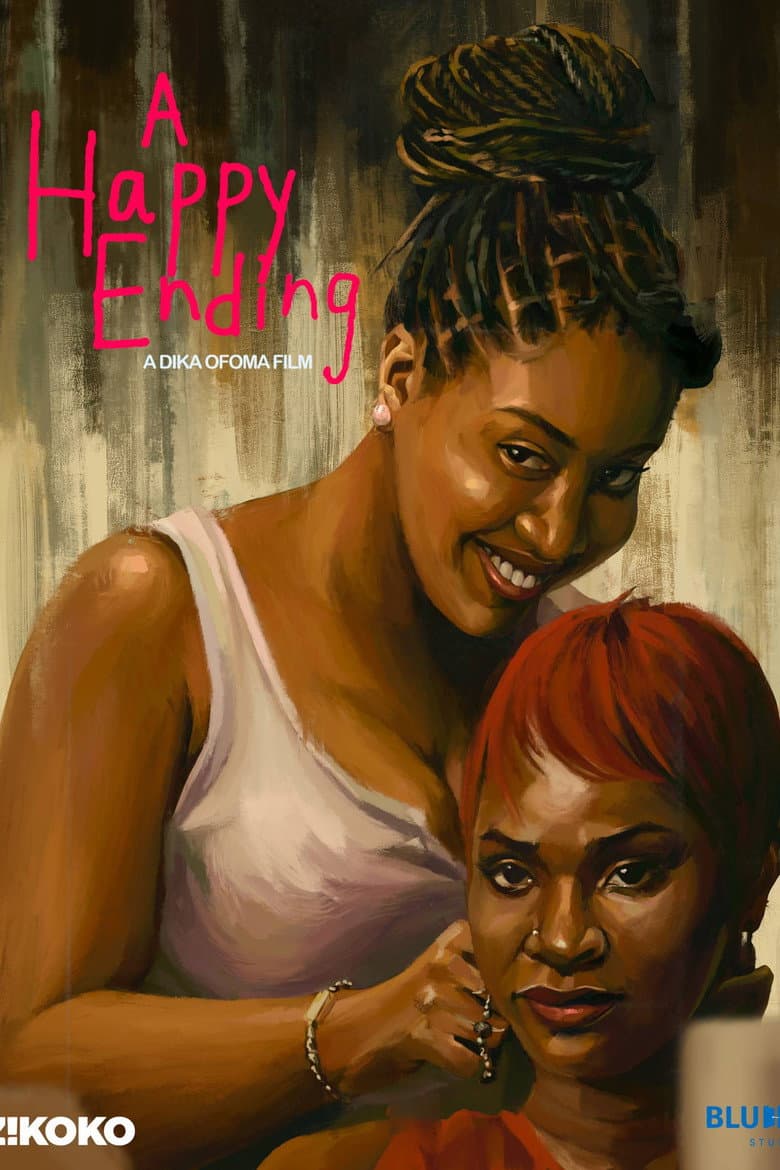
It’s not every day that a film arrives with the quiet weight of a secret. Today, August 8, 2026, marks the release of A Happy Ending, a title that feels almost like a dare in its irony. The movie, written and directed by the increasingly essential Dika Ofoma, doesn’t have a massive marketing blitz behind it, nor does it boast a recognizable franchise pedigree. Instead, it has something rarer: a premise that pokes at a cultural bruise, a cast of Nigerian screen veterans and rising talents, and a central question that lingers long after the credits. In a summer dominated by explosions, this is a different kind of detonation - a quiet one, aimed squarely at the heart of family, duty, and the price of a woman’s independence.
Release Date & Where to Watch
A Happy Ending opens in select theaters today, August 8, 2026. This is not a wide, stadium-seating, multiplex takeover; it’s a platform release, which means you’ll likely find it at art-house cinemas and specialized independent screens in major metropolitan areas. For those outside those initial markets, don’t despair. The film is expected to expand to additional cities over the next two to three weeks, a familiar playbook for prestige dramas hoping to build word-of-mouth. Digital and streaming availability haven’t been officially announced yet, but based on current distribution patterns, expect a VOD window roughly six to eight weeks after theatrical debut.
That means catching it on the big screen is the optimal experience. Ofoma’s visual language, known from his previous short films, leans into intimate close-ups and the textured warmth of natural light, which won’t translate as richly on a laptop. Check your local indie theater’s listing; this is a film that rewards the commitment of a proper viewing environment. Don’t be surprised if screenings are followed by Q&A sessions with the director or cast in select cities - this is exactly the kind of project that thrives on post-film conversation.
Cast & Crew
At the center of A Happy Ending is a performance that anchors the film’s emotional turbulence. Ifeoma Obinwa stars as the unnamed young woman at the story’s core - a role that demands both fierce resolve and a palpable vulnerability. Obinwa, who has been a rising star in Nollywood’s new wave, is joined by Ruby P. Okezie, whose recent work has shown a remarkable range. Together, they share a dynamic that feels less like acting and more like a collision of lived experiences.
The supporting cast reads like a roll call of respected stalwarts and fresh energy. Anne Njemanze, a veteran of the industry with decades of gravitas, plays a pivotal role, likely as a matriarchal figure whose disapproval is both a wall and a mirror. Nonso Odogwu, a performer known for his magnetic screen presence, and Kuchi Chris, whose everyman charm has been a fixture in several independent projects, round out the ensemble. There’s no weak link here; every player feels essential.
But the real artist in charge is Dika Ofoma. As both writer and director, Ofoma has crafted a narrative that refuses easy villainy. He shoots his characters with compassion, even when they’re making choices the audience might find frustrating. His direction is patient, letting scenes breathe, trusting his actors to convey the unspoken. The cinematography, reportedly shot on location in Nigeria, captures the bustling chaos of urban life alongside quiet, suffocating interiors - a visual metaphor for the protagonist’s internal tug-of-war. Technical credits are sparse in the metadata, but the film’s craft speaks for itself in its restraint.
Story & What to Expect
The official overview is deceptively simple: a young woman chooses an unconventional path to achieve financial independence, aiming to support the people in her life in a culture that disapproves of her choices. Ofoma has not been coy in interviews about the weight of that second clause. This is a story about the crushing expectations placed on women - to be dutiful, self-sacrificing, and invisible in their ambition. The “unconventional path” isn’t a spoiler; it’s the engine of the drama. Without revealing plot mechanics, expect the kind of moral gray zones where no character is entirely right or wrong.
What’s most striking is what A Happy Ending refuses to do. It doesn’t sensationalize the protagonist’s choices, nor does it moralize from a pedestal. The film sits in the discomfort, watching as the woman navigates a world that offers her few palatable options. She isn’t a martyr or a rebel without a cause; she’s someone who calculates, negotiates, and sometimes fails. The audience is left to weigh the cost of her “happiness” against the approval she sacrifices.
Tonally, the film is a slow burn - don’t expect propulsive twists. Instead, you get accumulating tension, scenes of dinner-table silences that speak louder than shouts, and a score (though uncredited) that likely adds a thrumming unease. There’s also a thread of dark irony to the title; by the end, you’ll wonder if any ending can truly be happy when it’s bought at such a price. For those who appreciate character-driven dramas with a sociopolitical edge, this hits the sweet spot.
Why It’s Worth Watching
We are drowning in sequels and spectacle. A Happy Ending offers something increasingly rare: a provocation. It forces the viewer to examine their own assumptions about work, family, and autonomy. If you’ve seen Ofoma’s earlier work, you know he has a knack for finding the universal inside the specific, and this feature is a major step up in scale and ambition.
The performances alone justify the ticket price. Obinwa delivers a career-defining turn, one that will likely place her on year-end best-actress lists. The chemistry between her and Okezie is electric in their shared scenes, and Njemanze’s presence provides a formidable counterweight - a character you’ll want to hate but may find yourself understanding.
Moreover, this is a film about money, and how loathsome it is that financial survival so often dictates our moral compromises. It speaks to a global audience, even as it remains rooted in a specific Nigerian cultural context. The TMDb rating is currently a blank slate at 0/10, which feels almost poetic - no one has judged it yet. That gives you the chance to be an early voice, a trendsetter who saw it before the consensus formed.
Do not go in expecting escape. Go in expecting a mirror. A Happy Ending is the kind of movie that doesn’t leave you when you leave the theater. It sits with you, asking a question you won’t be able to shake: What would you do to make everyone around you smile - and what would that smile cost you? That’s not just worth watching; that’s worth wrestling with.