The smallest films often carry the most unwieldy ideas, and few titles this year are as philosophically dense - or as visually volatile - as Atopia, a five-minute animated short that lands in theaters and on digital platforms today, August 7, 2026. Don’t let the runtime fool you. This isn’t a palate cleanser between features; it’s a concentrated shot of aesthetic theory, delivered through the raw, physical manipulation of celluloid itself. Director Leonardo Carrano has taken a concept that would make most academics reach for a second coffee - the state of “atopia” that afflicts Socrates in Plato’s Symposium - and turned it into something you can almost hear, see, and feel all at once.
Release Date & Where to Watch
Atopia opens today, August 7, 2026, in select art-house cinemas as part of a curated program of experimental shorts. Given its brief runtime, you won’t find it playing before mainstream blockbusters; instead, look for it at independent venues, museum film series, and film-society screenings that specialize in avant-garde animation. For those outside major metropolitan areas, the short is also available beginning today on major VOD platforms, including Apple TV, Amazon Prime Video, and Vimeo On Demand, where it can be rented or purchased alongside Carrano’s previous works. It’s a niche release by design, but the digital rollout means that anyone with a healthy data plan and a curious mind can access it. Check your local listings for specialty theaters or search the film’s official page for a full list of participating platforms. The film’s distributor has not announced a wider theatrical expansion, so for now, this is a you-have-to-find-it kind of experience - which, fittingly, mirrors the film’s own subject matter.
Cast & Crew
There is no traditional cast here; the performers are a musician, a filmmaker, and a roll of 35mm film. The sole credited human figure behind the camera is director Leonardo Carrano, an Italian visual artist whose previous work has blurred the line between found footage and pure abstraction. On the musical side, the film stars the acclaimed cellist Giovanni Sollima, a composer and improviser known for his boundary-pushing performances that incorporate extended techniques, electronic manipulation, and theatrical staging. Sollima’s playing is not a soundtrack layered over the visuals; it’s a co-equal partner in the film’s construction. The production credits list Carrano as director, editor, and visual effects artist, which is a polite way of saying he likely spent hours in a darkroom with acid, razors, and abrasive pads, personally etching the imagery you’ll see. There is no other crew listed, and no cast in the traditional sense - just a man, a cellist, and a medium pushed to its breaking point. The result is a film that feels less like a production with multiple departments and more like a duet between two artists who never met in the same room but synchronized through the grain of the film stock itself.
Story & What to Expect
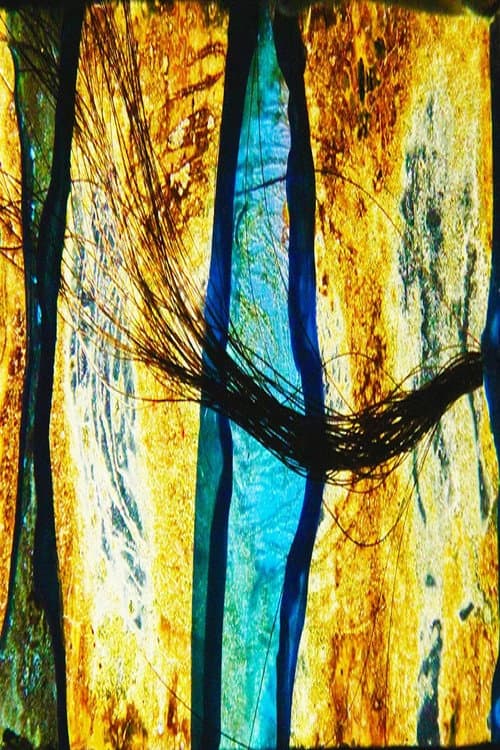
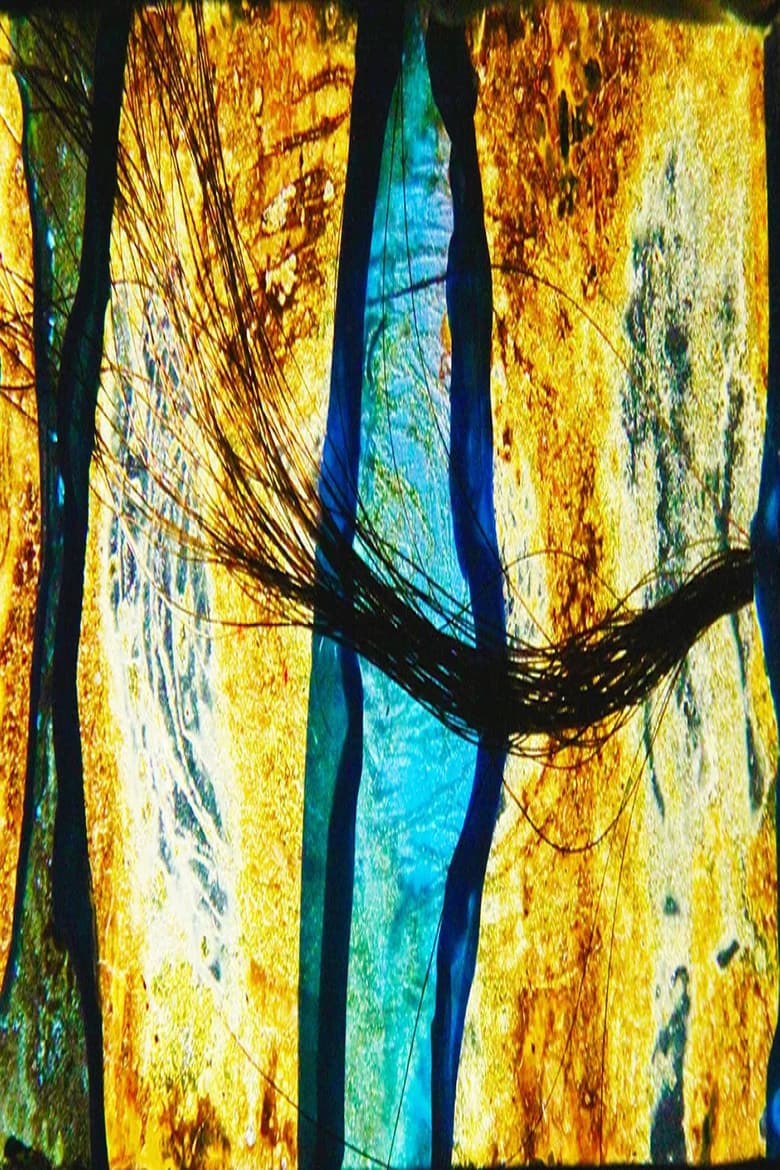
The narrative, such as it is, stems from a single philosophical concept: Socrates, in Plato’s Symposium, gets stuck outside the door of Agathon’s house, lost in a trance-like state. The Greeks called this “atopia,” a condition of being displaced, out of place, outside oneself - not alienated, but briefly unmoored from the self’s usual coordinates. Carrano interprets this not as a story about a philosopher, but as an aesthetic sensation. Rather than explain atopia through dialogue or plot, Atopia attempts to make you feel it by pairing Sollima’s live improvisation with a sequence of abstract images generated through direct film manipulation. Acid etches into the emulsion, creating jagged, organic blooms of color. Scratches carve white-hot lines across the frame. Abrasions wear down the surface until the image blooms into translucent, dreamlike layers. This is not digital effects work; it’s the physical material of cinema being tortured and caressed into new forms.
What you’ll experience in those five minutes is a synesthetic collision. The cello’s bow strokes seem to correspond to the drag of a tool across the negative. A high squeal from the strings lines up with a thin, white gouge in the image. The deep, resonant plucks of the cello mirror the sudden splash of chemical burns that open up pools of red or violet. The secret relationship between a musician and his instrument - the calluses, the pressure, the breath between notes - gets transposed directly onto the film medium. You’re not watching a representation of music; you’re watching the music’s physical trace, rendered in light and texture. Expect no characters, no dialogue, no narrative arc. Instead, Atopia is a sustained, five-minute crescendo of texture, rhythm, and color that builds to a final, almost ecstatic dissolution of the frame itself. It’s deliberately brief, because the state it captures is fleeting by definition - you step outside yourself, and then you step back in.
Why It’s Worth Watching
In an era where animation increasingly means clean CG renders and pixel-perfect worlds, Atopia is a bracingly tactile antithesis. Every scratch and stain is a gesture, a fingerprint of its maker’s hand. For viewers raised on streaming content that can be paused, skipped, and consumed distractedly, this short demands a different kind of attention - the kind you’d give a live performance. It’s a reminder that cinema, at its most basic, is light passing through material, and that this material can be as expressive as any actor’s face. The philosophical underpinning is not a pretentious garnish; it’s genuinely embedded in the film’s structure. You don’t need to know Plato to feel the sense of dislocation the film creates, but knowing a little bit gives you a framework for why the visuals feel so deliberately uneasy, so beautiful yet so unstable. Sollima’s score, which ranges from mournful drones to frantic, percussive bow work, is a masterclass in improvisational storytelling, and Carrano’s visuals match it beat for beat, creating a dialogue that is rare in short-form experimental work.
Is it for everyone? Absolutely not. Patience is required, and viewers accustomed to conventional narrative will find little to hold onto. But for those willing to surrender to the experience, Atopia offers a rare kind of purity: a film that is not about something, but is the something itself. It is an object that performs its own meaning. In five minutes, it will take you out of your seat, outside your usual frame of reference, and then set you down again - altered, slightly disoriented, and aware that you just witnessed a perfectly calibrated act of cinematic alchemy. That’s not a bad way to spend a Friday, especially when the alternative is yet another sequel. Check your local listings, plug in your headphones, and let yourself be momentarily atopic. You might not return entirely the same.