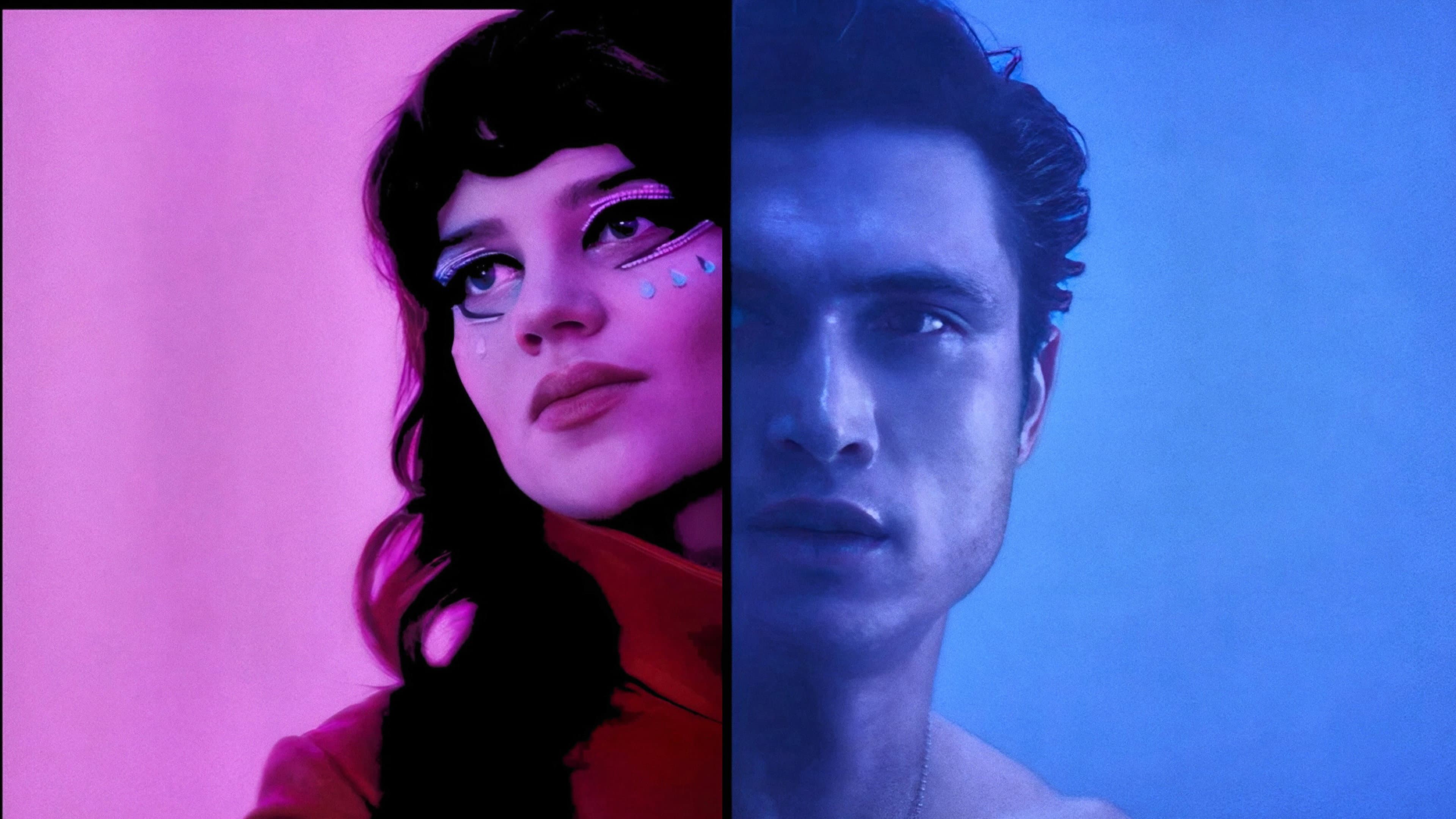
The harsh glare of critical sunlight has finally hit the neon-drenched concrete of Refn-land, and the results are, to put it mildly, scorched. When Her Private Hell premiered this past July, it arrived with the weight of expectation that only a director of Nicolas Winding Refn’s cult stature can command. Now, with the dust settled and the festival whispers turned into permanent digital scars - a 4.6 on IMDb, a 5.1 on TMDb - the question isn’t whether the film is good, but whether it was ever meant to be. It is a gorgeous, punishing paradox that leaves you feeling less like you’ve watched a movie and more like you’ve survived a sensory interrogation.
The premise is deceptively simple, almost B-movie pulp. A mysterious mist, thick and vaguely sentient, coils through a futuristic metropolis, displacing reality and unleashing an entity that is less a monster and more a philosophical migraine. Inside this chaos, Elle, played with a brittle, hollowed-out intensity by Sophie Thatcher, is on a quest for her missing father. Her path collides with Private K, portrayed by a stoic Charles Melton, who is undertaking his own harrowing odyssey to rescue his daughter from a very specific, very personal Hell. If that sounds like a lot of plot, it is - but Refn has never been interested in plot as a vehicle. He uses it as a clothesline upon which to hang dripping, saturated images.
The film opens with a geometry of light that feels like a fever dream of Los Angeles and Tokyo fused together. Refn’s signature style is intact: the oppressive symmetry, the long, uncomfortable takes that force you to stare into the void of a character’s soul, the soundtrack that throbs like a distressed heartbeat. Yet here, the style feels less like a signature and more like a straitjacket. The early scenes are mesmerizing - Thatcher, with her wide, searching eyes, walks through corridors of artificial light as the mist curls around her ankles like a curious pet. But as the runtime stretches past the 110-minute mark, the hypnotic rhythms begin to grate. The repetition that once felt meditative now feels like stalling.
The supporting cast is a rogues’ gallery of Refn-esque archetypes. Havana Rose Liu brings a cold, predatory elegance to Dominique, while the twin dynamic of Shioli Kutsuna and Aoi Yamada as Ms. T and Ms. S provides the film’s most unsettling, corporeal horror. Kristine Froseth’s Hunter is a spectral presence, and the veteran gravitas of Dougray Scott as Johnny Thunders (a name that screams Refn’s love of rock ‘n’ roll posturing) and Diego Calva’s Nico offer fleeting moments of grounding. But they are all pawns in a larger visual chess game. Everyone delivers exactly what is asked of them, but one gets the sense they are often acting against a green screen of existential dread rather than a tangible antagonist.
The narrative spine - the search for fathers and the rescue of daughters - is where the film attempts to find its emotional core. Thematically, Refn is digging into the idea of inherited trauma and the idea that Hell is not a place, but a genetic disposition. Elle’s journey is less about finding her dad and more about confronting the horror he left inside her. Private K’s odyssey, meanwhile, feels like a war film stripped of its politics, leaving only the primal fear of a parent who cannot protect their child. Unfortunately, the execution is often maddeningly obtuse. The entity, when it finally appears, is less a creature feature and more of a psychological projection - a shimmering, ugly distortion that feels lifted from a deleted scene of a more coherent movie.
Critics have been split, but the audience score is unambiguous. General viewers have balked at the film’s glacial pacing and its refusal to provide conventional scares. There is no jump-cut relief here; only the slow, creeping dread of a beautiful nightmare you can’t wake up from. The dialogue is sparse, often monosyllabic, asking the audience to read subtext in every twitch of Thatcher’s lip. For every viewer who sees this as a masterpiece of controlled atmosphere, there are two who see it as an exercise in pretentious tedium.
In a summer dominated by loud, disposable blockbusters, Her Private Hell stands as a defiant, ugly monument to directorial stubbornness. Refn has never cared about your comfort, but here, he seems to actively despise it. The film’s final act abandons narrative coherence altogether, dissolving into a symphony of light and sound that will either have you leaning forward in awe or checking your watch in despair. It is a movie that will be debated for years - not for its story, but for its sheer audacity.
Ultimately, Her Private Hell is a film for Refn completists and those who appreciate cinema as a tactile, punishing art form. If you demand logic, character arcs, or even a modicum of resolution, you will leave frustrated. But if you are willing to surrender to the image, to let the mist wash over you and accept that the search for a father is really a search for a self, there is a twisted, profound beauty buried in the chaos. It is a flawed, frustrating, and frequently brilliant failure - and for this director, that might just be the point.