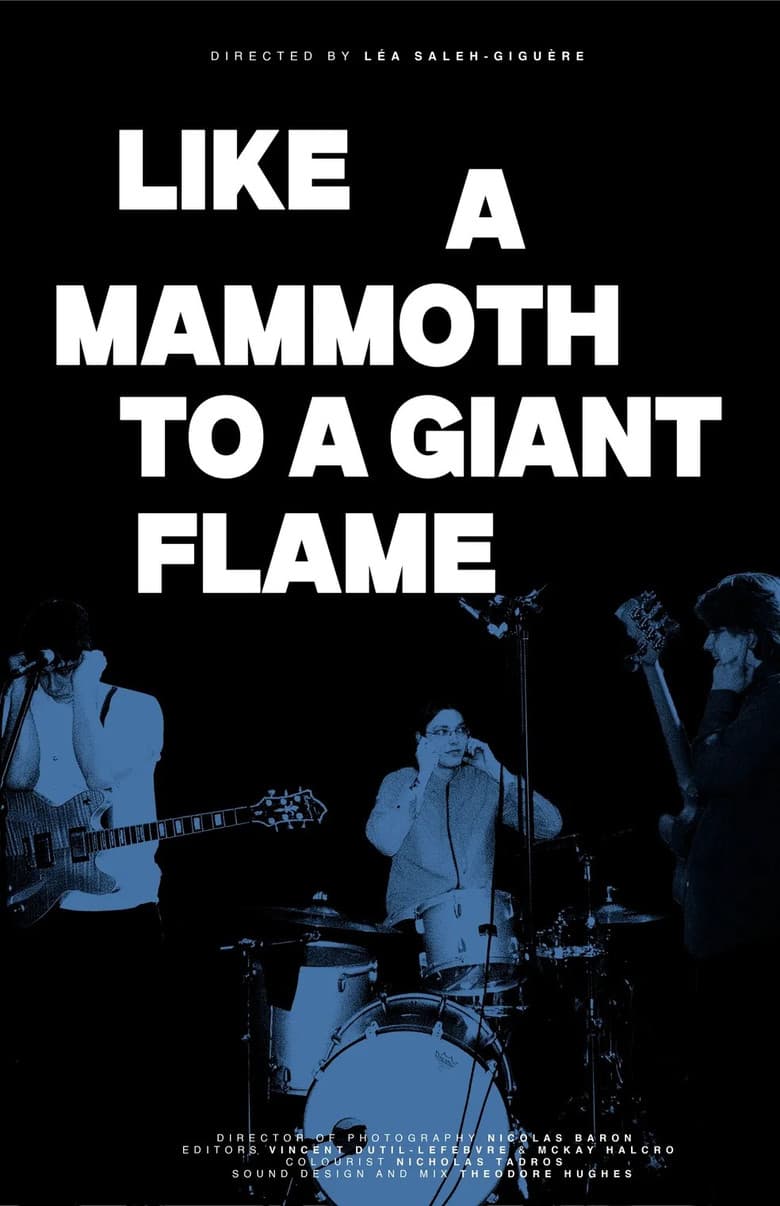
The calendar rarely aligns this perfectly with art. On Tuesday, August 11, 2026, the very day that marks the official release of Like a Mammoth to a Giant Flame, audiences will get a chance to experience something that feels less like a movie premiere and more like a séance. This is not a blockbuster. It is not even a standard-length feature. Clocking in at a brisk 45 minutes, this documentary/concert film from Montreal director Léa Saleh-Giguère is a compact, combustible artifact - a love letter to a band that has spent decades carving out a strange, woolly corner of the indie rock landscape. And it arrives just in time for a world that seems to have finally caught up with their particular brand of noise.
Release Date & Where to Watch
Coinciding with its world-premiere date of August 11, 2026, Like a Mammoth to a Giant Flame is bypassing the traditional festival gauntlet in favor of a direct-to-audience strategy. The film will be available exclusively via digital streaming platforms, including major VOD outlets and the band’s own website, starting at midnight Eastern Time. Given the sub-one-hour runtime, this is a perfect mid-week streaming choice - something you can watch in a single sitting with your full attention, the way a concert film deserves. There will be no theatrical roll-out, no IMAX engagement; this is an intimate, front-row experience meant for headphones and a dark room. However, a limited series of 35mm screening events is rumored for Montreal and Toronto later in the fall, though that remains unconfirmed. For now, set your alarms: this one drops like a sudden crescendo.
Cast & Crew
At the helm is Léa Saleh-Giguère, a filmmaker whose previous short-form work has been described as “ethnographic punk.” She brings a documentarian’s patience and a fan’s feverish devotion to the project. The subjects, naturally, are the three core members of Mellow Casualty, who appear as themselves with a raw, unvarnished authenticity. Francois Jolicoeur is the band’s founding guitarist and primary vocalist, a man whose stage presence is equal parts shaman and machine repairman. Ben Wood, on drums and electronics, provides the rhythmic spine that keeps the whole thing from floating into the void. And Christian Couper, the bassist and occasional second vocalist, anchors the low end with a melodic sensibility that defies the genre’s usual brutalism. Together, they form a trinity that has been making intentionally difficult, rewarding music since the late 2000s. The film credits no narrator, no talking-head historians - only the band and the roar of a live room.
Story & What to Expect
Do not walk into Like a Mammoth to a Giant Flame expecting a traditional behind-the-music retrospective. Saleh-Giguère has constructed something far more impressionistic. The film is built around a single, electrifying performance captured in a small, sweat-soaked venue in Montreal’s Plateau neighborhood. But it is not just a concert film. The director intercuts the live footage with fragmented, almost subliminal images: archival cassette tapes, grainy rehearsal-room video, and abstract close-ups of instrument cables and cracked amplifiers. There is no linear narrative about the band’s formation or their struggles with record labels. Instead, the film trusts that the music itself tells the story - a story about perseverance, entropy, and the strange beauty of making a sound that stubbornly refuses to be polished.
The title, a poetic metaphor for self-destructive momentum, is apt. The film captures a group of middle-aged musicians who have not softened with age. They play with the urgency of a herd running off a cliff, yet there is a controlled intelligence in the chaos. Expect long, unbroken shots of Jolicoeur’s face contorted in an almost painful concentration. Expect Ben Wood’s drumming to feel less like rhythm and more like a seismic event. Expect Christian Couper’s basslines to weave through the mix like a third, wiser voice. The 45-minute runtime is deliberate; it is the length of a perfect set, leaving you wanting more but feeling completely spent. The sound mix is intentionally raw, with bleed from the monitors and the audience’s shouts bleeding into the music, creating a claustrophobic, you-are-there immediacy.
Why It's Worth Watching
In an era where music documentaries are often sanitized, hagiographic epics that stretch to two-and-a-half hours to justify their streaming budgets, Like a Mammoth to a Giant Flame is a bracing antidote. It is a punk-rock haiku - brief, sharp, and devastating. The film’s power lies not in its revelations but in its reverence for the ineffable. It captures a band that has never chased commercial success, and in doing so, it offers something more valuable: a portrait of artistic integrity as a lived practice. Saleh-Giguère does not try to explain why Mellow Casualty matters; she simply puts you in the room and lets the volume do the argument.
For viewers unfamiliar with the band, this is an accessible entry point, but be warned: it is not easy listening. There are moments of feedback that might make you flinch. There are passages of near-silence before a cacophony explodes. But that is the point. The film is about the push and pull between creation and destruction, the tension that defines any worthwhile artistic endeavor. The band members, all in their late forties and early fifties, play with a physicality that belies their age, and the camera loves them for it. The TMDb rating currently sits at a blank zero, a testament to its untested status. But that will change quickly. On August 11, 2026, you have a choice: let the year’s noisy, tender, mammoth-sized heartbreak pass you by, or step into the flame. I know which one I’m choosing.