MOOSAP (2026) Movie Preview | Edsel Gasmen
Photo: TMDb
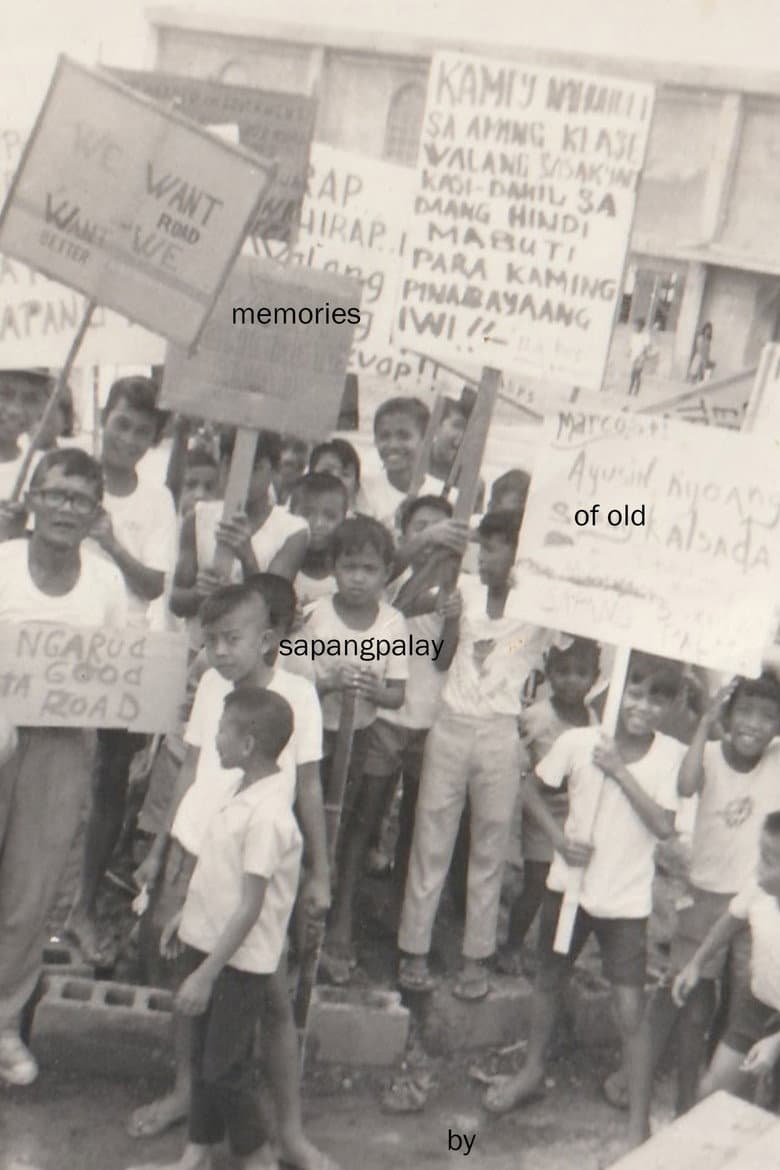
The experimental documentary short arriving on August 11, 2026, doesn’t just ask its audience to watch history - it forces a reckoning with how little of it we’ve actually learned. Clocking in at a brisk five minutes, MOOSAP (Memories of Old Sapang Palay) is a dense, deliberately fractured piece of cinema that refuses to offer easy catharsis. It’s less a history lesson and more a mirror held up to the present, and it’s arriving with almost no fanfare, which feels oddly appropriate for a film about people who were never given a platform in the first place.
Release Date & Where to Watch
MOOSAP hits select screens and streaming platforms on Tuesday, August 11, 2026. Given its experimental nature and five-minute runtime, don’t expect a wide theatrical roll-out. Instead, the film will be available on major VOD platforms, including iTunes, Amazon Prime Video, and Google Play, with a likely emphasis on film festival circuits and museum programs in the months following. For those in the Philippines, where the film’s historical resonance is most acute, local streaming services and cultural centers are expected to carry it as part of curated short-film showcases. The lack of a major studio behind it means discovery will be word-of-mouth, but that’s precisely the kind of organic engagement this project seems designed to spark. Check your preferred digital storefront on the release date, and be prepared to watch it twice - once for the images, once for the gaps between them.
Cast & Crew
The film is the singular vision of director Edsel Gasmen, whose previous work in experimental media has often circled themes of memory, urban decay, and institutional neglect. Gasmen operates here as both director and primary archivist, weaving together 1970s footage with newly shot material that echoes those older images. There is no traditional cast listed; this is not a narrative with actors playing roles. Instead, the “performers” are the anonymous settlers of Sapang Palay - their faces, their homes, their worn hands - captured in grainy archival footage. The contemporary segments feature unnamed subjects as well, their identities deliberately obscured to underscore the cyclical nature of displacement. Gasmen’s crew is minimal, but the sound design deserves early commendation; the film layers audio of old protest marches, the shuffle of feet on asphalt, and the hollow wind of empty promises into a single, oppressive soundscape. This is a work of editing and juxtaposition rather than performance, and Gasmen’s hand is evident in every jarring cut.
Story & What to Expect
The premise is deceptively simple: in the 1970s, families were relocated from Manila to Sapang Palay, a resettlement area advertised as a fresh start. What they found instead was severe neglect - no adequate housing, no water, no livelihood. Just dirt, dust, and the distance from the city that was supposed to care for them. Eventually, facing starvation and disease, they walked - marched for days - to Malacañang Palace to demand the basic necessities that had been promised. That march is the film’s emotional core, but Gasmen refuses to present it as a triumphant moment. Instead, he cuts between those archival images and modern footage of forced evictions, informal settler demolitions, and new families being shuttled to new peripheries. The parallels are stark, almost unbearable.
The film’s structure is non-linear and associative. A shot of a mother cradling a child in a makeshift shack in 1974 dissolves into a similar image from a demolition site in 2024. A politician’s speech about “development” from the Marcos era is layered over audio of a contemporary official using nearly identical language. This is not a film that explains its thesis; it presents the evidence and lets the viewer sit with the discomfort. Expect no voice-over narration, no title cards with dates. The only textual elements are the intertitles that form the acronym itself: “Memories of Old Sapang Palay,” which appear briefly before giving way to more images. The central question the film poses - how long must a community walk before their voices are truly heard? - is never answered, because the film suggests the answer is still unwritten. The closing sequence, a long, unbroken shot of a road stretching toward a hazy horizon, leaves the viewer suspended in that uncertainty.
Why It's Worth Watching
Five minutes is both a gift and a challenge. It’s enough time to make a profound impression, but it demands the viewer bring their own context. If you’re unfamiliar with the history of Sapang Palay, this film will not hold your hand. It presupposes a certain awareness of Philippine political history, and its power lies in the recognition of how those specific wounds have been left to fester.
But for those willing to engage, MOOSAP is a masterclass in compression. Every frame is purposeful. The experimental format allows Gasmen to bypass the conventions of historical documentary - no talking heads, no authoritative narration, no neat conclusion. Instead, we get the raw texture of memory: footage that looks like it’s been dug from a vault, scratched and faded, rubbing against crisp digital images that feel almost too clean. That visual friction is the point. We are meant to see the scars.
The film also carries a moral urgency that’s hard to shake. It’s a rebuke to the idea that “the past is the past.” By drawing a direct line from the Sapang Palay settlers’ march to the ongoing displacement of urban poor communities across the Philippines today, Gasmen argues that the machine of neglect is still very much running. The film’s brevity feels less like a limitation and more like a strategic choice. It’s a sharp, short jab intended to leave a lasting bruise, not a lengthy lecture.
If there’s any weakness, it’s that the runtime may frustrate those seeking fuller context. But that’s also its strength. MOOSAP isn’t meant to be a comprehensive history; it’s a poem, a protest, a ghost story. It speaks to the cyclical nature of broken promises with a clarity that a two-hour epic might dilute. For anyone interested in the intersection of experimental aesthetics and social justice, this is essential viewing. Go in with an open mind and a willingness to sit with the uncomfortable. And perhaps, after the credits roll - if you can call them that - consider what it means to walk, and how far you’d go for the bare minimum.