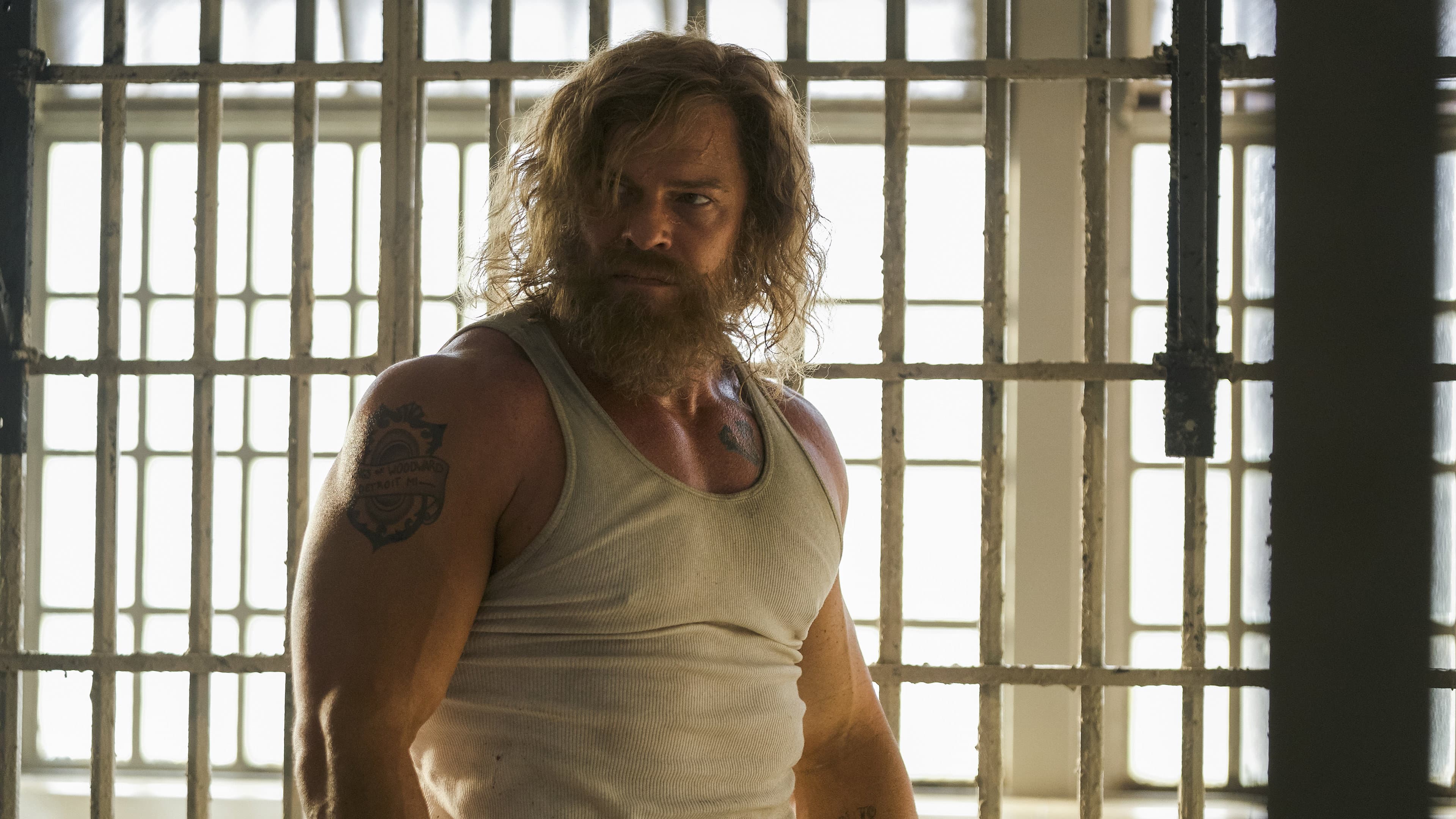
DETROIT - The muscle cars are jacked up on cinder blocks, the factories are coughing their last, and the Motown sound has given way to the growl of an engine that won’t start. This is the 1970s Detroit of “Motor City,” a revenge thriller that doesn’t so much arrive on screen as it lurches out of a grease-stained garage, fists first. Directed by Potsy Ponciroli, the film roared into theaters on July 23, and it’s already sparking a curious divide: audiences seem to love it, critics are less sure, and the gap between those two numbers is as wide as Woodward Avenue.
At the center of this asphalt opera is Alan Ritchson, the hulking star of “Reacher,” trading his military precision for a scruffier, more wounded brand of violence. He plays John Miller, a man who makes the mistake of falling for Sophia (Shailene Woodley), the kind of woman who glows even in the city’s perpetual smog. The problem? She belongs, in a loose and dangerous sense, to Reynolds (Ben Foster), a local gangster whose smile never quite reaches his eyes. Miller’s punishment for the affair isn’t a beating - it’s a frame-up, a prison cell, and the slow, grinding knowledge that his girl has been taken and his life has been dismantled. The film’s setup is as old as the genre itself, but Ponciroli doesn’t treat it as a relic. He treats it as a fuse.
For 104 minutes, “Motor City” burns that fuse with a deliberate, almost tactile patience. Ritchson doesn’t play Miller as a righteous avenger; he plays him as a man hollowed out by loss, running on fumes and blind instinct. When he finally breaks out and returns to the city, the film shifts from somber tragedy to something leaner and meaner. The revenge plot is a simple thread, but Ponciroli pulls it taut, weaving in a supporting cast that feels less like characters and more like obstacles waiting to be dismantled. Lionel Boyce brings a quiet menace to Youngblood, while Amar Chadha-Patel’s Singh and the duo of Dominic Bogart and Mister Fitzgerald - credited as Porthos and Aramis, a nod to the musket-bearing wit of the genre’s past - round out a rogues’ gallery that keeps the body count honest.
The film’s real engine, however, is Ben Foster. As Reynolds, he gives the kind of performance that makes you check the exits. He’s silk and shrapnel, a man who runs his empire on charm and terror in equal measure. His scenes with Ritchson crackle with tension; you get the sense that both actors know they’re in a dance where the music could stop at any second. Shailene Woodley, meanwhile, has the thankless task of playing the object of desire and betrayal, but she elevates Sophia into something more than a prize. She’s a survivor in her own right, caught between two men who see her as a possession, and Woodley’s quiet defiance gives the film a moral weight it might otherwise lack.
Ponciroli, who cut his teeth on Westerns like “Old Henry,” brings a dusty fatalism to the Motor City. He shoots Detroit like a ghost town, all burnt-out storefronts and empty lots, and he’s not afraid to let a scene breathe. There are long silences between the gunfire, moments where the only sound is the hum of a distant freeway or the shuffle of boots on concrete. It’s a stylistic choice that rewards patience, but it also explains the critical grumbling. The IMDb score sits at a middling 5.8, a number that suggests impatience with the film’s slower, more brooding stretches. The TMDb score, however, is a much warmer 7.089, indicating that audiences who showed up for a Saturday night thrill ride found exactly what they were looking for: a gritty, unapologetic b-movie with a big-budget heart.
That disconnect is nothing new for the genre. Revenge thrillers are judged by their body count and their pacing, but “Motor City” is interested in what happens before the blood starts to spill. It asks a simple question - how much can a man lose before he stops being a man? - and then answers it with a series of increasingly desperate decisions. Ritchson carries that weight well; he’s a physical performer, sure, but his best moments here are the quiet ones, the flickers of grief that cross his face when he thinks no one is watching.
The film isn’t subtle. Its symbols are as on-the-nose as a broken taillight, and its dialogue occasionally tips into hard-boiled cliché. But there’s a sincerity to it that’s hard to fake. “Motor City” wants to be a throwback, a grimy, unglamorous cousin to the slick actioners of today. It’s a film that believes in the catharsis of a well-aimed punch and the redemptive power of just getting even. In a summer dominated by superheroes and CGI spectacles, that’s a risky bet. But for those willing to trade flash for grit, and polish for grease, “Motor City” is a ride worth taking - even if the road is a little rough.