The sky over the Front Range is a hard, unyielding blue, the kind that feels less like a promise and more like a dare. It’s August 26, 2026, and inside a cavernous Colorado hangar, a man named Hig is doing what he does best: waiting. With Ridley Scott’s The Dog Stars now in theaters, the wait is over for audiences who have been hungry for a post-apocalyptic tale that doesn’t just trade in ash and despair, but in the stubborn, quiet pulse of hope.
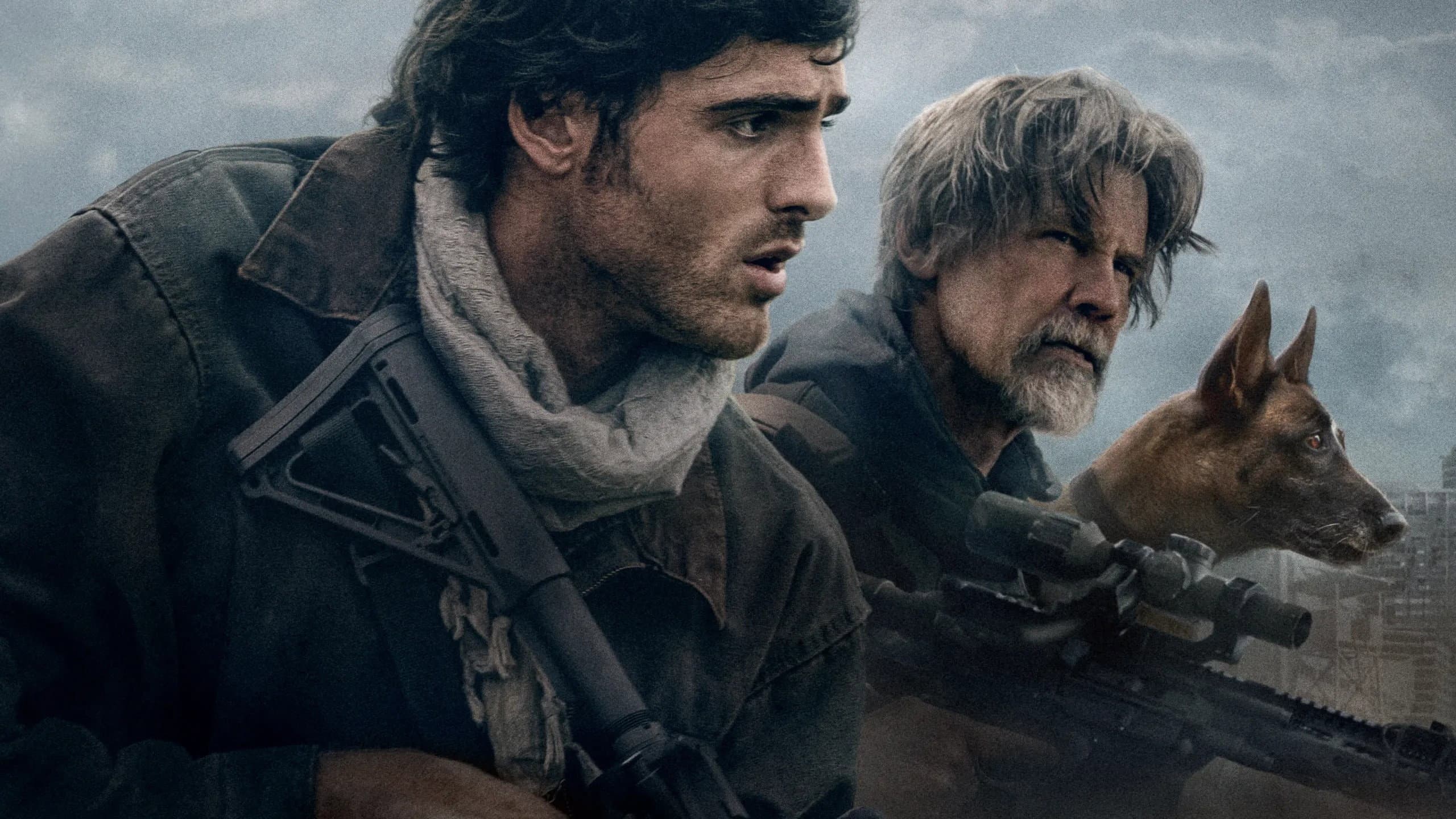
Adapted from Peter Heller’s acclaimed novel, the film finds Jacob Elordi shedding his teen-idol skin completely to inhabit Hig, a pilot who has survived a global pandemic that has left the world’s population a ghost of itself. He lives a lonesome existence in that hangar, his only constant companions being his faithful dog, Jasper, and a dour, heavily armed survivalist named Bangley, played with grim relish by Josh Brolin. It’s a strange, prickly cohabitation - two men who don’t particularly like each other, but who recognize the utility in not being alone.
The film’s engine kicks in when Hig, flying his beat-up Cessna on a scavenging run, picks up a faint, fleeting transmission on the radio. It’s a voice, a snippet of song, a crackle of human origin that shouldn’t exist anymore. For a man who has spent years convincing himself that the world has shrunk to the size of his runway, this spectral signal is an unbearable lure. It sparks a desperate hunt for the provenance of the sound, a flight into the unknown that feels less like a mission and more like a pilgrimage.
Scott, at 88, proves he is still the master of scale and intimacy, often in the same frame. He shoots the vast Colorado wilderness with the epic sweep of The Martian, but lingers on the small, tactile details - the worn leather of a flight jacket, the worn-out belly of a dog who just wants to chase a stick, the slightly off-kilter cadence of two lonely men sharing a can of beans. This is a thriller without a clear villain, a sci-fi film with no aliens or lasers. Its terror is existential, its action sequences grounded in the desperate pragmatism of survival.
Elordi delivers a performance of quiet transformation. His Hig is a man who has gone soft around the edges to protect a core of decency, and the actor captures that vulnerability with a soulful, almost bewildered gaze. Brolin is his perfect foil - a coiled spring of paranoia and doctrine. Their scenes together crackle with the weary, mutual distrust of two radically different species sharing a shrinking habitat. Margaret Qualley enters the narrative later as Cima, a woman who may or may not be the source of that radio voice, bringing with her a jolt of unpredictable energy that threatens to upend the fragile status quo. The supporting cast, including Guy Pearce, Allison Janney, and Benedict Wong, adds texture and gravity to a world that has been reduced to its essentials.
What makes The Dog Stars land with such force is its refusal to wallow. Yes, the world has ended, but Scott is more interested in what begins in the aftermath. The film is a meditation on grief, but also on the stubborn reflex to keep going - to fly, to hunt, to protect a dog, to answer an anonymous voice simply because it means you are not the last one left. The pacing is deliberate, almost laconic, allowing the tension to build not in frantic bursts, but in the quiet hum of the Cessna’s engine and the silent scanning of the horizon.
The TMDb rating of 7.569/10 suggests that early audiences are responding to this blend of rugged adventure and melancholic beauty. The film sits comfortably in the genre spaces of Science Fiction, Adventure, and Thriller, but it defies easy categorization. It is a survival story that argues, at its core, that survival is pointless without something to live for. For Hig, that something is a dog, a chance, and a voice on the wind.
In a summer of spectacle and noise, The Dog Stars dare to whisper. It’s a grown-up, contemplative blockbuster that trusts its audience to sit with silence, to find meaning in a glance between a man and his canine best friend, and to understand that the most dangerous journey is often the one we take inside ourselves. Ridley Scott hasn’t just directed a movie; he’s engineered an experience that lingers long after the landing gear is up and the screen goes dark. This is American cinema at its most reflective, and a welcome reminder that even at the end of the world, stories are what keep us human.


