The Alaskan bush does not care about rank, training, or the fact that you've survived a plane crash. It only cares about whether you can find food, shelter, and warmth before the next storm rolls in. That brutal indifference is the beating pulse of "Heart of the Beast," David Ayer's new survival thriller that hit theaters yesterday and is already generating serious awards-season chatter.
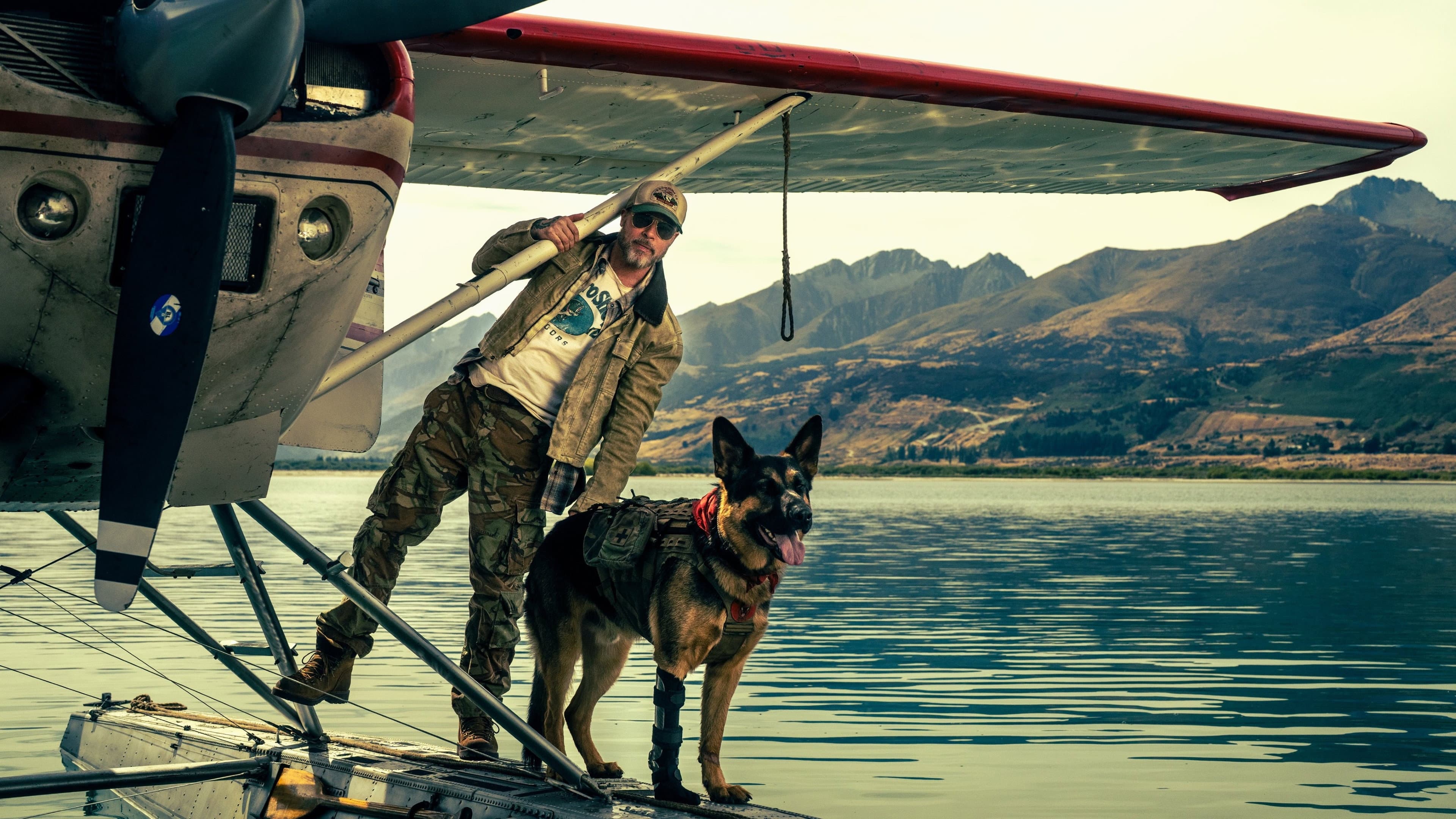
The film reunites Ayer with Brad Pitt for the first time since 2014's "Fury," and the director has traded the claustrophobic confines of a tank for something even more unforgiving: the vast, frozen emptiness of the Alaskan wilderness. Pitt stars as James Belmont, a Special Forces officer whose transport plane goes down in the middle of nowhere. His only companion in the wreckage is Odin, his combat dog. What follows is 101 minutes of pure, unrelenting tension.
It's a premise that could have easily devolved into a standard man-versus-nature slog. Instead, Ayer and his team have crafted something far more intimate. The relationship between Belmont and Odin isn't just a plot device; it's the emotional core of the entire film. And credit for that belongs, in large part, to a four-legged performer named Uber, who plays Odin with a soulfulness that will catch you off guard.
"People keep asking me if it was hard working with a dog," Ayer said in a recent interview. "I tell them it was the easiest part of the whole shoot. Uber understood the assignment. There were days when Brad would look at that dog and you could see every ounce of fatigue, every flicker of hope, every moment of despair. The dog gave it right back to him. That's not training. That's chemistry."
Pitt, for his part, delivers what may be the most physically demanding performance of his career. There's no movie-star glamour here. Belmont is battered, bleeding, and perpetually on the verge of collapse. Pitt plays him with a quiet, almost stoic determination that feels earned rather than performed. This is a man who has spent his life in combat zones, but nothing in his training prepared him for this.
The supporting cast is sparse but effective. J.K. Simmons appears in flashback sequences as Walter Boone, Belmont's grizzled former commanding officer, offering cryptic advice that echoes through the film's quieter moments. Anna Lambe makes a striking impression in a limited but crucial role that I won't spoil here. Her scenes with Pitt crackle with an unspoken tension that adds another layer to an already complex narrative.
Cinematographer Roman Vasyanov, who previously collaborated with Ayer on "Suicide Squad" and "The Tax Collector," deserves enormous credit for capturing the landscape's terrifying beauty. The film was shot on location in British Columbia and Alaska, and you can feel every gust of wind, every crack of ice, every long night spent huddled in makeshift shelter. There's no green screen trickery here. What you see is what the cast and crew endured.
The screenplay, penned by Ayer and newcomer Michael Reyes, wisely avoids exposition dumps. We learn about Belmont through his actions, not through lengthy monologues about his past. The dialogue is sparse, often reduced to grunts and hand signals. When characters do speak, every word carries weight.
Where the film truly excels, though, is in its pacing. Ayer understands that survival isn't a series of dramatic set pieces; it's a grind. A slow, exhausting, day-by-day grind punctuated by moments of sheer terror. A river crossing. A wolf pack. A fall through thin ice. Each sequence builds on the last, ratcheting up the tension until you're not sure how much more you can take. And then, just when you think you've got a handle on things, the film shifts gears.
Early audiences have responded enthusiastically. The film currently sits at an 8.8 out of 10 on TMDb, a rating that suggests word-of-mouth is going to be a major factor in its box office trajectory. That's not surprising. This is the kind of movie that people tell their friends about. It's visceral. It's emotional. It's the kind of film that reminds you why you fell in love with movies in the first place.
"Heart of the Beast" is not an easy watch. It's grueling, heartbreaking, and occasionally difficult to sit through. But it's also a reminder that cinema can still surprise us. That a story about a man and his dog can carry more weight than a dozen CGI spectacle. That David Ayer, for all his ups and downs, remains one of the most interesting filmmakers working today.
Go see it. Bring tissues. And maybe a jacket.