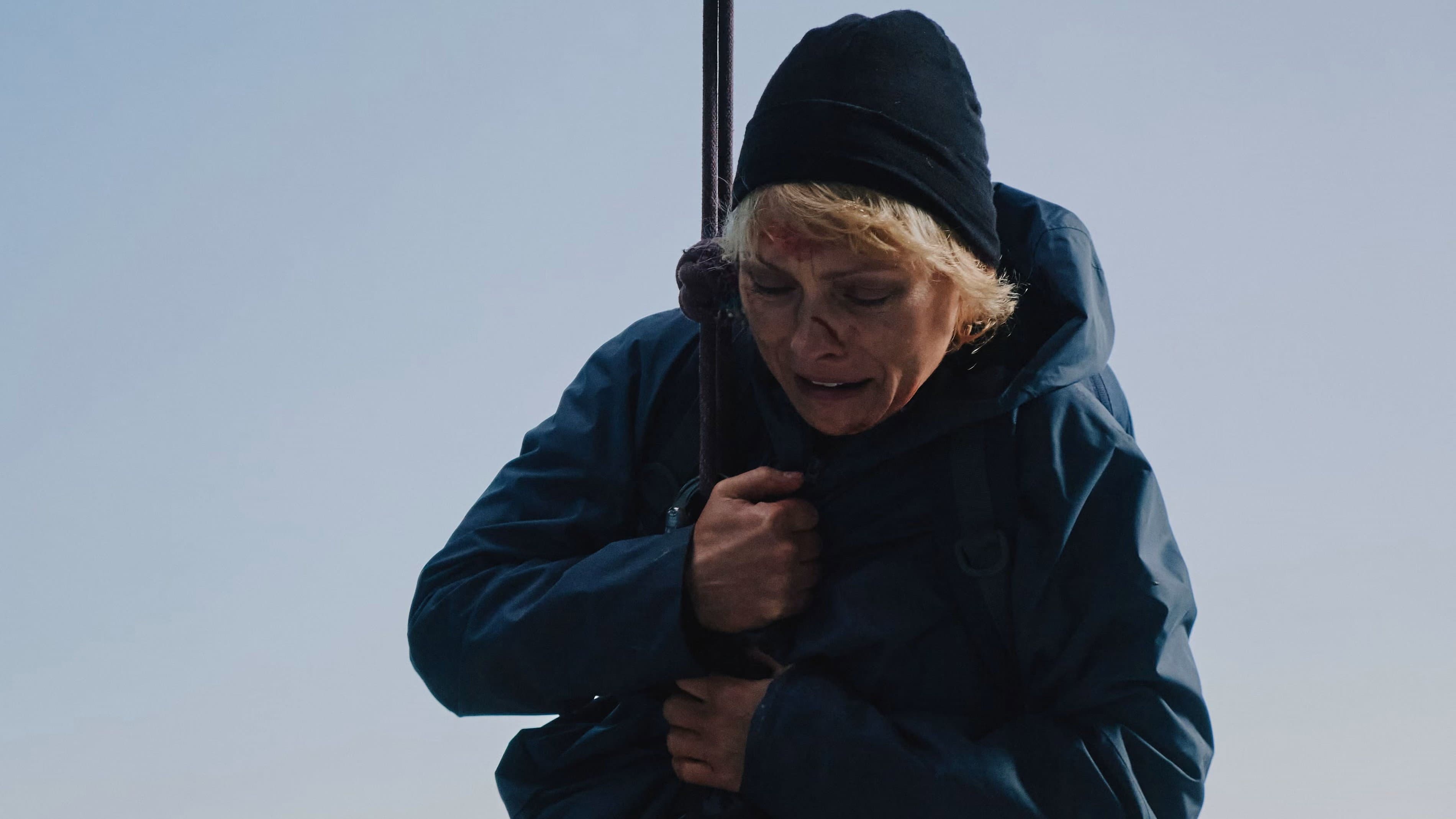
The documentary landscape often yields its most potent stories in the tightest running times, and “After the Line” arrives today as a crisp, focused counterweight to bloated feature-length profiles. Clocking in at just 11 minutes, this portrait of cyclist Logan Maclean doesn’t have time for preamble or padding. It cuts straight to the bone, offering a concentrated look at what drives an athlete long after the cheering stops and the finish line fades in the rearview mirror. With a release date that lands exactly on July 29, 2026, the film is already out for audiences hungry for something honest, compact, and unvarnished.
Release Date & Where to Watch
“After the Line” officially premieres today, July 29, 2026. Given its short-form nature, the documentary is likely to find its way to audiences through a mix of digital platforms, festival screenings, and perhaps a spot on a sports-oriented streaming service. While the distributor has not been widely announced, the film’s 11-minute runtime makes it an ideal candidate for inclusion in documentary shorts programs or as supplementary content on cycling-centric channels. Check local listings for any premiere events, or keep an eye on the director’s social channels for direct links. For a film this brief and targeted, the best bet is often to search streaming platforms under new documentary releases. As of today, it is officially out in the world.
Cast & Crew
At the helm is director Ben Fitzhugh, a filmmaker whose previous work has tended toward intimate, vérité-style projects that capture individuals in moments of physical and mental strain. With “After the Line,” Fitzhugh turns his lens entirely on one subject: Logan Maclean. Maclean is both the film’s star and its sole on-screen presence, making his performance - or rather, his unguarded real-life experience - the entire engine of the piece. There is no supporting cast, no narrator, no talking-head experts. The casting is a deliberate reduction: one man, his bike, his memories, and the road. It’s a bold choice for a documentary, and it places enormous weight on Maclean’s ability to carry the narrative through action and silence alone. Fitzhugh’s credits suggest he understands that trust between director and subject is the real currency of a project this lean.
Story & What to Expect
“After the Line” does not chronicle Logan Maclean’s most famous victory or a dramatic comeback from injury. Instead, it picks up in the quiet aftermath - the days and weeks that follow a major race, the kind of race that defines a career but leaves an athlete wondering what comes next. The title itself carries a double meaning: the literal finish line of a competitive event, and the metaphorical line between who Maclean was as a competitor and who he is becoming in a landscape that no longer revolves around a single finish. The documentary uses Maclean’s own reflections, captured during training rides and quiet moments at home, to explore the psychology of endurance sport when there is no public clock ticking.
Expect long, almost meditative shots of Maclean riding alone on rural roads, his breath steady, his eyes fixed ahead. There is no dramatic soundtrack to pump up tension; the sound design leans on wind, tires on asphalt, and the occasional voiceover from Maclean, speaking in a tone that feels more like a private journal entry than a prepared interview. Fitzhugh avoids the typical sports-doc beats - no archival race footage, no slow-motion montages of past glory. The focus remains stubbornly on the present, on the small rituals that keep an athlete tethered to the sport when the crowds have gone home. If there is a narrative arc, it is internal: the negotiation between memory and forward motion, between an identity built on competition and the quiet reality of life after the big day.
Why It’s Worth Watching
In an era where documentary features routinely stretch past 90 minutes to justify their presence on streaming platforms, “After the Line” is a refreshing act of discipline. Its 11-minute runtime is not a limitation but a deliberate structure - a constraint that forces the filmmaker and subject to choose only what matters. There is no filler, no elongated B-roll of sunsets, no padding with second interviews. Every second earns its place.
For fans of cycling, the film offers an unromantic, ground-level view of what it means to live with the sport when the podium is no longer the goal. For viewers who appreciate documentary craft, Fitzhugh’s restraint is instructive: he trusts the viewer to read the fatigue in Maclean’s eyes and the stubborn contentment in his pedaling. The TMDb rating currently sits at 0/10, which is not a critique but simply the result of no votes yet - meaning this is a clean slate, a film waiting to be discovered and judged by its audience rather than by hype.
But the real reason to watch is the honesty of the piece. “After the Line” does not pretend that athletic achievement is all glory. It acknowledges the loneliness of the long-distance ride, the way a finish line can feel like an ending rather than a triumph. And in doing so, it turns a very short film into something that lingers far longer than its 11 minutes. For anyone who has ever finished something important and wondered, “What now?” - this documentary is an unexpected, quietly resonant answer.