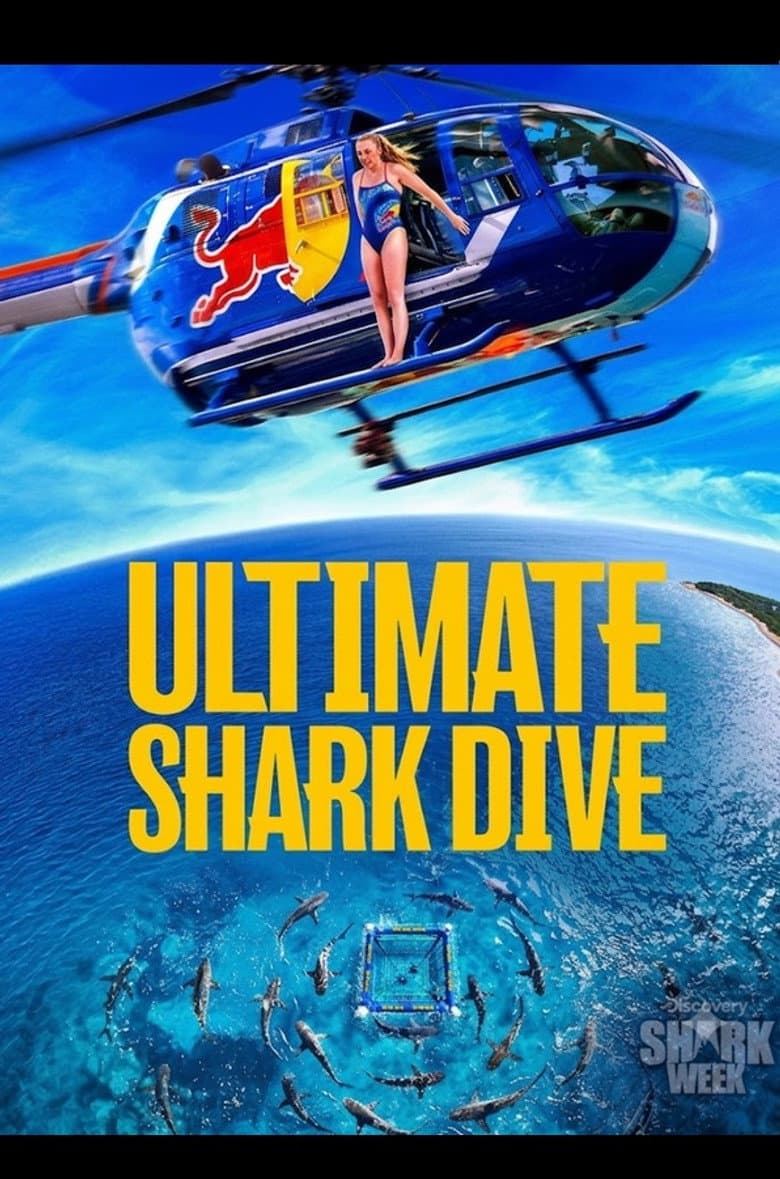
It’s a rare day when a film premieres that requires a disclaimer before the opening credits: “No sharks were harmed - but the same cannot be said for the audience’s heart rate.” That’s the promise of Ultimate Shark Dive, a 42-minute adrenaline spike that lands today, July 30, 2026, and dares viewers to watch through their fingers. In what’s being billed as a world first, professional cliff diver Molly Carlson attempts a 50-foot plunge from a hovering helicopter directly into a floating cage surrounded by a full-blown shark feeding frenzy. The result is less a documentary and more a high-wire act captured in real time - no green screen, no stunt double, just a woman, a cage, and dozens of very hungry apex predators.
Release Date & Where to Watch
Ultimate Shark Dive releases today, July 30, 2026, and is available primarily through digital on-demand platforms. At this writing, the film has secured a multi-platform streaming deal covering Amazon Prime Video, Apple TV, Vudu, and Google Play, with select screenings in IMAX theaters in major markets such as Los Angeles, New York, and Miami. Given its brief runtime - 42 minutes, just shy of a standard television slot - it’s an ideal pick for a movie night that doesn’t require a three-hour commitment. For those who prefer the big screen, check local listings; the limited theatrical run is expected to hold for at least one week, possibly extending if the buzz justifies it. As with most independent action-nature hybrids, early demand may push additional showtimes, so fans of both extreme sports and marine biology should act quickly.
Cast & Crew
The sole credited cast member is Molly Carlson, playing herself - which, in this case, means performing a stunt that most professional stunt coordinators would call a hard pass. Carlson is no stranger to vertical terror: the Canadian-born athlete holds multiple Red Bull Cliff Diving World Series titles and has thrown herself off platforms as high as 72 feet, but this dive presents a far more complicated equation. The helicopter adds rotor wash, downdrafts, and a moving exit point, while the cage below floats at the mercy of ocean currents. The sharks - predominantly bull sharks and great whites, according to production notes - are anything but passive observers.
Behind the camera, the film’s direction remains uncredited publicly at this time. It’s known that the production team includes experienced underwater cinematographers who have worked on Shark Week specials and nature documentaries for the BBC and National Geographic. The cinematography crew faced the unusual challenge of capturing a vertical descent from an aerial platform into a cage that is itself submerged - a logistics puzzle that required multiple drone operators, a separate support vessel with a crane-mounted camera, and divers with housing rigs positioned at varying depths. No director of photography is listed in official materials, but the footage that has been teased suggests a clean, visceral style that lets the action speak for itself. Additionally, marine biologists were on site to monitor shark behavior and ensure no artificial feeding methods endangered the animals or Carlson.
Story & What to Expect
The narrative structure is deceptively simple: a single, continuous attempt over the course of one day in open ocean off the coast of South Africa, chosen for its reliable population of large sharks. The film opens with Carlson preparing on a support boat - suiting up, checking the cage’s lock mechanism, and discussing the variables with her safety team. There is no manufactured drama; the tension comes from the sheer impossibility of the task. The cage is twenty feet across, floating on the surface, with a gaping top entry that Carlson must hit cleanly. On the water, a crew has already begun chumming, drawing sharks into a tight, swirling vortex of fins and teeth. The helicopter pilot must hold a precise hover at 50 feet while rotating to account for wind changes. Carlson must leap at the exact moment the cage is directly beneath her, drop through the entry, and secure the lid before the sharks, already in a feeding state, can investigate.
The dive itself, when it arrives, is a masterclass in controlled danger. Underwater footage captures the moment of impact - Carlson hits the water at roughly 30 miles per hour, sinks into the cage, and immediately begins working the latch as sharks ram the bars. The water goes opaque with chum, then clears, revealing the silvery shapes circling inches away. Here the film reveals its most surprising quality: silence. The underwater sequences are scored only by the muffled roar of bubbles and the clang of metal. It’s an intimate portrait of one human inside a very small space surrounded by creatures that have not read the script.
Interspersed with the dive footage are brief interviews with Carlson, who speaks with the measured confidence of someone who has calmly calculated every risk. She acknowledges the operation’s margin for error: “If I miss the cage by a foot, I’m in open water with sharks in a feeding pattern. That’s not a place you want to be.” She also discusses the psychological game of standing on a helicopter skid, watching the frenzy below, and choosing to step off anyway. The film doesn’t pretend the stunt is anything but reckless - it is that rarest of modern documentaries, one that admits its subject might not survive the final act.
Why It’s Worth Watching
Ultimate Shark Dive earns its place in the crowded landscape of shark-related programming by doing something genuinely new. We’ve seen free divers with sharks. We’ve seen cage diving from boats. We’ve even seen sharks jump into boats. But a 50-foot helicopter dive into a feeding frenzy is a feat that combines extreme sport, animal behavior, and live-action risk in a way that hasn’t been attempted before on film. The 42-minute runtime is a virtue rather than a limitation: the film wastes no time on filler, cutting straight to the objective and building to a single, breathtaking payoff.
There’s also a quiet commentary here about how we relate to apex predators. Carlson isn’t hunting them or trying to touch them - she’s dropping into their world, briefly, on their terms. The sharks are not villains; they are the environment. The film treats them with respect, showing their power without demonizing them. For viewers who have grown weary of Sharknado sequels and CGI-heavy creature features, this project offers the real thing: a human being making a choice that most of us would never consider, captured without special effects or dramatic manipulation. It’s pure, terrifying, and surprisingly moving.
Will Ultimate Shark Dive become a classic of the genre? That remains to be seen - its unrated status (the TMDb rating sits at 0/10, a placeholder for the moment) means early reviews and audience reactions will determine its shelf life. But for now, it’s a bold, singular experiment in what a short-form nonfiction film can achieve. If you have 42 minutes to spare, and a strong stomach, you’ll find it’s one of the most honest portraits of human nerve released this year. Just don’t watch it right before a beach trip.