The Ozark wilderness has long been a favored backdrop for stories about people who stray where they shouldn't. Few, however, have strayed into territory quite as sticky as the one awaiting the congregation at the center of "Don't Move," a survival horror thriller that has been quietly generating word of mouth since its September 11 release.
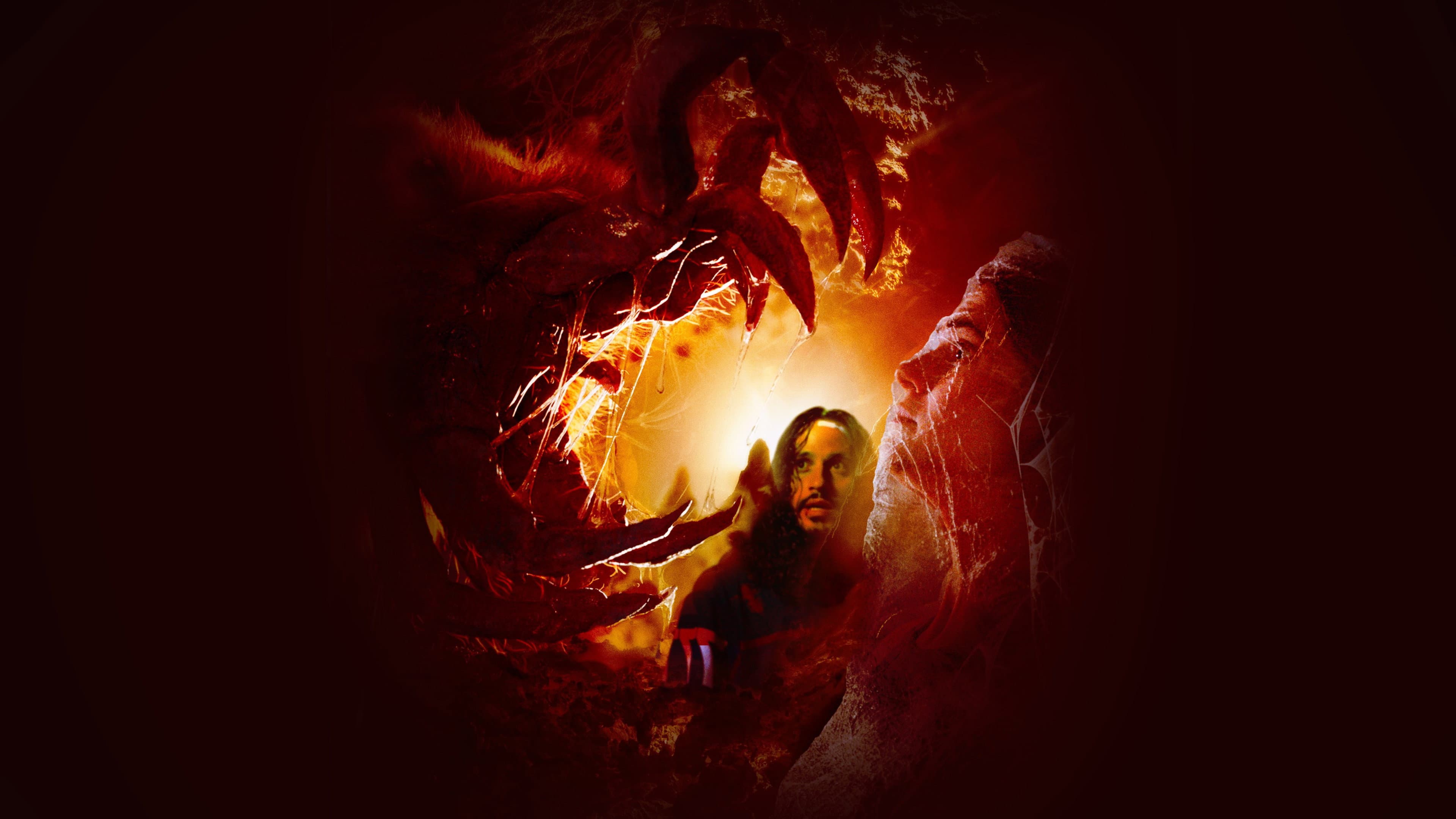
Directed by Maclain Nelson, the film follows a church group on its annual retreat. When the members wander off the beaten path into a remote stretch of the Ozarks, they find themselves in a part of the forest that seems to have been waiting for them. One by one, they are picked off. Suspicion immediately lands on Ricky Vargas, the group's resident troublemaker, played by Russ. Ricky fits the profile everyone has already written for him: the guy who pushes buttons, tests boundaries, and never met an authority figure he couldn't irritate. But the screenplay has a nastier trick up its sleeve. The killer isn't Ricky. It's something far older and far worse - a prehistoric arachnid, nesting deep in the woods inside a labyrinth of webs, an apex predator that hunts not by sight but by vibration. Every footstep is a dinner bell.
That premise gives "Don't Move" its title and its central engine of dread. The rules of the film are brutally simple: stand still and live, or run and die. It's a constraint that turns ordinary panic into a kind of torture, since the human instinct to flee is exactly what dooms you. Nelson leans into the claustrophobia of it, staging sequences in which the characters must suppress every reflex that survival normally demands. The title stops being a marketing hook and becomes an existential instruction.
At the center of the chaos is Megan Forrester, played by Lyndsy Fonseca, who arrives at the retreat with her husband Mike, played by Matt Biedel. As the body count rises and the group's suspicions curdle into infighting, Megan becomes the de facto leader of the survivors - not because she asked for the job, but because she's the only one still thinking clearly. Fonseca, a genre veteran with deep roots in television, plays Megan with a controlled steadiness that contrasts sharply against the hysteria building around her. The film's real question isn't whether anyone survives. It's whether Megan can hold together a group that is already fracturing from within.
The supporting ensemble gives the film its texture. Tom Cavanagh, an actor whose warmth usually reads as reassurance, plays Pastor Rizzo, the spiritual anchor of the retreat, with an undercurrent of something less certain. Hunter King plays his daughter Emma, and Joseph Lee Anderson rounds out the group as Ryan Stark. Rob Riggle appears as Paul DeLuca, and Brian Quinn plays Ranger Wright - the man whose warnings, in hindsight, take on a darker weight. The banter among the congregation in the early going is loose enough that the film's descent into terror lands harder than it might otherwise. These are people with histories, petty grievances, and inside jokes. That's what makes them worth mourning.
Nelson, working from a script that keeps its creature largely in shadow and its tension cranked high, understands that the most effective monster is the one you can't quite see. The arachnid is enormous, ancient, and patient, but the film's best moments come from what the characters hear - a rustle, a hum through strands of silk, the terrible silence after someone stops moving. Cinematographer and sound team deserve credit for building a forest that feels actively malevolent, all snapping twigs and quivering filaments.
The film's commercial performance has been modest but durable, and the audience response has been divided in the way that horror often is. Its IMDb rating sits at a healthy 6.7 out of 10, while the TMDb aggregate lands at 5.385. That gap suggests a movie that plays well with the genre faithful while leaving casual viewers more ambivalent - a familiar pattern for creature features that prioritize tension over explanation. At 94 minutes, "Don't Move" doesn't overstay its welcome, and its efficiency is part of its appeal. It sets a rule, enforces it mercilessly, and gets out before the premise wears thin.
What lingers after the credits is the film's grim arithmetic. The church group came to the Ozarks seeking renewal, community, and a weekend away from the noise of ordinary life. What they found instead was a reminder that nature has its own rules, and none of them are negotiable. "Don't Move" isn't interested in moralizing about faith or hubris, and it doesn't need to. It simply drops its characters into the web and watches them decide how badly they want to live. For audiences with the stomach for it, that's a proposition plenty frightening on its own.