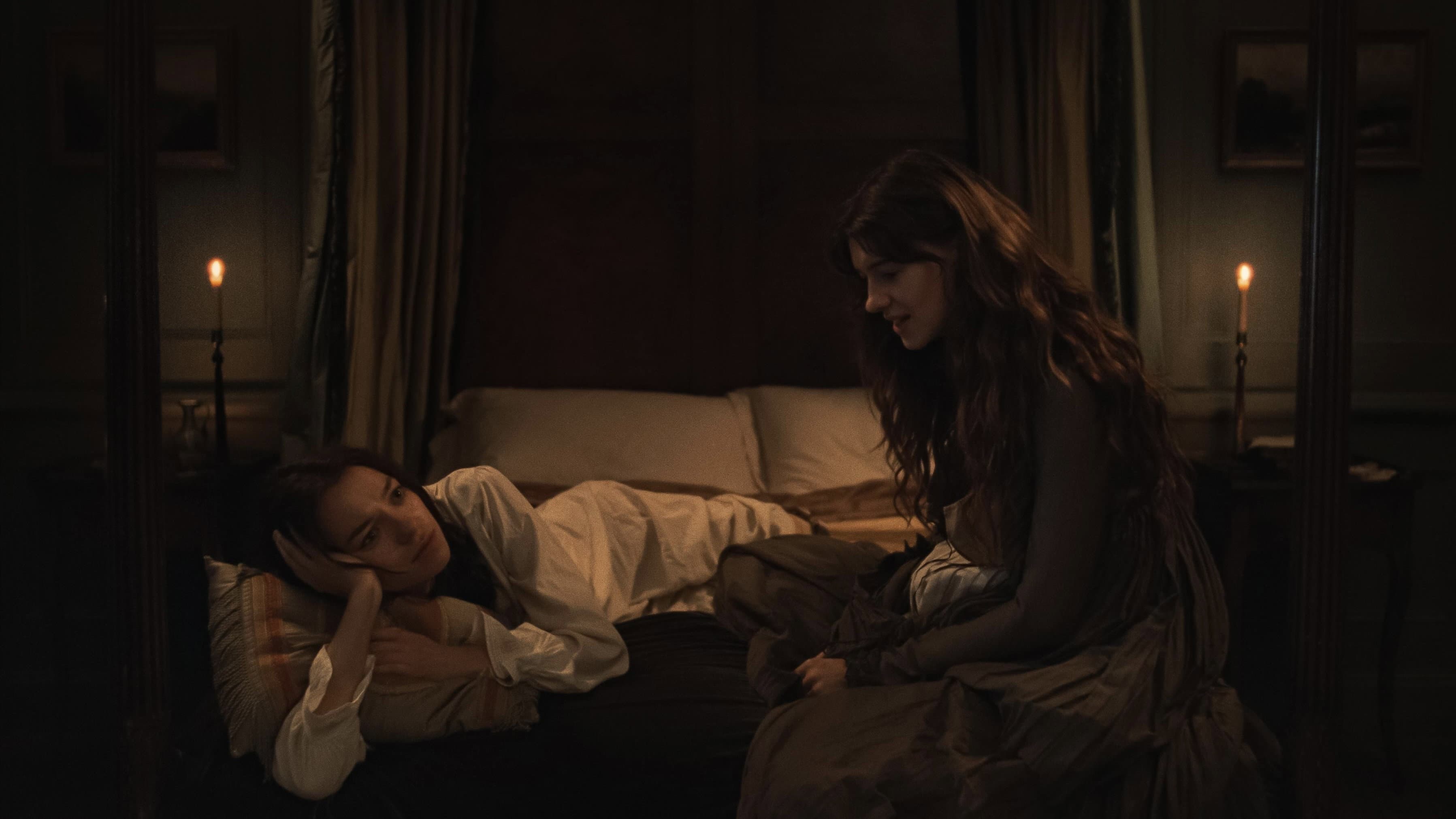
Georgia Oakley does not waste a single frame of Sense and Sensibility announcing itself as important. Her adaptation arrives fourteen years after the last major screen version of Jane Austen's first published novel, and rather than bow to that legacy, Oakley treats the Dashwood story as something urgent and unsettled, which may be the smartest decision anyone has made with this material in a generation.
At 132 minutes, the film moves with an unhurried confidence that matches its source. The story remains what it has always been: Elinor and Marianne Dashwood, sisters of wildly different temperaments, navigating the collapse of their family's fortune and the treacherous terrain of courtship. Elinor, played by Daisy Edgar-Jones, is the older sister who feels everything and displays nothing. Marianne, played by Esmé Creed-Miles, is the younger one who feels everything and displays all of it. The novel's central tension - sense against sensibility, restraint against abandon - has always been deceptively simple, and Oakley lets it breathe rather than pushing it toward tidy resolution.
Edgar-Jones makes a convincing case for Elinor as the more quietly radical figure. Her performance is built on hesitation and self-interruption, on the small physical adjustments a person makes when they have decided that their own feelings are an inconvenience to everyone around them. It's a performance that demands patience from the audience, and it earns that patience back. Creed-Miles, meanwhile, gives Marianne a wildness that never tips into caricature. Her romanticism feels earned and dangerous rather than childish, which makes the character's eventual reckoning with disappointment land far harder than it might have.
The supporting cast reads like a small embarrassment of riches. Caitríona Balfe's Mrs. Dashwood is watchful and frayed, a mother trying to hold her family's dignity together while mourning the life they've lost. Fiona Shaw turns Mrs. Jennings into something more than the comic busybody the role can become - there's genuine warmth under the relentless chatter, and a suggestion that her cheerfulness is itself a kind of armor. George MacKay brings a particular kind of awkward decency to Edward Ferrars, a man who is never quite the romantic hero the narrative might want him to be, and that's precisely the point. Frank Dillane's John Willoughby has the smoothness of someone who has never had to examine his own motives too closely, which works. And Herbert Nordrum's Colonel Brandon is perhaps the film's most surprising note: a man whose steadiness could read as dull, played here with a visible interior life that makes him quietly compelling rather than simply patient.
Oakley, whose previous work has focused on stories about women navigating restrictive systems, brings a contemporary sensitivity to the material without ever making it feel anachronistic. The social machinery of Austen's world - entailments, inheritances, the way financial ruin is also romantic ruin - is treated with a sharp clarity that helps modern audiences understand exactly what's at stake when Elinor masks her feelings or when Marianne gives hers away too freely. The film's wit is dry and well-timed, but its emotional register is more complex than the description "charming" alone might suggest.
What's most impressive is what Oakley resists. There's no effort to modernize the language, no anachronistic gestures toward present-day sensibilities, no winking asides to the audience. Instead, the film trusts that the story's concerns - the cost of emotional honesty, the cruelty of circumstance, the way sisters often understand each other better than they want to - remain stubbornly relevant. The result is something that feels less like a museum piece and more like a chamber drama where the stakes are always personal and often devastating.
With a TMDb rating of 7.435 that suggests early audiences are responding to the film's particular balancing act, Sense and Sensibility arrives at an interesting moment for period dramas. The genre has spent years oscillating between ironic distance and lush escapism, and Oakley's film inarguably lands in neither camp. It's a movie that takes its characters' feelings seriously without taking itself too seriously, which is a harder trick to pull off than it sounds.
Whether audiences accustomed to more overtly dramatic Austen adaptations will embrace its restraint is an open question. But there's little doubt that Oakley has made something with real integrity - a film that understands that the most interesting conflicts are often the ones that happen quietly, between two people in a drawing room, neither of whom is saying what they actually mean.