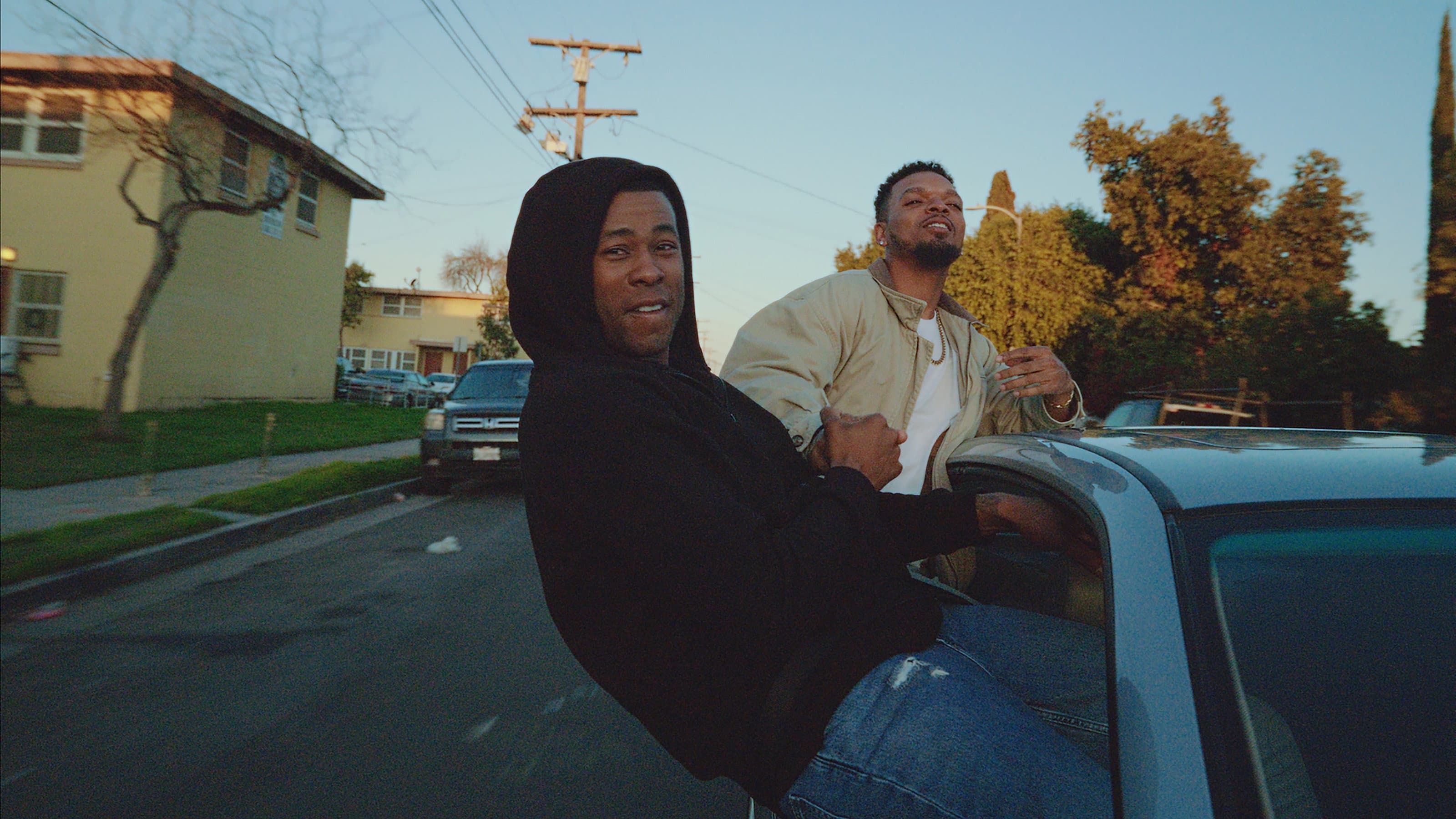
Walter Thompson-Hernández has spent his career listening to the spaces between people - the pauses, the half-sentences, the things fathers and sons mean but never quite say. With If I Go Will They Miss Me, his first narrative feature, that listening becomes cinema. The film, released September 11, is an eighty-nine-minute drama that trades exposition for atmosphere, following a father and son through a South Los Angeles summer that feels both specific and mythic.
At its center are two performances that seem to breathe in tandem. Bodhi Dell plays Lil Ant, a boy whose imagination is his most reliable companion, and J. Alphonse Nicholson is Big Ant, his father, a man whose love arrives in fits and starts, often buried beneath the weight of his own unfinished business. The film refuses to reduce either of them to type. Big Ant is not a cautionary tale, and Lil Ant is not simply a symbol of lost innocence. They are, instead, two people trying to find each other across a distance that neither fully understands.
Danielle Brooks brings a grounded warmth to Lozita, a presence whose steadiness throws the fractures between father and son into relief. The supporting ensemble - Kelvin Adekunle as 2-Moon Friend, Bre-Z as Jenn, Myles Bullock as JJ, J.J. Boone as Julia Rose, and Zaria Kelley as Acacia - fills out a world that feels lived in rather than assembled. These are not background figures. They are the neighbors, friends, and elders who make up the texture of a community that holds its people even when they struggle to hold themselves.
Thompson-Hernández, whose documentary work has long explored intimacy and identity, brings a documentarian's patience to fiction. The camera lingers. Scenes unfold at their own pace. There is a confidence here in silence, in the unspoken, that distinguishes the film from more conventional family dramas. The result is something closer to poetry than plot - a quality reflected in the film's glowing critical reception. An IMDb rating of 7.8 and a TMDb score of 6.8 suggest audiences are finding their way into its rhythms, even if its approach is not for everyone.
What makes If I Go Will They Miss Me resonate is its insistence on grace. The film does not pretend that love solves everything. It suggests something more modest and more radical: that love, even when clumsy and incomplete, can transform. Big Ant and Lil Ant do not achieve a tidy reconciliation. They achieve moments - brief, fragile, real - where something shifts. A look held a beat too long. A hand on a shoulder. A question finally asked.
The title itself carries the film's central ache. It is the question a child asks when he cannot tell whether he matters, and it is the question a father cannot answer because he is still asking it about himself. Thompson-Hernández understands that this question is not unique to any one family, but he roots it so deeply in the particularities of Black fatherhood, of South Los Angeles, of a boy's imagination as both refuge and bridge, that it becomes universal without ever feeling generic.
If I Go Will They Miss Me arrives at a moment when Hollywood is increasingly willing to fund stories that resist easy categorization. It is a drama, yes, but it moves like a tone poem. It has the emotional weight of a memoir and the visual language of a dream. Thompson-Hernández has made a film that trusts its audience to sit with discomfort, to find beauty in fracture, to believe that healing is not a destination but a practice.
In a landscape of films that shout, this one whispers. And in that whisper, it says something worth hearing.