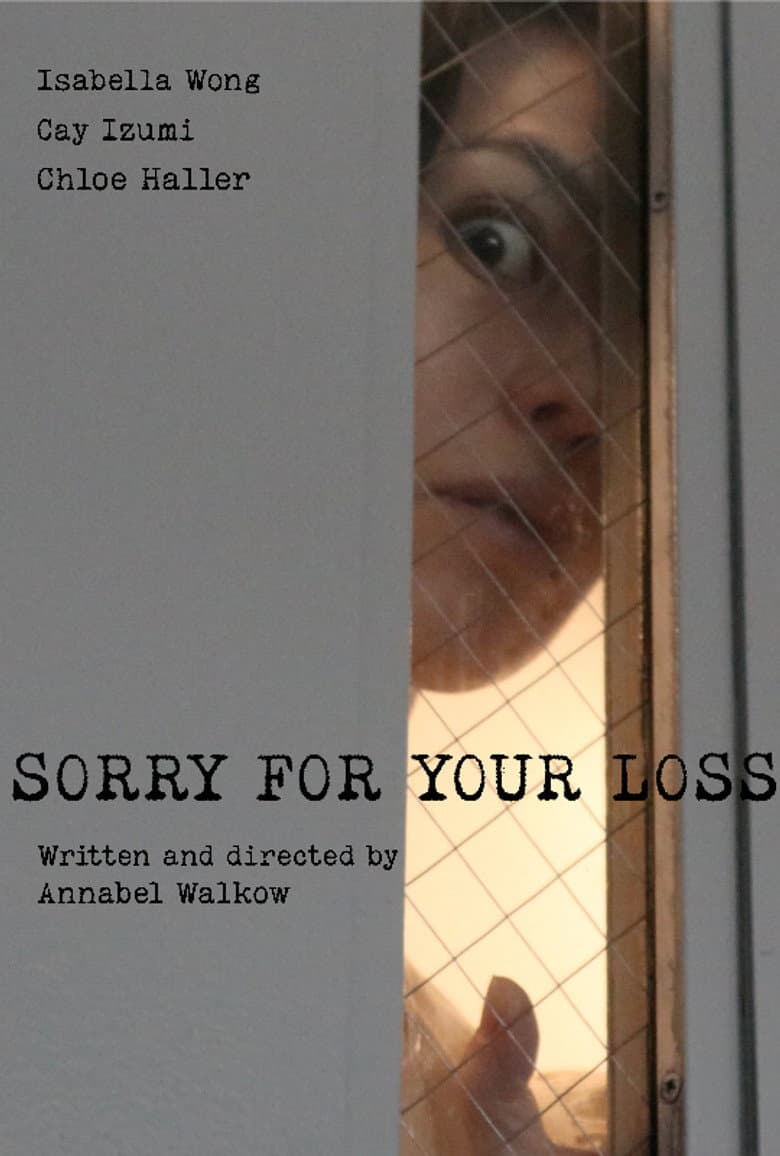
I'm Sorry for Your Loss: Movie Preview
Get a sneak peek at 'I'm Sorry for Your Loss', a poignant drama exploring grief and healing. Read our preview for cast, plot, and release details.
The industry tends to treat grief as a clean, three-act arc - denial, anger, acceptance - but anyone who has actually lost someone knows the process is messier, darker, and occasionally terrifying. I’m Sorry for Your Loss, which arrives in theaters and on VOD today, July 28, 2026, wants to explore that mess in the language of horror. Directed by rising genre talent Annabel Walkow and anchored by a gripping lead performance from Isabella Wong, the film promises to be less a weepy meditation on sorrow and more a slow-burn nightmare about what happens when the dead refuse to stay dead.
Release Date & Where to Watch
I’m Sorry for Your Loss opens nationwide today. Audiences can catch it in select theaters - primarily arthouse and independent venues - as well as on major video-on-demand platforms including Amazon Prime Video, Apple TV, and Vudu. Given its modest release footprint, fans of smart, character-driven horror will want to check local listings early; the film is currently only scheduled for a limited theatrical run, though a wider digital rollout is expected in the coming weeks. No runtime has been officially listed, but early festival word suggests a tight, under-100-minute cut that respects the audience’s patience. Walkow and her team have kept the runtime under wraps, perhaps to preserve the slow unspooling of dread that defines the picture.
Cast & Crew
The ensemble is small but sharply chosen. Isabella Wong, previously seen in the indie drama Half-Empty Rooms, leads as Jasmine, a teenager reeling from the sudden and unexplained death of her mother. Wong carries nearly every scene, and early reviews have praised her ability to shift between numb grief and raw terror without ever losing the character’s grounded reality. Cay Izumi plays Jasmine’s mother - credited simply as “Jasmine’s mom” in the metadata - and her presence is felt even when she isn’t on screen. Izumi, a veteran of theater and short films, lends a haunting warmth to the few flashback moments we get.
Chloe Haller takes the role of Matilda, Jasmine’s best friend, who tries to pull her back toward normalcy while something invisible pulls her further away. Haller, best known for her comedic work in the web series Dorm Life, reveals a surprisingly sturdy dramatic side here. William Bonet rounds out the main cast as the school teacher - a small but pivotal figure who may know more about the circumstances of the mother’s death than he lets on. Bonet’s quiet intensity has already generated buzz; one festival programmer called his performance “the unsettling glue that holds the mystery together.”
Behind the camera, director Annabel Walkow brings a background in experimental shorts and documentary-style horror. Her 2023 short The Still Hours won Best Supernatural Short at the Salem Horror Fest, and I’m Sorry for Your Loss marks her feature debut. Walkow has described the film as “a ghost story that doesn’t need a ghost,” hinting that the haunting may be more psychological than literal - though the trailer certainly doesn’t rule out a few good scares.
Story & What to Expect
The official logline is deceptively simple: after Jasmine’s mother dies mysteriously, something begins to haunt her. What that “something” is remains the film’s central question, and Walkow doesn’t rush to answer it. The story unfolds in the quiet days after the funeral, as Jasmine tries to maintain routines - school, piano practice, visits to her mother’s empty room - while odd phenomena accumulate. Lights flicker without cause, objects shift positions overnight, and Jasmine begins to see a figure in the periphery of her vision that no one else can confirm.
Unlike many modern horror films that lean on jump scares or elaborate mythology, I’m Sorry for Your Loss keeps its supernatural elements ambiguous and deeply personal. Is the presence a manifestation of Jasmine’s unprocessed grief? A restless spirit seeking closure? Or does it have something to do with the school teacher’s cryptic warnings about “unfinished business”? Walkow has refused to offer definitive answers in interviews, saying only that “the worst haunting is the one you blame yourself for.” That line - translated from a French interview earlier this year - captures the film’s emotional core.
Expect a mood that swings from quiet domestic dread to moments of startling violence, but always filtered through Jasmine’s perspective. Wong’s performance anchors the film in a recognizable reality, so when the shadows start to move, they feel like a violation of the natural order rather than a cheap trick. The mystery is layered: the mother’s death was ruled accidental, but there are hints of a more troubling truth - perhaps involving a hidden illness, a family secret, or something the school teacher knows but won’t say.
Why It’s Worth Watching
For viewers tired of horror that treats grief as a plot device rather than an actual emotional state, I’m Sorry for Your Loss offers something rarer: a slow, patient meditation on loss wrapped in a genuinely unnerving mystery. The film’s power lies not in its scares - though there are several that will linger - but in its refusal to offer easy catharsis. Walkow trusts the audience to sit with discomfort, to wonder alongside Jasmine whether the haunting is real or a symptom of her shattered psyche.
Isabella Wong is a revelation. She gives Jasmine a haunted stillness that makes every small sound or flicker of light feel monumental. Cay Izumi’s limited screen time is used with precision, and Chloe Haller provides a warm counterbalance that keeps the film from sinking entirely into despair. William Bonet’s school teacher adds a layer of intellectual unease - the kind of character who speaks in riddles and makes you feel like you’re missing something crucial.
With a TMDb rating of zero so far - because the film literally just premiered today - I’m Sorry for Your Loss has yet to be judged by the broader audience. But early whispers from critics who caught advance screenings suggest a quiet contender for one of the year’s most thoughtful horror debuts. If you value atmosphere over gore, mystery over exposition, and performances that don’t stop haunting you after the credits roll, this is a release worth seeking out. Just don’t expect to leave feeling better.