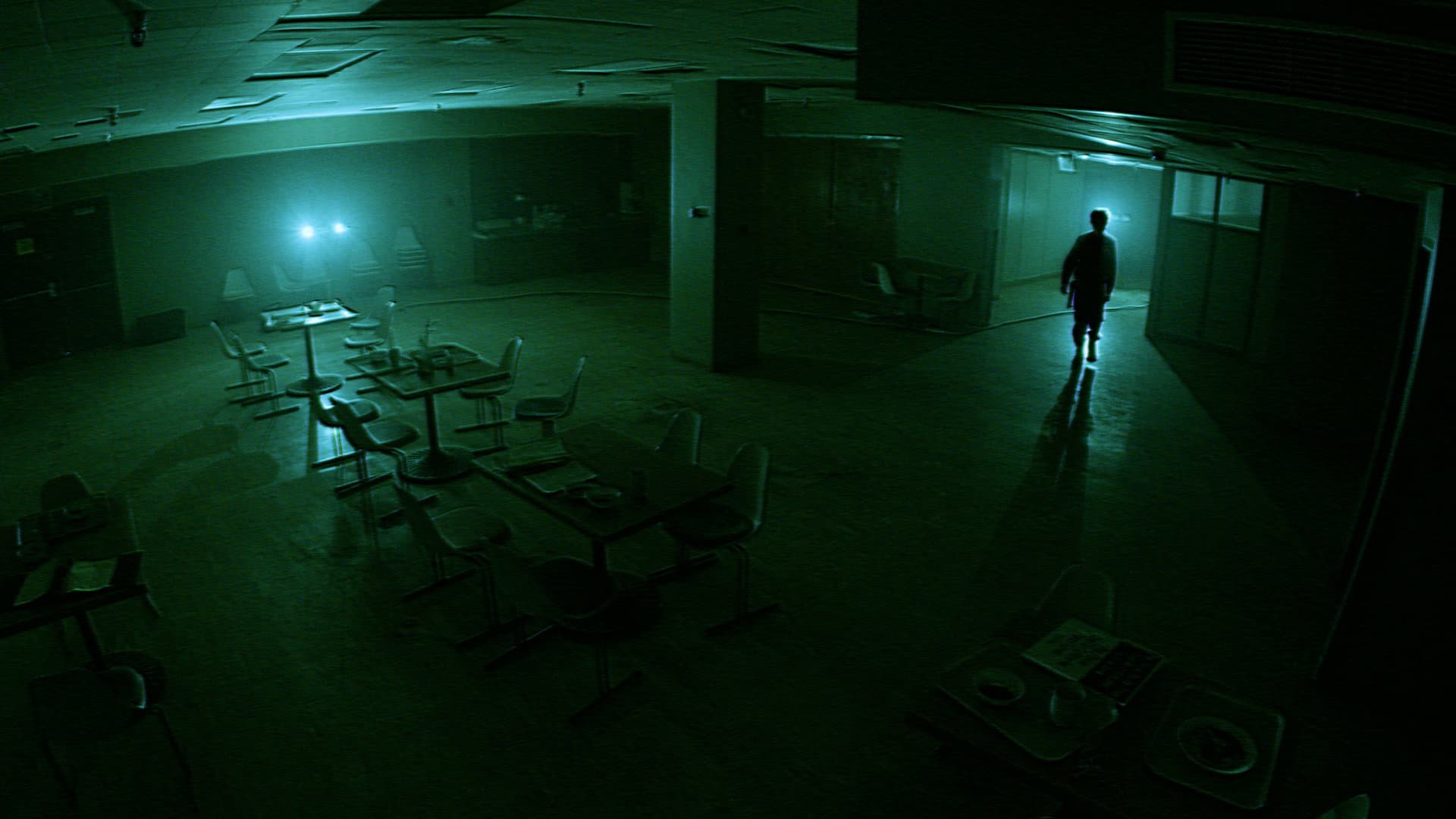
On the night of March 14, 2023, a security guard named Edward reported for his first shift at the long-shuttered psych hospital on the city's north side. He never clocked out. His body was never recovered. What investigators did recover - nine hours of bodycam footage, most of it corrupted, some of it not - has sat in an evidence locker for three years, fueling speculation among paranormal researchers, skeptics, and at least two separate wrongful-death suits. Now that footage forms the spine of Infirmary, the new horror feature from director Nicholas Pineda that opened in theaters on October 2 and has spent its first two weekends doing steady business on the strength of a single, much-shared clip: sixty-eight seconds of a hallway that appears to be a hallway until it very much isn't.
Pineda, who spent a decade cutting trailers before moving into features, has said in interviews that he was drawn to the case not because he believes it, but because he doesn't know what to believe. That ambivalence is the engine of the film. Infirmary runs a lean 85 minutes, and almost all of it unfolds in real time through the camera mounted on Edward's chest. Paul Syre plays him as a man running on coffee and quiet desperation - overqualified for the job, underpaid for the life - and his mostly wordless performance is the movie's center of gravity. We watch him sign in, joke with a dispatcher we only hear, and walk the same corridor four times before the fifth walk goes somewhere else.
Pineda has assembled a small, precise supporting cast, and the film uses them sparingly, as voices on radios or figures glimpsed at the far end of a hallway: Mark Anthony Williams as Lester, the veteran guard who trained Edward for exactly one hour and then left him alone; Danielle Kennedy as Ms. Downey, a hospital administrator whose phone calls grow steadily less concerned with Edward's well-being; and Corinna Wagner-Smith as a vagrant whose appearances thread the line between trespasser and something older. None of them are in the film for long. All of them leave a mark.
Genre audiences have met this premise before, and Infirmary knows it. What distinguishes the film is its refusal to cheat. Every scare in the movie can, in theory, be explained by the building's decay - a door that swings because the foundation has shifted, a light that flickers because the wiring is sixty years old. Pineda stages each incident so that the rational explanation arrives roughly one beat after the terror does, and the gap between those two moments is where the film lives. Horror has always been a genre of suggestion, but there is craft in making an audience argue with itself in real time, and Infirmary does it better than most of its recent multiplex competition.
The film's technical team deserves real credit for this. The bodycam conceit could easily have become a gimmick - shaky frames, muddy audio, an excuse for incoherence - but the cinematography is disciplined, almost austere, and the sound design does a lot of quiet work. The film's most effective sequence involves no visible threat at all, just a radio that transmits a few seconds of something that should not be on that frequency. Ratings have settled at a modest 5.571 on TMDb and a more encouraging 6.4 on IMDb, a split that suggests the film is connecting with genre devotees more than with casual viewers.
Infirmary arrives at a moment when found-footage horror has been declared dead roughly every other year for two decades, and it makes a case for the format's stubborn durability. It also arrives at a moment when the real case remains open. The actual bodycam footage was made public through a records request in 2024, and armchair investigators have spent two years combing it for what Pineda's film calls "the seven-second problem" - a stretch of tape during which Edward's camera appears to be moving while his feet, visible in the lower frame, are not. The film dramatizes that stretch. It does not explain it. Neither, to date, has anyone else.
Whatever one ultimately makes of the footage, Infirmary makes its own kind of case: that some stories work best when they're told in the dark, from a fixed angle, with no way out except the door you came in - and no guarantee it's still there. The film is in theaters now. It runs 85 minutes. You will want to leave a light on.