The August release of Teenage Sex and Death at Camp Miasma was supposed to be a punchline. After a decade of direct-to-streaming sludge, the legendary slasher franchise had become a zombie of itself, shambling through cameo-stuffed reboots that pleased no one. Then Jane Schoenbrun, the indie darling known for disorienting, emotionally raw genre work, signed on. The result, now holding steady on IMDb at a respectable 7.1, isn’t just a resurrection. It’s a transmutation.
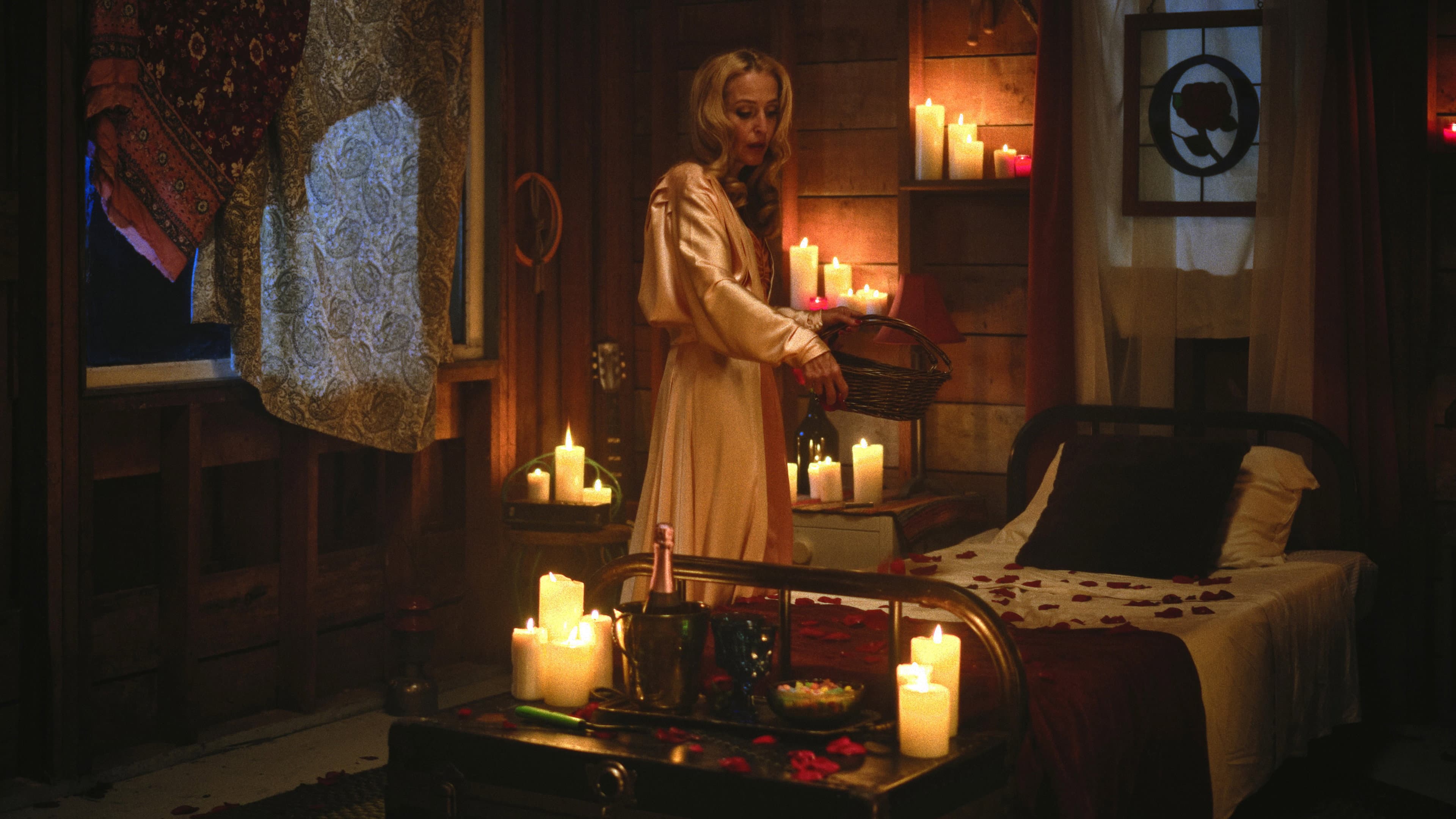
The film opens with a familiar setup: Kris (a wired, frantic Hannah Einbinder), a struggling filmmaker hired to revive the series, travels to a remote estate to secure the blessing of its reclusive original star, Billy. You remember Billy. The final girl of 1982’s Camp Miasma, played then by a young Amanda Fix in flashback, and now embodied by Gillian Anderson with a glacier’s worth of composure and a voice like honey poured over broken glass. But this isn’t a dreary behind-the-scenes drama. Schoenbrun has made something far stranger: a romance that pulses with genuine terror, a comedy with a body count, and a horror film that’s less concerned with jump scares than with the slow, rotting dread of idolatry.
What makes Teenage Sex and Death sing is the chemistry between its two leads, which crackles like a faulty fuse. Einbinder’s Kris is all nervous energy and millennial desperation, a filmmaker who has staked her career on a franchise she secretly thinks is beneath her. Billy, meanwhile, is a monument of contradictions - bitter, radiant, predatory, and wounded. Anderson sinks her teeth into every line, delivering dialogue that oscillates between campy cruelty and startling vulnerability. When Billy begins to seduce Kris, it’s unclear whether she’s grooming a protégé or fattening a lamb. The film leans hard into that ambiguity, and it’s why the middle act, which finds the two women trapped in a hallucinatory loop of shared memories and new bloodshed, never loses momentum.
Schoenbrun’s direction is a masterclass in tonal juggling. One scene will land a Sarah Sherman-esque absurdist gag (Sherman shows up early as Kris’ agent, delivering a monologue about “brand synergy” with the wide-eyed glee of a hostage), and the next will plunge you into a dreamlike nightmare where the camp’s pine trees seem to breathe. The comedy isn’t a garnish; it’s the engine. Laughing at the sheer audacity of a sequence - say, a disco-lit massacre set to a thumping DJ Ella Giastic (Eva Victor) track - makes the subsequent silence feel oppressive. That’s hard to pull off, but Schoenbrun manages it with confidence, never letting the irony undercut the actual stakes. When Alex (Arthur Conti, playing a suspiciously helpful groundskeeper) ends up on the wrong end of a machete, the shock lands precisely because the film let you forget, for a moment, that it was playing by slasher rules at all.
Underneath the viscera and one-liners, though, lies a surprisingly tender meditation on legacy and ownership. Billy is haunted not just by the masked killer who stalked her onscreen, but by the woman she became in its wake - a star frozen in amber, dependent on a character she despises. The film’s flashbacks with Fix as Young Billy are particularly haunting, showing a ingénue whose wide-eyed terror was real, exploited by a director (a sleazy Patrick Fischler) who promised art and delivered trauma. When Kris and Billy confront that shared history in a blood-spattered cabin finale, the resolution isn’t cheap catharsis. It’s messy, queer, and genuinely moving.
The critical consensus seems to agree it’s a triumph, though the TMDb score of 6.679 suggests general audiences are still chewing on a film that refuses to be just one thing. Some will find the middle stretch too oblique, the romance too thorny. But that’s the point. Teenage Sex and Death at Camp Miasma isn’t a comfortable nostalgia trip; it’s a reckoning. It asks what we owe the stories that shaped us, and whether loving a monster means becoming one. By the time the credits roll, over a haunting cover of a lullaby from the original film, you’ll have laughed, winced, and maybe shed a tear. If you had told a fan of the original, back in 1982, that its legacy would culminate in this - a bloody, heartfelt, outrageously funny romance between a burned-out final girl and the woman sent to resurrect her - they’d have called you insane. Good. Boring films don’t deserve sequels. This one earned its resurrection.