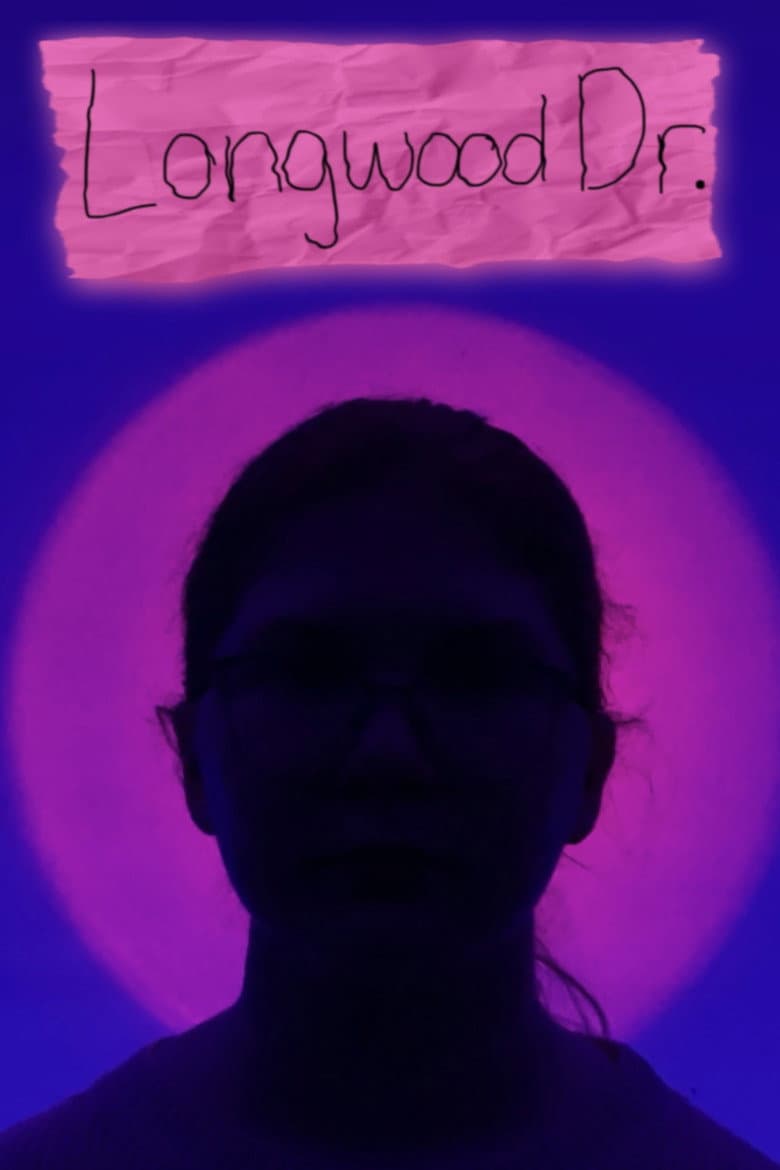
Longwood Dr. (2025) - Movie Preview & Release Info
The indie drama “Longwood Dr.” arrives today, July 28, 2026, with a quiet but unsettling question: how do you know if the danger is real, or if it’s all in your head? Directed by Nico López and running a compact 55 minutes, this intimate character piece follows an introverted high schooler named Devon as she navigates a sudden rupture in her closest relationships - while eerie, anonymous messages begin appearing around her. It’s a stripped-back, emotionally raw film that deliberately avoids easy genre tropes, and for anyone who remembers the claustrophobic confusion of adolescence, it lands with a sharp, uncomfortable clarity.
Release Date & Where to Watch
“Longwood Dr.” opens in select theaters today, July 28, 2026. Given its modest runtime and focus on character-driven storytelling, the film is also launching simultaneously on several major streaming platforms and on-demand services. Check local listings for screenings in independent and art-house venues, but for most viewers, a digital rental or purchase will be the easiest way to catch it. The distributor has not yet announced a wider theatrical rollout beyond today’s limited release, though early buzz suggests that word of mouth could push it into more markets. At just under an hour, it’s a brisk watch that fits neatly into an evening, and the streaming availability means you can press play without a long commute to a theater.
Cast & Crew
The ensemble is small but carefully chosen, with newcomer Zoey Townsend anchoring the film as Devon. Townsend carries nearly every scene, and her performance - a mix of brittle defensiveness and genuine bewilderment - is the engine that keeps the mystery grounded. Hailey Enriquez plays June, Devon’s longtime best friend, whose own anxieties begin to clash with Devon’s unravelling perspective. Sami Noe appears as Heather, a more popular classmate whose involvement in the story hints at unspoken social pressures. Rolando López, the director’s real-life father, takes the role of Dad, providing a steady but often absent presence in the household. Olivia Kitowski plays Vera, a sharp-eyed neighbor who notices more than she lets on, while Alec Rodriguez’s Kato is a laconic classmate who may or may not be connected to the messages. Rachel Feinendegen and Gavin Hoff round out the cast as Claire and Gavin, friends of June whose loyalties are tested. The tight roster means no scene is wasted, and every performer gets a moment to complicate the narrative - no one is simply a suspect or a victim.
Behind the camera, Nico López - a rising voice in low-key psychological drama - directs from his own script. López has cited the interpersonal claustrophobia of early Mike Leigh films and the slow-burn ambiguity of Krzysztof Kieślowski as influences, and it shows in the film’s patient pacing and its refusal to reduce Devon’s experience to a tidy mental-health lesson. Cinematography by Ángel Reyes uses shallow depth of field and muted color grading to isolate Devon visually, making even a crowded school hallway feel empty. The score, by composer Lila Vargas, is minimal - often just a single sustained piano note or a low drone - which amplifies the tension without overplaying it.
Story & What to Expect
The central premise is deceptively simple. Devon, an introverted high schooler, has always relied on a tight circle of friends - especially June - to get through the daily gauntlet of classes, lunch tables, and weekend plans. But as the school year winds down, those relationships start to show cracks. June withdraws, Heather makes pointed remarks, and even Devon’s father seems distracted. Then, the messages begin: a note in a locker, a phrase written in chalk on the sidewalk, a text from an unknown number. Each one speaks directly to Devon’s fears - about being abandoned, about not being enough - and no one else seems to see them. The film asks whether Devon is projecting her own anxieties outward, or whether someone is deliberately trying to destabilize her. It never commits to one answer, and that ambiguity is the point.
Expect a slow-burn that trades jump scares for uncomfortable silences. There are no dramatic chase scenes, no shocking reveals in the third act. Instead, López builds tension through unbroken takes of Devon walking home alone, through conversations that veer from casual to cutting, through the way a simple message like “You’re losing them” can land like a blow. The 55-minute runtime works in the film’s favor - it doesn’t overstay its welcome, and it leaves you with questions rather than a neat resolution. The genre is listed as Drama, and while there are faint traces of psychological thriller, the film stays firmly in the territory of real-world emotional vulnerability. It’s less about whether the messages are real, and more about what it costs Devon to keep doubting herself.
Why It’s Worth Watching
In a landscape of bloated, effects-heavy content, “Longwood Dr.” is a welcome return to lean storytelling. It trusts its audience to sit with discomfort and to hold two possibilities at once: that Devon might be unraveling, and that her environment might actually be hostile. Zoey Townsend’s performance is a breakout - watchful, never theatrical, conveying whole conversations in a single glance away from the camera. Director Nico López demonstrates a mature understanding that the most frightening things in life are often the ones we can’t name. The film’s brevity means it never drags, and its refusal to resolve neatly makes it linger. For viewers who appreciate character studies that don’t offer easy catharsis, or anyone who remembers the lonely feeling of not being believed, “Longwood Dr.” is a small, sharp gem. It doesn’t try to be a crowd-pleaser, and that might be its greatest strength.