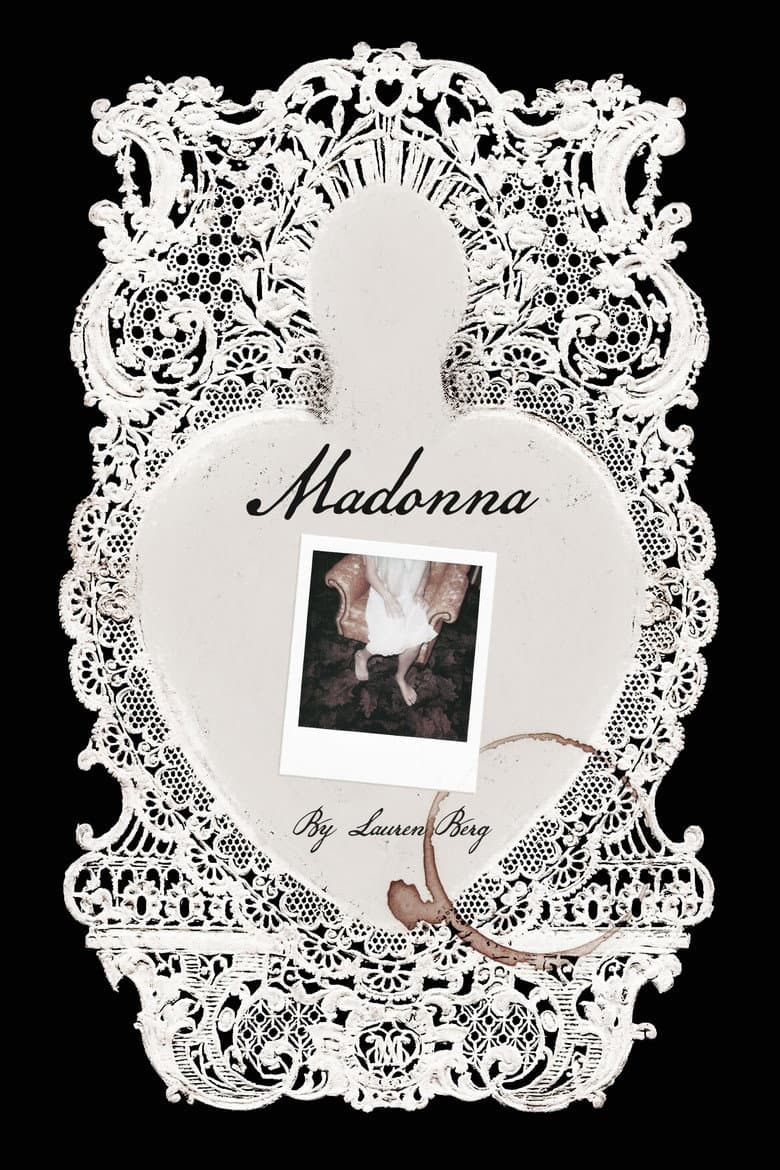
There is a particular kind of loneliness that festers in the fluorescent hum of an office park, and it appears Lauren Lee Berg has bottled it for her latest short film, Madonna. Clocking in at a tight 13 minutes, this Hollywood production promises a cringe-inducing descent into the psyche of a man who has confused possession with affection and delusion with romance. It is a comedy, technically, but one that likely derives its laughs from the uncomfortable silences rather than slapstick.
Release Date & Where to Watch
Audiences won't have to wait long to test their tolerance for awkwardness. Madonna hits platforms today, September 16, 2026. Given its runtime and the current landscape of independent distribution, expect this to be a prominent fixture on the festival circuit before finding a home on a dedicated streaming service for short-form cinema, such as ShortsTV or a curated indie platform. For those who prefer their character studies served in small, potent doses, this is the evening's main course.
Cast & Crew
Berg directs from her own script, steering a small ensemble through what appears to be a deeply claustrophobic narrative. The cast is led by Petar Blagojevic, who steps into the uncomfortable shoes of Vincent. Blagojevic carries the weight of the film on his shoulders, tasked with portraying a man whose reality is crumbling in real-time. Opposite him, Clara Sorto-Occosio embodies Suzanne, the sex doll wife who serves as the silent anchor to Vincent's spiraling psyche. The chemistry here - or perhaps the deliberate lack thereof - will be crucial to the film's success.
Karhei Ng joins the fray as Marianne, the secretary who becomes the unwitting object of Vincent's para-social obsession. Ng's performance will need to balance the mundane reality of office life with the terrifying realization that she is being watched. Rounding out the cast is Cole Bzowy as Clyde, likely representing the "real world" intrusion that threatens Vincent's fantasy.
Story & What to Expect
The logline is a masterclass in uncomfortable specificity. Vincent is a man obsessed with purity. It is a concept that sounds noble in a philosophical text but becomes monstrous when applied to human relationships. He is married to Suzanne, a sex doll. This arrangement allows Vincent to project his idealized version of a partner onto a silent, compliant vessel. Suzanne cannot disappoint him because she cannot speak; she cannot cheat because she cannot leave. It is a controlled environment designed to shield Vincent from the messiness of actual human connection.
However, the human mind craves chaos. Enter Marianne, the secretary. Vincent develops a para-social relationship with her - a one-sided bond where he likely feels a deep, intimate connection that exists entirely within his own head. He probably knows her coffee order, the sound of her keyboard, and the way she sighs when the printer jams. To Vincent, this is a profound romance. To Marianne, he is probably just the weird guy in accounting who stares too long.
The conflict arises when these two worlds - the synthetic purity of his home life and the unattainable reality of his work life - begin to collide. The film explores the notion that Vincent's obsession with purity is actually a fear of intimacy. By loving a doll, he avoids rejection. By obsessing over a co-worker from afar, he avoids the risk of asking her out. The arrival of Clyde likely throws a wrench into the works, possibly serving as a rival for Marianne's attention or a mirror reflecting Vincent's own absurdity.
Expect a tone that leans into the pathetic rather than the violent. This sounds less like Fatal Attraction and more like a spiritual cousin to Lars and the Real Girl, albeit with a sharper, meaner edge. The comedy will come from the disconnect between the gravity Vincent assigns to his situation and the actual stakes involved. It is a study in delusion, performed within the confines of a 13-minute window. It is a snapshot of a breakdown, not the full autopsy.
Why It's Worth Watching
Short films are often dismissed as calling cards for feature directors, but the 13-minute format is uniquely suited to stories like Madonna. There is no room for filler. The narrative must be lean, rising action quick, and the resolution sharp. Berg appears to be using the timeframe to deliver a surgical strike on modern masculinity and isolation.
The current TMDb rating of 0/10 is almost certainly a placeholder artifact due to the film's fresh release date, so pay it no mind. The real appeal lies in curiosity. How does one navigate a narrative about a man who loves a doll while simultaneously stalking his secretary without veering into farce? The challenge is tonal. If handled poorly, it is a sketch comedy. If handled well - and the casting of Blagojevic suggests a serious dramatic approach - it is a poignant, uncomfortable window into a fractured mind.
This is not a date movie. This is a movie for people interested in the darker, stranger corners of the human condition, delivered with a side of dry wit. It questions the nature of fidelity and the increasingly blurred lines between digital (or synthetic) fantasy and reality. In an age where AI companions and parasocial internet relationships are becoming the norm, Vincent's plight feels terrifyingly relevant. He is not just a weird man; he is an extreme version of a modern trend. For a 13-minute investment, Madonna offers a complex, if unsettling, return on the time spent.