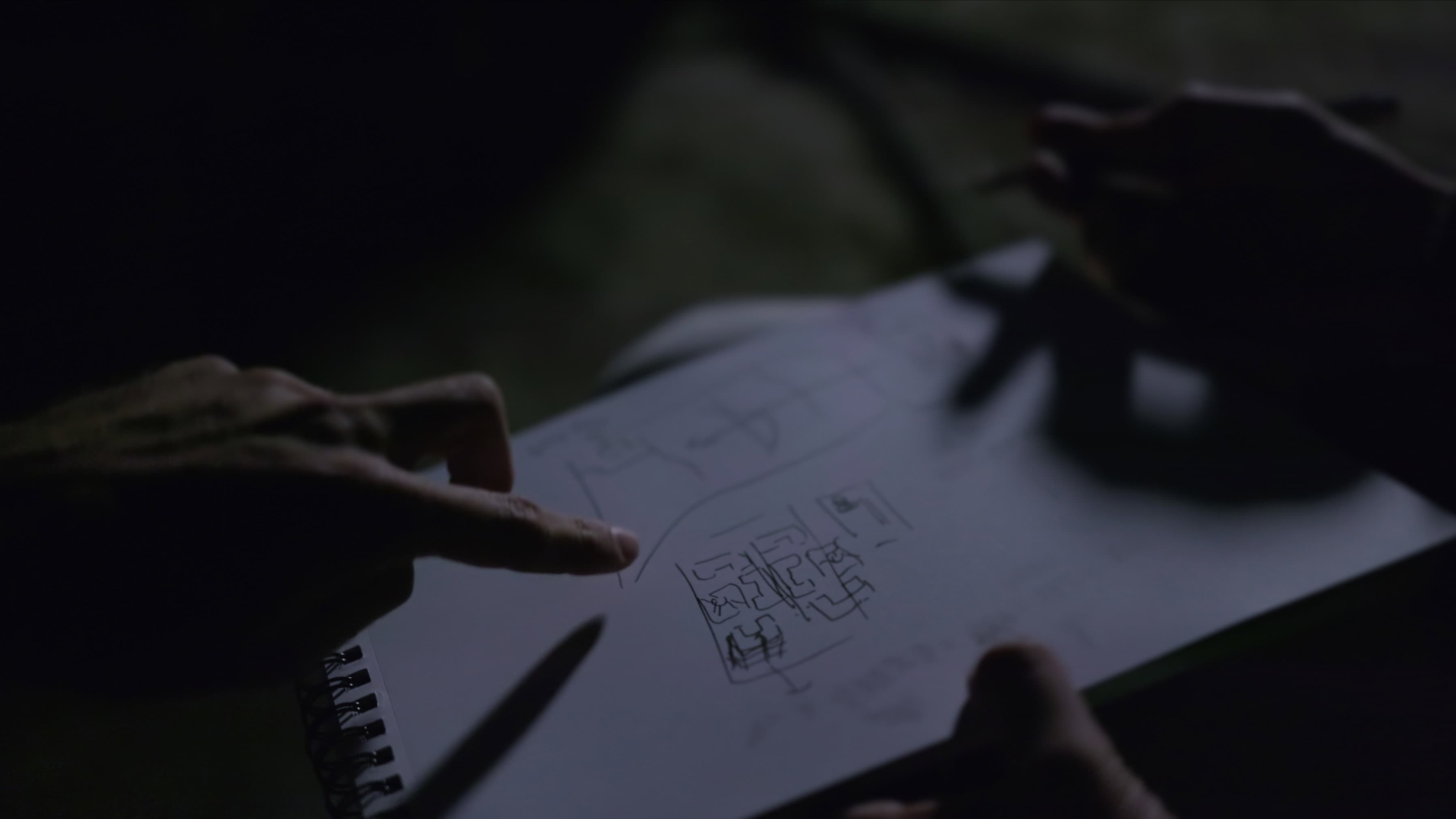
The rooftop is a strange place to build a confession. In Tel Aviv, the flat roofs sit close enough that neighbors can hear each other's conversations drift across the night air, which is precisely what makes them useful. People say things up there they would never say indoors. Yuval Abraham understood this instinctively, and his new documentary, NAZA, takes full advantage of that geography of disclosure. The film, which opened in limited release on September 25 and has been quietly expanding since, runs just seventy-seven minutes, but it carries the weight of something much longer.
Abraham, who also appears on camera as himself, structures the film around a series of nocturnal encounters with the architects and operators of Israel's military systems in Gaza. These are not anonymous whistleblowers in shadowy rooms. They are professionals who helped design targeting protocols, logistics chains, and the bureaucratic machinery behind what the film describes as a calculated mass killing of Palestinian civilians. They speak in Hebrew, in hushed tones, often with the city's ambient hum beneath their words. The conversations unfold over weeks, maybe months - the film never specifies - and the cumulative effect is less a gotcha exposé than a slow unraveling of how ordinary people participate in extraordinary violence.
What makes NAZA distinctive is its refusal to sensationalize. There are no dramatic reenactments, no swelling orchestral cues, no graphics exploding across the screen to explain what you're seeing. Abraham keeps the camera mostly still. He lets silences sit. When one interviewee pauses for nearly thirty seconds before answering a question about evacuation corridors, the film doesn't cut away or fill the gap with narration. You just watch a man think about what he's about to admit.
The title itself is never explicitly defined on screen. Characters reference it in passing, as if the audience already knows what it means. This could frustrate viewers looking for a tidy explanation, but it also reflects the film's larger argument: that the systems being described are so embedded in daily life that they don't require footnotes. The people on these rooftops know exactly what NAZA refers to. So does anyone who has paid attention to the region's recent history.
Abraham's presence as both director and subject creates an interesting tension. He is not a neutral observer. At several points, he pushes back against his interviewees, challenging their euphemisms, asking them to say plainly what they mean when they use terms like "incidental damage" or "operational necessity." These moments are uncomfortable, and they're meant to be. But Abraham also knows when to stay quiet, letting the people across from him talk themselves into corners they didn't anticipate.
The film's cinematography deserves mention, though it never calls attention to itself. Shot almost entirely at night, NAZA uses the limited light of cell phone screens, cigarette embers, and distant streetlamps to illuminate faces. The effect is intimate and vaguely claustrophobic. You feel like you're eavesdropping, which is exactly the point. The rooftop setting becomes a character in its own right - a liminal space where the rules of public discourse temporarily loosen.
Critical reception has been strong, with the film currently holding an 8.1 rating on TMDb. That number will likely shift as more viewers find it, but the early response suggests NAZA has struck a nerve. Some have praised Abraham for his persistence in getting these conversations on record. Others have questioned whether the film's narrow focus on individual participants risks obscuring the larger institutional forces at play. Both reactions seem fair. The documentary doesn't pretend to offer a comprehensive history of the conflict or a detailed policy analysis. It offers something more modest and, in its own way, more devastating: a portrait of people who built something terrible and are now trying, in fragments, to describe what they did.
At seventy-seven minutes, NAZA moves quickly but never feels rushed. Abraham trusts his audience to keep up. He doesn't explain every reference or provide context for every name. The film assumes a certain baseline of knowledge, which may limit its reach but also gives it a sharper edge. This isn't a primer. It's a confrontation.
The final conversation takes place on a rooftop overlooking the Mediterranean, the sea barely visible in the darkness. The interviewee, a former officer who helped coordinate supply routes into Gaza, talks about the moment he realized what he was participating in. He doesn't cry. He doesn't apologize. He just describes the machinery, piece by piece, the way you might describe a commute you've taken a thousand times. Abraham listens. The camera holds. Then the screen goes dark.
NAZA is now playing in select theaters.