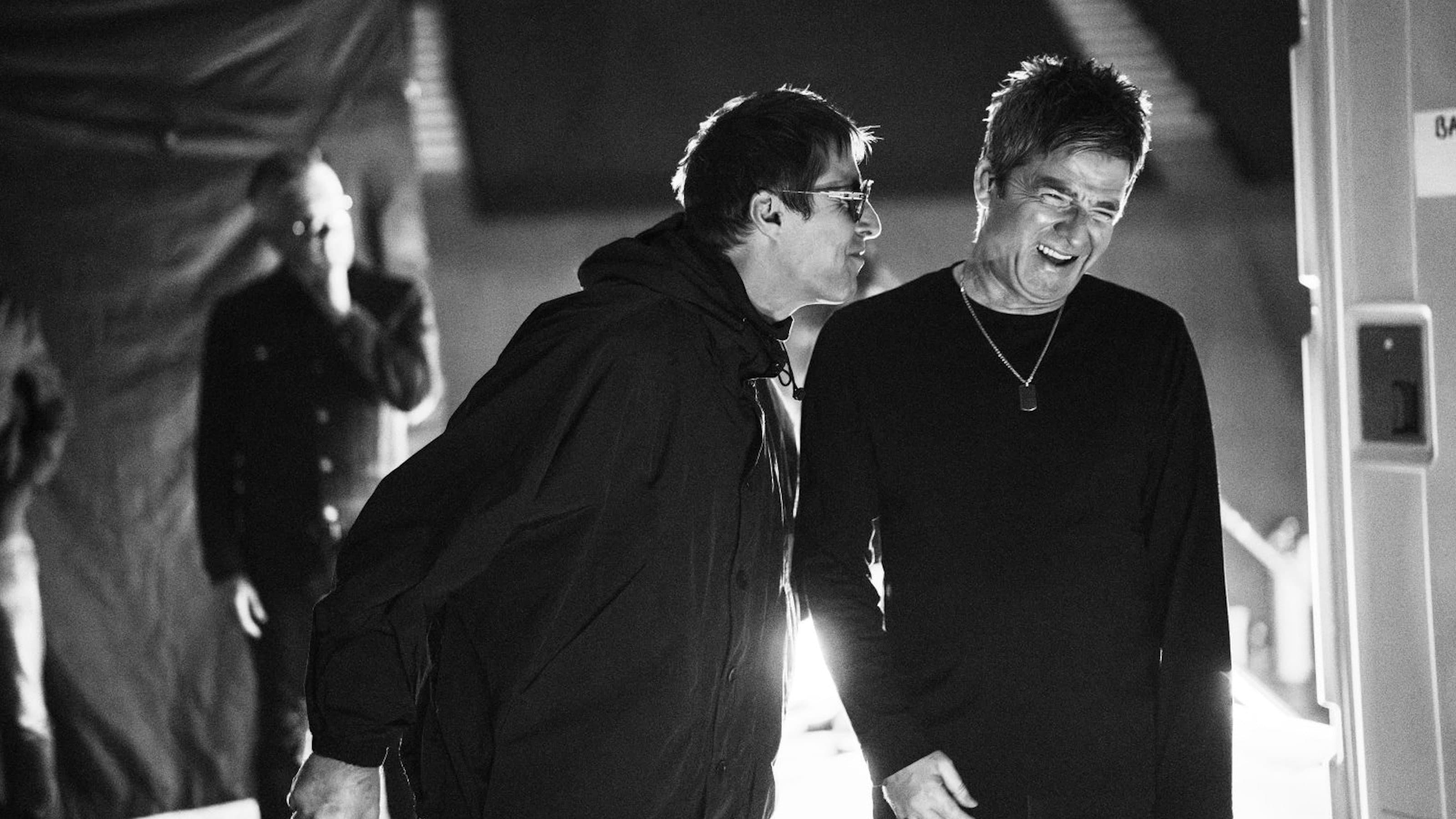
Two minutes and thirty seconds into Oasis: Don't Look Back in Anger, director Dylan Southern cuts from a grainy handheld shot of five young men crammed into a Manchester rehearsal room to the unmistakable roar of a stadium crowd three decades later. The juxtaposition lands like a sucker punch, and it sets the tone for a documentary that refuses to sand down the rough edges of one of rock's most combustible stories.
Opening in theaters on September 9, 2026, and now in its fourth week of release, the film arrives at a curious moment. Oasis Live '25 has already reminded the world what happens when Liam and Noel Gallagher share a stage again, and Southern's cameras were granted remarkable access to that reunion. But this is not a concert film, not exactly. It's a chronicle of how two brothers from Burnage turned a provincial post-industrial city into the center of the rock universe, and then spent years tearing that achievement apart.
The documentary's greatest asset is its archival material. Southern, best known for the 2016 drama The Violent Men and the music documentary The Stone Roses: Made of Stone, has assembled footage that even devoted fans will find unfamiliar. There are early television appearances where Liam's sneer is already fully formed, hotel-room confrontations captured on camcorder, and studio sessions where Noel patiently builds the melodic architecture of songs that would become generational anthems. The film treats these clips as primary documents rather than nostalgia triggers, letting them breathe without excessive narration.
What distinguishes Don't Look Back in Anger from the typical rock-doc template is its structural confidence. Southern resists the temptation to position the reunion as a redemptive third act. Instead, he interweaves the 2025 shows throughout the film, using them as a framing device rather than a climax. The effect is elegiac rather than triumphant. When the older Gallagher brothers exchange glances across a stadium stage, the weight of everything unsaid between them becomes the film's emotional core.
The cast list reads like a family reunion. Paul Arthurs, Gem Archer, and Andy Bell all appear, offering perspectives that go beyond the sibling rivalry that has dominated headlines for decades. Joey Waronker and Christian Madden discuss the logistics of rebuilding the band's sound for modern arenas. Anaïs Gallagher's presence adds a generational dimension, a reminder that the Oasis story now belongs to people who weren't born when Definitely Maybe topped the charts.
Southern's decision to avoid talking-head interviews from critics and historians pays dividends. The film is populated almost entirely by the people who lived it, and their recollections don't always align. That's precisely the point. Memory is contested territory in the Oasis universe, and the documentary embraces that ambiguity rather than pretending to adjudicate it.
With a runtime of 123 minutes, the film moves briskly through the band's formation, the Britpop explosion, the American breakthrough, and the slow-motion fracture that culminated in Noel's departure in 2009. The middle section, covering the Be Here Now era and its aftermath, is particularly well-handled. Southern doesn't shy away from the excess or the creative missteps, but he contextualizes them within the impossible expectations that followed the band's early triumphs.
Where the documentary excels is in its attention to craft. Liam's voice, that singular instrument, is examined with genuine curiosity rather than mere reverence. Noel's songwriting process gets similar treatment, with early demos and discarded takes revealing how classics like "Wonderwall" and "Champagne Supernova" evolved from rough sketches into stadium singalongs. For anyone who has ever wondered how those songs actually came together, the film provides satisfying answers.
The reunion footage, shot during the Oasis Live '25 dates, provides moments of genuine tension. The brothers keep their distance, but the old chemistry is undeniable. A sequence showing them rehearsing "Don't Look Back in Anger" for the first time in over a decade captures something rare: two artists rediscovering a song they wrote together, uncertain whether it still belongs to them.
The film's TMDb rating of 7.5 suggests audiences are responding to what Southern has built. It's a portrait of a band that mattered, made by someone who understands that their significance extends far beyond the music. Oasis: Don't Look Back in Anger doesn't attempt to resolve the contradictions at the heart of the Gallagher saga. It simply presents them, unvarnished and alive, and trusts the audience to make sense of the noise.
In an era of sanitized music documentaries designed to sell back catalogs and concert tickets, Southern's film feels refreshingly unconcerned with image management. The Oasis story has always been messy. This documentary understands that the mess is the story.