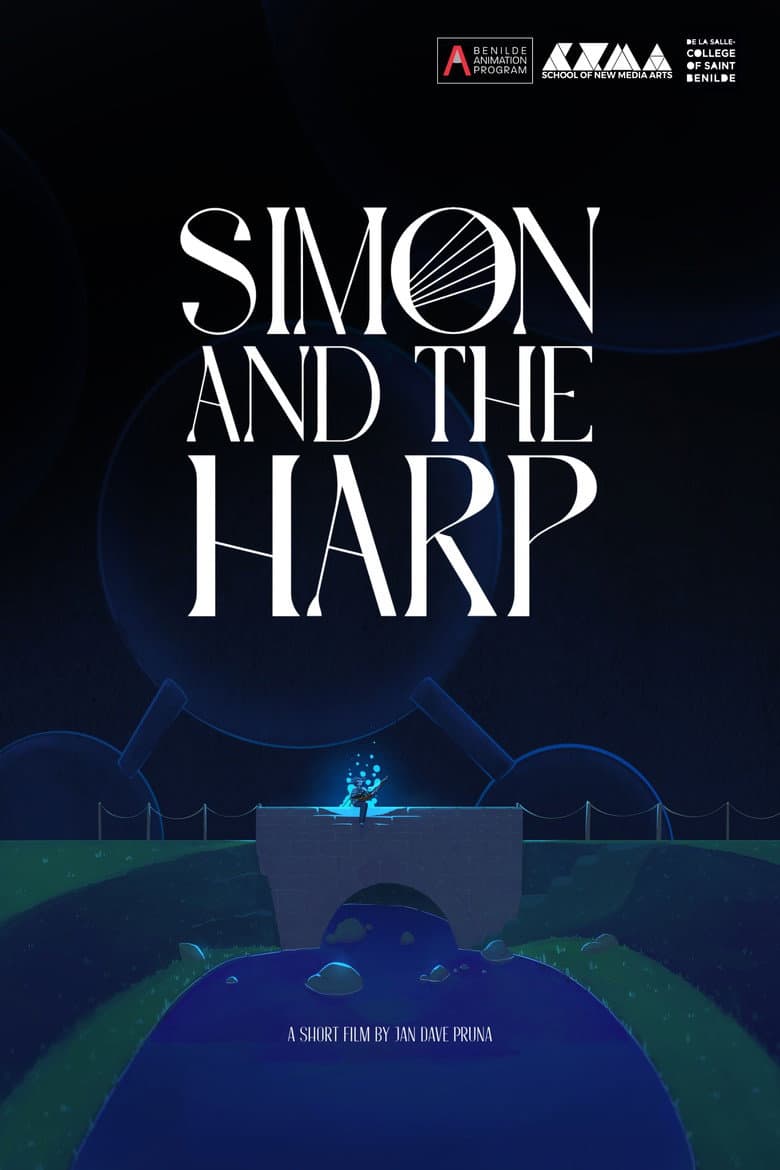
Simon and the Harp (2026) - Movie Preview
Photo: TMDb
The calendar has flipped to August 12, 2026, and with it arrives a quiet, shimmering anomaly in the cinematic landscape. While the multiplexes are dominated by explosions and superhero epics, an independent short film is making its debut today that demands attention for entirely different reasons. Simon and the Harp, a 10-minute meditation on loneliness and artistic rescue, is not the kind of thing that usually generates pre-release buzz. It has no marquee names attached, no studio marketing machine behind it. What it has is a premise so gently surreal it feels like a fable whispered across a pond at dusk, and a director whose vision appears singularly focused on the miniature and the melancholic.
Release Date & Where to Watch
The film officially premieres today, August 12, 2026, and will be available for viewing through a select number of film festival platforms and curated streaming aggregators that specialize in short-form independent cinema. While a wide theatrical roll-out is not in the cards for a piece this intimate, early indications suggest that it will be featured prominently on the virtual cinema circuit, likely accompanying a feature-length program on major on-demand services like Vimeo On Demand or MUBI, where short-form auteurs often find their most appreciative audiences. Given the release date’s quiet positioning in the late-summer doldrums, this is a strategic move aimed at letting the film breathe - a wise choice for a story that demands a viewer's undivided stillness. For those outside the festival bubble, keep an eye on the film's official social channels, as the director has hinted at a broader digital release on platforms like Apple TV and Amazon Prime by early autumn, contingent on the festival run’s momentum.
Cast & Crew
The credits are a tightly guarded secret, a rarity in an industry that thrives on pre-release name-dropping, but the name that matters most belongs to the director, Jan Dave Pruna. Known in underground animation and experimental circles for a meticulous, painterly approach to digital storytelling, Pruna has crafted a reputation for animating the invisible weight of emotion. Here, the singular voice is Pruna’s, and the cast - likely a small ensemble of voice actors - has been kept deliberately opaque, a move that suggests the film is less about performance celebrity and more about the audio-visual texture as a whole. The lack of publicly listed cast members is not a sign of a low-rent production, but rather a deliberate Bressonian gesture, stripping away the cult of personality to focus on the character of Simon himself - a creature of chitin and glass. Pruna’s previous shorts, though obscure, have earned plaudits for their use of negative space and micro-sound design; expect nothing less than a complete sensory immersion.
Story & What to Expect
The narrative is deceptively simple. Simon, a blue dragonfly, exists inside a sprawling network of glass terraria - an architectural metaphor for a cubicle-bound, modern existence. His days are filled with monotony: repetitive tasks, data entry, the dull hum of an artificial ecosystem. He is not a prisoner in shackles, merely a prisoner of habit and isolation. The film opens with a montage of his routine, each shot framed by the geometric boundaries of his transparent prison, emphasizing the separation between himself and the world just beyond the glass. It is quiet, suffocating, and visually stunning.
Then comes the collapse. Overcome by exhaustion, Simon falls, and in his fall, he finds a way out - or rather, a way through. He discovers an old, abandoned harp by the river, a relic of a pre-corporate world, rusted yet resonant. The film's pivotal turn is not one of escape, but of re-purposing. As Simon plucks the strings, the sound waves ripple through the terraria, and for the first time, his environment responds to him, not the other way around. The music he produces is not just a personal balm; it becomes a mechanical key, unlocking doors, altering the geometry of his world, and attracting the attention of other beings for the first time.
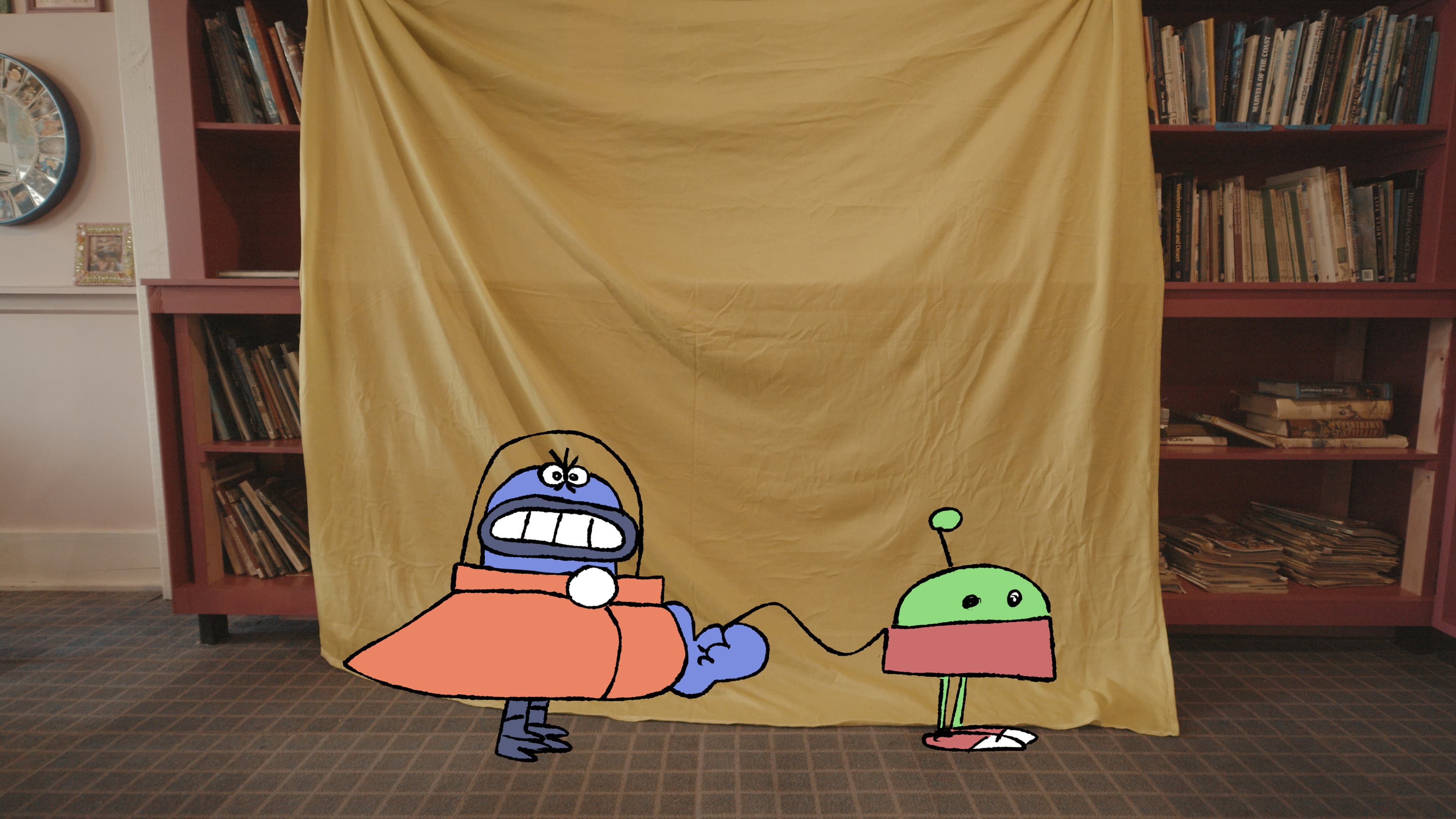
Visually, expect a blend of photorealistic macro-photography with hand-painted digital animation. The blue of Simon’s body against the verdant greens and steely grays of the terraria is a study in contrast. Pruna’s use of light - sunbeams filtered through condensation, the glint of harp strings - suggests a painter who edits with the rhythm of a composer. There is no dialogue, we are told, only the sound of wind, water, and the harp itself. This is not a film of plot twists but of tonal transitions, a slow-burn crescendo from apathy to awe.
Why It's Worth Watching
In a world where feature-length films often struggle to justify their runtimes, Simon and the Harp uses its brief 10-minute window to say more about cognitive dissonance and the redemptive power of art than most two-hour dramas manage. It is a film that trusts its audience to feel, not to be told. The dragonfly as an office worker is a poignant commentary on the absurdity of the modern grind - a creature born for flight, confined to a desk. His discovery of the harp is not a triumph of ego but a surrender to something larger, a lesson in humility that resonates on a personal level.
The film’s rating is, at present, a blank slate - zero out of ten - not because it has been evaluated, but because it is yet to be seen. That is the beauty of a debut like this. There is no critical consensus to muddy the waters, no hype to underdeliver. It is an open invitation. For fans of animation that pushes beyond the boundaries of family entertainment, for viewers who appreciate the slow, deliberate rhythm of art-house cinema, and for anyone who has ever felt trapped in a glass box of their own making, Simon and the Harp is a must-watch. It is a small, gem-like object, but its resonance is expansive. Do not miss it while it is here; these quiet works have a way of disappearing into the air like a dragonfly’s wingbeat.