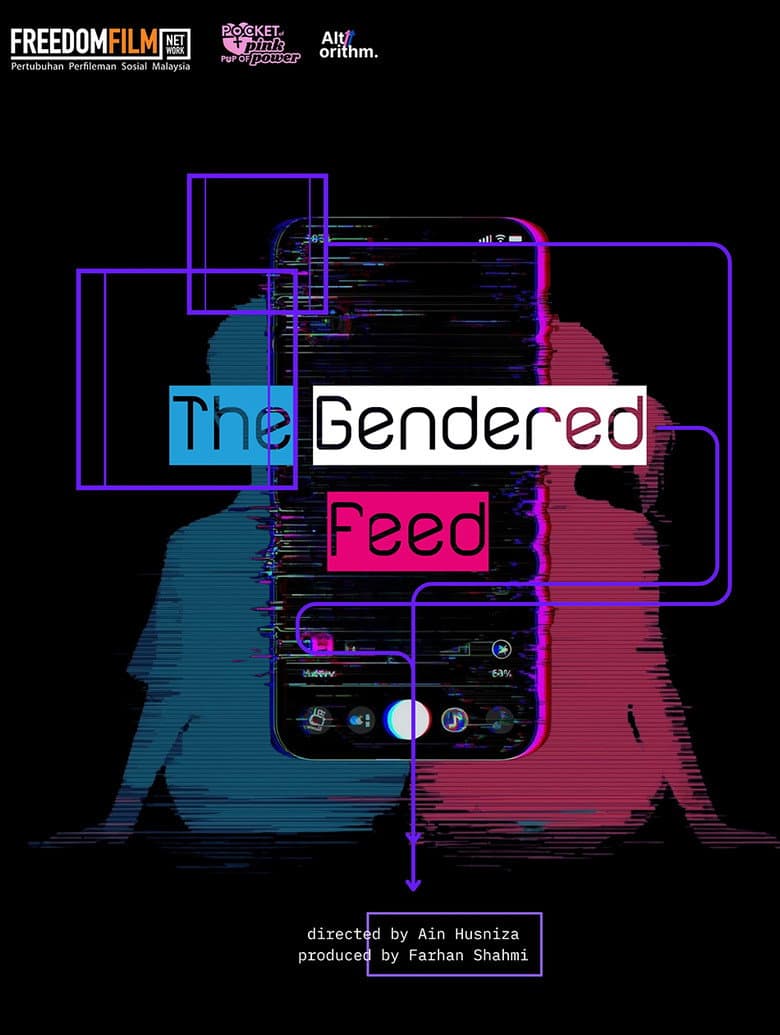
The algorithm doesn't shout. It whispers, nudging one video at a time, and by the time you notice the direction you're heading, the feed already knows you better than you'd like. That quiet, insidious process is the subject of "The Gendered Feed," a compact and unsettling documentary arriving today from director Ain Husniza. It's a film that turns the familiar act of scrolling into something closer to an investigation - and it asks a question that feels increasingly urgent: what happens when the machine learns your gender before you've figured out anything else?
Release Date & Where to Watch
"The Gendered Feed" lands on October 24, 2026, timed to coincide with the ongoing public conversation about algorithmic recommendation and adolescent screen time. At just nine minutes, it's built for the streaming attention span - the kind of short-form documentary that platforms have begun slotting into their nonfiction slates. Expect a digital-first rollout rather than a traditional theatrical push; a nine-minute runtime makes the festival circuit and streaming premiere the natural home for a project like this. Specific platform details are still emerging, but given the film's subject matter, a release on services that themselves run recommendation engines carries a certain ironic charge. Viewers should check major documentary streaming hubs and the film's official channels for exact availability in their region.
Cast & Crew
The film is directed by Ain Husniza, whose background in youth advocacy and digital literacy gives the project a natural authority. This is documentary work in the observational mode - there are no marquee names here, and the cast is listed as unknown, which is entirely appropriate for a film centered on ordinary researchers doing methodical, unglamorous work. The on-screen team is composed of young researchers, and their relative anonymity is part of the point: these are people from the generation being studied, examining the machinery that shapes their own lives. The production comes out of Hollywood, and the film is in English throughout. At nine minutes, it's a lean piece of filmmaking, presumably assembled from screen recordings, interview footage, and the researchers' own documented feeds. The tight runtime suggests discipline - there's no room for padding, and every minute has to justify itself.
Story & What to Expect
Here's the premise, and it's a clever one: a team of young researchers decide to understand the gendered algorithm from the inside. They create blank accounts - no history, no preferences, no signals - and then they simply watch. They scroll. They note what appears. And they track how the feed bends, differently for each account, depending on how gender is signalled or inferred.
What follows, per the film's own framing, is a series of case studies in escalation. A video about confidence becomes a gateway into the manosphere, a pipeline that trades self-improvement language for grievance and then for radicalisation. A makeup tutorial, meanwhile, leads elsewhere - into a spiral of unattainable beauty standards, each video raising the bar a little higher than the last. Curiosity tips into something harder. The documentary's title is doing real work: the feed isn't neutral, and it isn't the same feed for everyone.
Expect a brisk, tightly edited piece that mixes the researchers' screen-captured evidence with their running commentary and analysis. The format lends itself to a kind of procedural tension - watching the recommendations shift in real time, knowing what's coming, unable to stop the drift. Don't expect hand-wringing montages or celebrity talking heads. Expect something more clinical and, for that reason, more disturbing: the calm documentation of a system doing exactly what it was built to do.
Why It's Worth Watching
The film arrives at a moment when the debate over algorithmic feeds has moved from tech blogs into living rooms and legislative chambers alike. What "The Gendered Feed" offers is not another op-ed but evidence - the simple, damning record of what a fresh account becomes after a few hours of watching. The decision to run parallel experiments across gendered accounts is the film's sharpest move; it turns an abstract complaint into a controlled comparison, and the differences speak for themselves.
Nine minutes is a bold choice. It respects the audience's time and mirrors the very behavior it critiques: short, sharp, easy to consume and share. That brevity also means the film functions as a conversation starter more than a comprehensive study - a provocation designed to be paused, discussed, and passed along. For parents, educators, and anyone who has ever looked up from their phone wondering how they got there, it's essential, uncomfortable viewing. Ain Husniza has made a film about the spiral, and the smartest thing about it is that it never pretends to stand outside one. It just shows you the turns.