On the wind-scoured edges of an Orkney isle, two siblings keep a world alive by hand. Isla and Sandy hunt seabirds, tend fires, and tell the old stories of their ancestors, guarding their tiny kingdom against the shadowy threat they call "Incomers." That fragile, defiant existence is the beating heart of The Incomer, a comedy-drama from director Louis Paxton that arrived in theaters on September 4 and has quietly become one of the fall's most talked-about character studies.
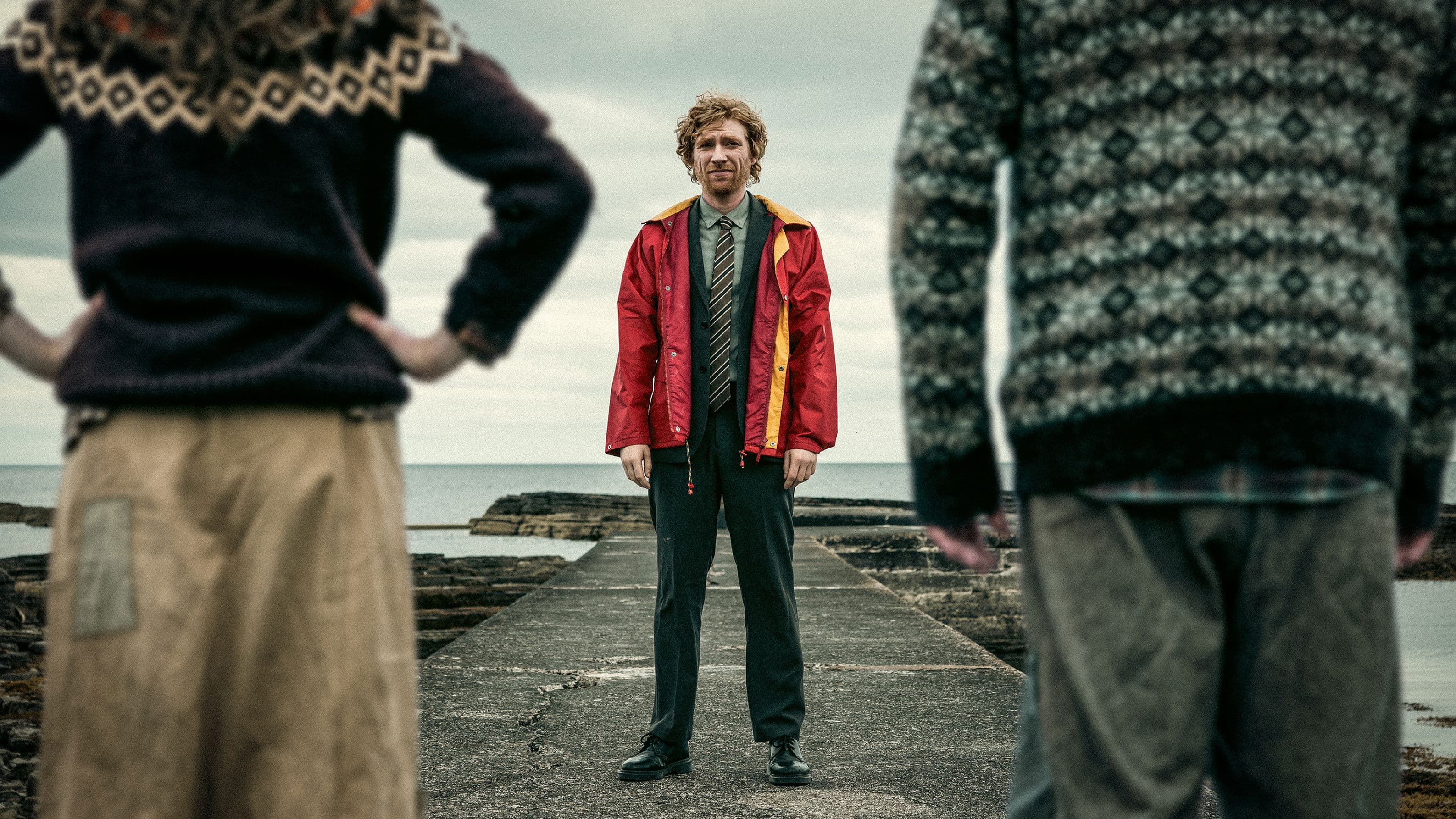
The premise is deceptively simple. When an awkward council worker named Daniel - played by Domhnall Gleeson with the kind of fumbling earnestness that has become his signature - arrives on the island to uproot the siblings from their homeland, the film's central collision is set: bureaucracy versus folklore, paperwork versus seabird bones, the modern state versus two people who have decided, against all evidence, that they are the last line of defense against the outside world.
Gayle Rankin's Isla is the anchor of the household, a woman whose ferocity is matched only by her devotion to ritual. Grant O'Rourke's Sandy moves through the film with the loose-limbed watchfulness of someone who has spent a lifetime scanning the horizon. Together, they have built a private cosmology out of retold stories, and Paxton films their routines with an intimacy that never tips into mockery. The comedy arises naturally from the clash between their grave self-seriousness and the mundane realities of Daniel's visit - a man who has come armed with forms, not folklore.
The supporting cast reads like a who's who of Scottish screen talent. Emun Elliott brings a sly, watchful energy as Calum, while Michelle Gomez and John Hannah - the latter appearing in a dual role as Fin Man and Father - add texture to the island's thin but vivid human geography. Adam McNamara and Neil Bratchpiece round out the ensemble as Tam and Gav, figures who seem to have stepped straight out of the island's collective memory.
At 102 minutes, The Incomer resists the urge to overexplain. Paxton trusts the landscape - the sea, the cliffs, the relentless weather - to carry as much narrative weight as dialogue. The film's English-language script is spare and rhythmic, laced with the cadence of island speech, and it treats the siblings' beliefs with a straight face even as it invites the audience to smile at their stubbornness.
What emerges is a story about what happens when a community's stories are all it has left. Isla and Sandy are not simply eccentrics; they are archivists of a way of life that the mainland has already forgotten. Daniel, for all his clumsiness, is not a villain. He is the future, arriving whether the island wants it or not. The film's tension lies in that uncomfortable middle ground, where neither side is entirely wrong and neither side can afford to lose.
Early audiences have responded to the film's tonal balancing act. A 6.5/10 rating on TMDb suggests a divided but engaged viewership - viewers who appreciate its ambition and its refusal to resolve neatly. That ambivalence feels appropriate for a movie that is less interested in answers than in the ache of a question: who gets to decide what a home is worth?
The Incomer is, in the end, a film about inheritance and intrusion, about the stories we tell to keep the dark at bay and the strangers who arrive to remind us that the dark was never really the enemy. It is a comedy in the way that life on the edge is a comedy - bleak, funny, and stubbornly alive. In a fall season crowded with sequels and spectacle, Paxton's film stands apart, a small, windswept thing with a great deal on its mind.