Nicole and Sebastian Castillo arrive at their new life carrying the kind of grief that doesn't announce itself. It sits in the silence between sentences, in the way they move through rooms like people who have forgotten what they were looking for. The Whistler, Diego Velasco's 97-minute descent into rural dread, understands that loss is not a single event but a frequency you learn to live with. Until something else starts humming alongside it.
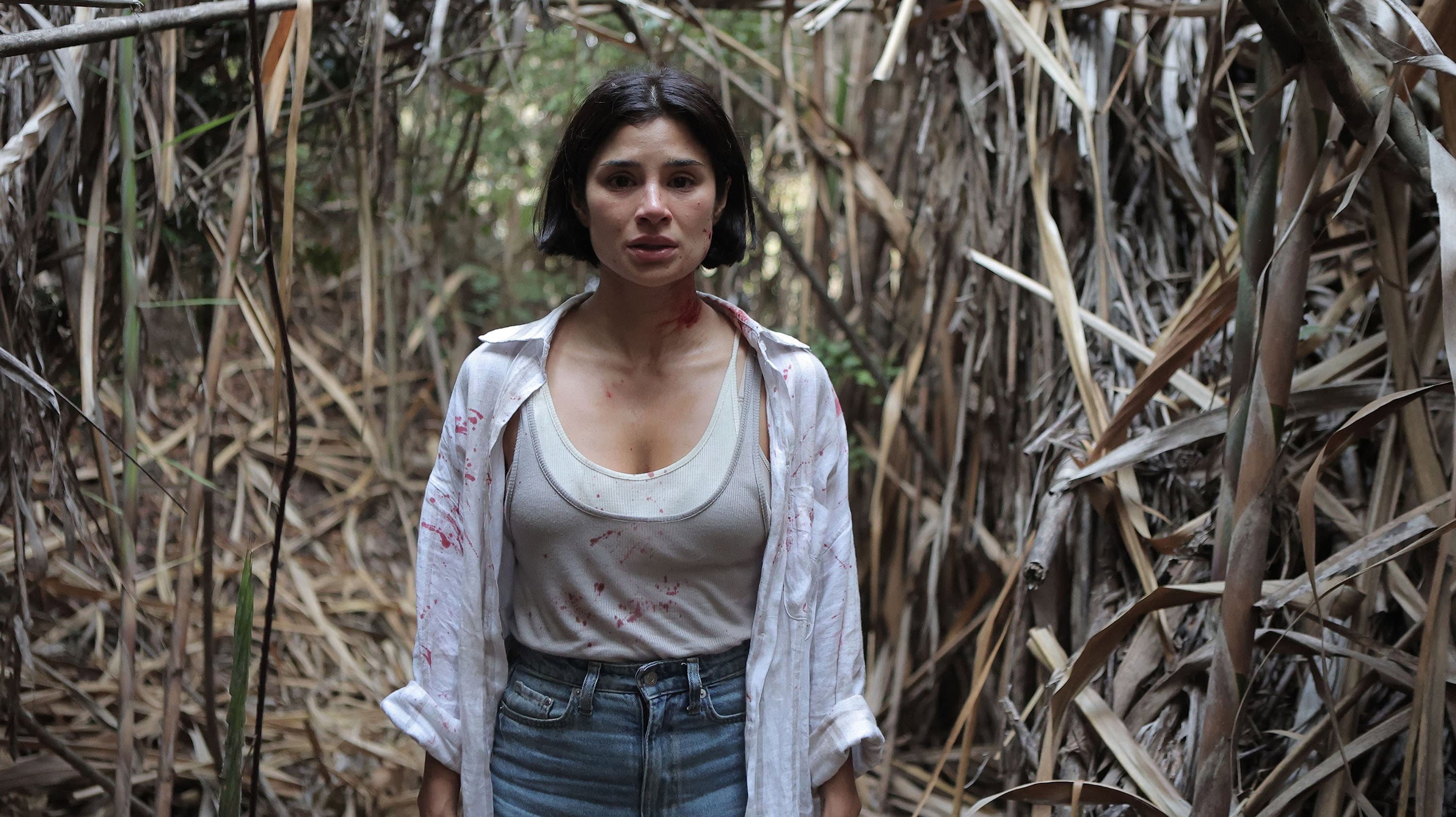
The film, which opened in theaters on September 24, 2026, follows the Castillos as they inherit a secluded farm in Venezuela. The property comes to them through circumstances the screenplay by Velasco and his collaborators keeps deliberately vague at first - an inheritance, a legal formality, the kind of transaction that happens when families are too exhausted to ask questions. Nicole, played by Diane Guerrero, sees the farm as a retreat. Sebastian, played by Juan Pablo Raba, sees it as something closer to a reckoning. Neither of them sees what's waiting for them in the trees.
Velasco, working in English for the first time after a career built on Spanish-language features, doesn't waste time on exposition. The farm reveals itself in fragments: a locked shed, a well that's been sealed with concrete, a neighbor who won't step past the property line. Petra, the closest thing to a local guide, is played by Indhira Serrano with a wariness that feels earned. She tells Nicole that the land has a "memory," a line that lands somewhere between folk wisdom and a warning. Nicole, still numb, doesn't press her.
The cast around Raba and Guerrero builds the film's world with the specificity of people who have lived in it. Laureano Olivares plays Laureano Silverio Moré, a figure whose connection to the farm predates the Castillos by decades. Laura Sofía Domínguez, as Greisy Moré, brings a watchful stillness to a role that could easily tip into hysteria. Diego Landaeta's Nixon is the kind of presence that makes you check the frame's edges. Carlos Velasquez, Norberto Rivera, and others round out a community that knows more than it says.
What separates The Whistler from the glut of grief-horror that's flooded the market in recent years is its restraint. Velasco doesn't chase scares. He lets them arrive on their own schedule. The film's first half is almost quiet enough to be a drama about a marriage collapsing under the weight of an old wound. Then the sound comes - a low, thin whistle, more breath than pitch, drifting in from somewhere past the treeline. It's not a jump-scare device. It's a presence, and once you hear it, you can't unhear it.
The film's visual language is built on that same patience. Cinematographer Javier Van de Couter, working with a palette of greens and browns that feels simultaneously lush and claustrophobic, frames the farm as a living thing. The camera doesn't prowl. It waits. The house's interiors are shot with a stillness that makes the sudden movement of a curtain feel like an event. By the time the film enters its final act, the space between the walls has become as threatening as whatever is outside them.
The Whistler is not a film that explains itself. Those looking for a neat mythology - the rules of the curse, the origin, the way to break it - will find the film frustrating. The Whistler isn't interested in rules. It's interested in what grief does when it finds a place to land. The farm is not a haunted house. It's a mirror, and the Castillos are not fighting a monster. They're fighting the fact that they already lost.
Raba and Guerrero never let their characters become symbols. Sebastian's anger is specific, ugly, and familiar. Nicole's numbness is not a flaw but a survival mechanism. Their scenes together have the rhythm of people who have talked so much that they've run out of new words. When they argue, it's not about the farm. It's about the daughter they can't mention by name without breaking something.
The film's supporting cast, largely unfamiliar to American audiences, brings a texture that a starrier production might have flattened. Serrano's Petra is the film's moral center, not because she's good but because she's honest. Olivares, as the older Moré, moves through the film like a man who has made peace with things he cannot fix. Domínguez, as Greisy, provides the film's most unsettling moments without ever raising her voice. The ensemble feels like a real community, not a collection of horror-movie archetypes.
The Whistler opened to little fanfare and has since become a topic of conversation among those who seek it out. Its TMDb rating sits at 1/10, a number that suggests either a coordinated backlash or a fundamental misreading of what the film is trying to do. Ratings rarely reflect a film's actual reception, and this one is no exception. What matters is that Velasco has made something that doesn't dissolve in the memory. The whistle stays with you. It's the sound of something that was always there, waiting for you to stop moving long enough to hear it.
For USA Film News, the question is not whether The Whistler works. It's whether audiences are willing to sit with a film that refuses to comfort them. The farm is not a puzzle to solve. The Castillos are not victims to be saved. The whistle is not a ghost to be banished. It's just the sound of grief finding a new place to echo. The film ends not with a resolution but with an understanding - the kind that arrives after everything else has failed.