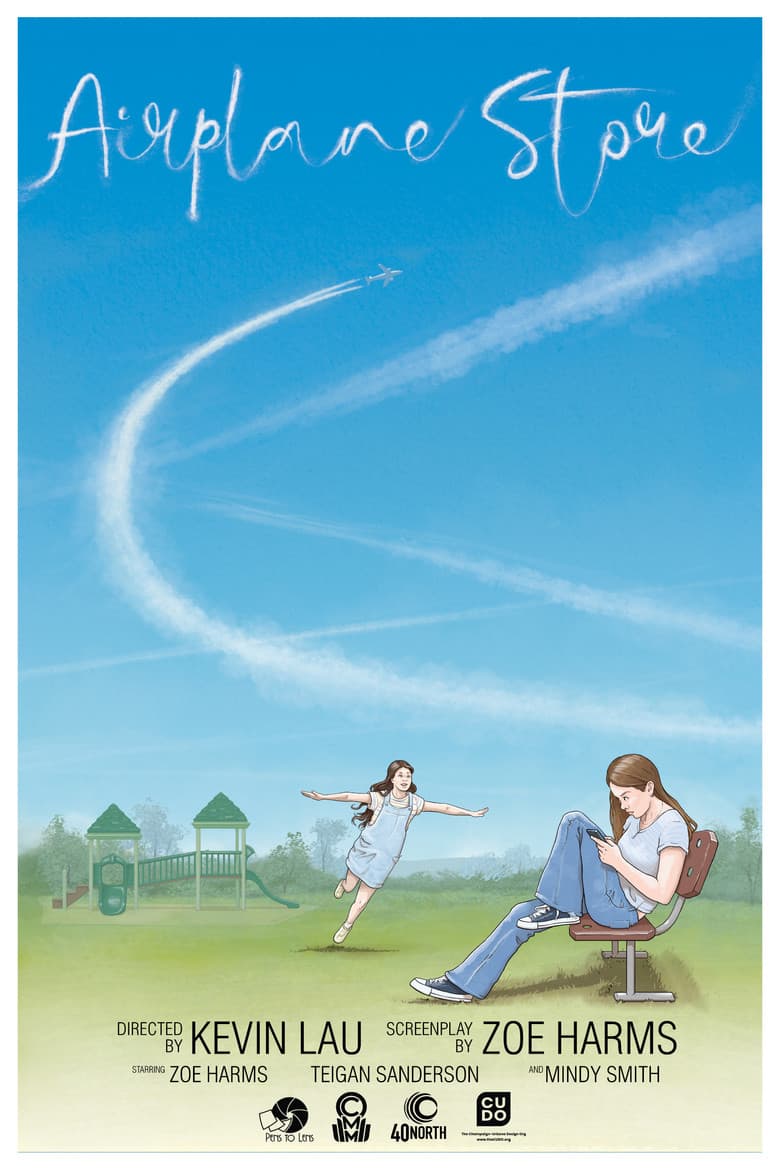
The summer movie season is winding down, but the most intimate and surprising stories often arrive just as the blockbusters start to fade. On August 15, 2026, a tiny film with a giant heart lands in the spotlight, proving that big emotional journeys don’t require a four-quadrant budget. Airplane Store, a five-minute drama born from the Pens to Lens program, is not your typical multiplex fare. It is a quiet, deliberate look at the chasm between two sisters - one lost in her digital world, the other trying to pull her back to reality. And in its brief runtime, it manages to say more about connection than most two-hour epics.
Release Date & Where to Watch
Mark your calendars for Saturday, August 15, 2026. That is the official release date for Airplane Store, and the film will be available to stream exclusively on the Pens to Lens official platform and its affiliated screening channels. Because this is a short film made through the educational nonprofit, it won’t be hitting major streaming giants like Netflix or Hulu on day one. Instead, you’ll want to check the Pens to Lens website or their Vimeo showcase, where the film will premiere as part of their 2026 collection of student and mentor-driven projects. It is a free-to-view release, intended to spotlight emerging filmmakers and young actors. For those eager to catch it before the digital drop, there may be a few festival screenings in regional independent theaters, but the primary distribution is squarely online. It is a smart home for a film this personal, allowing it to find an audience that values narrative brevity over spectacle.
Cast & Crew
The creative engine behind Airplane Store is director Kevin Lau, who steps behind the camera with a clear vision for emotional restraint. Lau, known in the Pens to Lens circuit for a keen eye on naturalistic performances, keeps the focus tightly on his two leads. The film features Zoe Harms as Sadie, the phone-obsessed protagonist whose world has shrunk to a six-inch screen. Harms embodies the detached shuffle of a teenager more comfortable with likes than laughter, and she brings a subtle, aching stillness to the role. Opposite her is Teigan Sanderson as Lucy, the sister who serves as the story’s emotional catalyst. Sanderson has the harder job - she has to be persistent without being grating, hopeful without being naive. Her portrayal is a quiet revelation, grounding the film’s central plea for presence. The supporting cast is rounded out by Mindy Smith as Mom, who appears in brief but poignant flashes, representing the larger family unit that Sadie has tuned out. The chemistry between Harms and Sanderson is the film’s engine; they feel like real siblings, familiar and frayed. There are no marquee names here, and that is precisely the point. This is raw, homegrown talent given a professional canvas, and the intimacy they achieve is something a big-budget ensemble often struggles to replicate.
Story & What to Expect
Do not come to Airplane Store expecting aerial dogfights or aviation mechanics. The title is literal but also wonderfully allegorical. The story is simplicity itself: Sadie is glued to her phone, trapped in an endless scroll of notifications, videos, and phantom validation. Her sister, Lucy, has had enough. She wants Sadie to get off the couch and go somewhere - specifically, to the airplane store. For those unfamiliar, the "airplane store" isn't a place that sells planes; it is a quirky local spot that sells model kits, die-cast airplanes, and nostalgic aviation memorabilia. To Lucy, it’s a portal to shared childhood memory. To Sadie, it’s just another destination that doesn’t require wi-fi. The plot is a simple tug-of-war: a gentle but firm request to disconnect, a frustrated refusal, and the slow, awkward negotiation that follows.
What makes the film work is not the destination, but the friction. The entire middle act is a dialogue-heavy standoff in a living room that feels claustrophobic. The script, developed through the Pens to Lens mentorship, is peppered with the kind of natural, unpoetic dialogue that real siblings use. There are no grand monologues. Instead, we get half-finished sentences, the click of a keyboard as Sadie ignores a plea, the heavy sigh from Lucy as she sits on the armrest of the couch. The tension is not melodramatic; it is the quiet frustration of loving someone who has checked out. Expect a visual language that contrasts harsh blue phone light with the warm, natural daylight streaming through the window. Lau uses close-ups on Sadie’s face as her thumb scrolls, then cuts to Lucy’s eyes reflecting that glow, a stubborn beacon of real-world presence. The final act hinges on a single choice - does Sadie put the phone down, even for a minute? Without spoiling the outcome, the film respects its premise. It does not offer a miracle cure or a dramatic therapy scene. Instead, it gives us a glimmer - a tentative first step, a shared look, the sound of a car engine starting in the driveway. It is honest, and that honesty is more satisfying than any tidy resolution.
Why It's Worth Watching
In a landscape dominated by IP reboots and content churned out for algorithms, Airplane Store is a refreshing sip of cold water. Its value is not in its technical spectacle but in its emotional precision. This is a movie that understands the anxiety of modern connection - the way our devices simultaneously connect us to everyone and isolate us from the person sitting next to us. The story is universal, especially for families with teenagers, but it avoids being preachy. The director, Kevin Lau, trusts the audience to draw their own conclusions, and the five-minute runtime is perfect, leaving you with a lingering feeling rather than a padded narrative. The performances from Harms and Sanderson are grounded and authentic, far beyond what you might expect from a program film.
Moreover, supporting Airplane Store means supporting the Pens to Lens mission, which gives young people the tools to tell their own stories. That provenance adds a layer of earnestness to the proceedings. You are not watching a corporate product; you are watching a human attempt to capture a feeling. Whether you are moved by the sibling dynamic, relate to the digital doldrums, or simply appreciate a well-crafted short, there is something here for anyone who has ever looked up from a screen and wondered where the day went. It is a small story, but it carries a heavy truth. When the credits roll at the five-minute mark, you will likely check your own phone - but perhaps with a little more awareness of what you are missing. That is the mark of a film that does its job. Find it on August 15, put your device down, and watch.