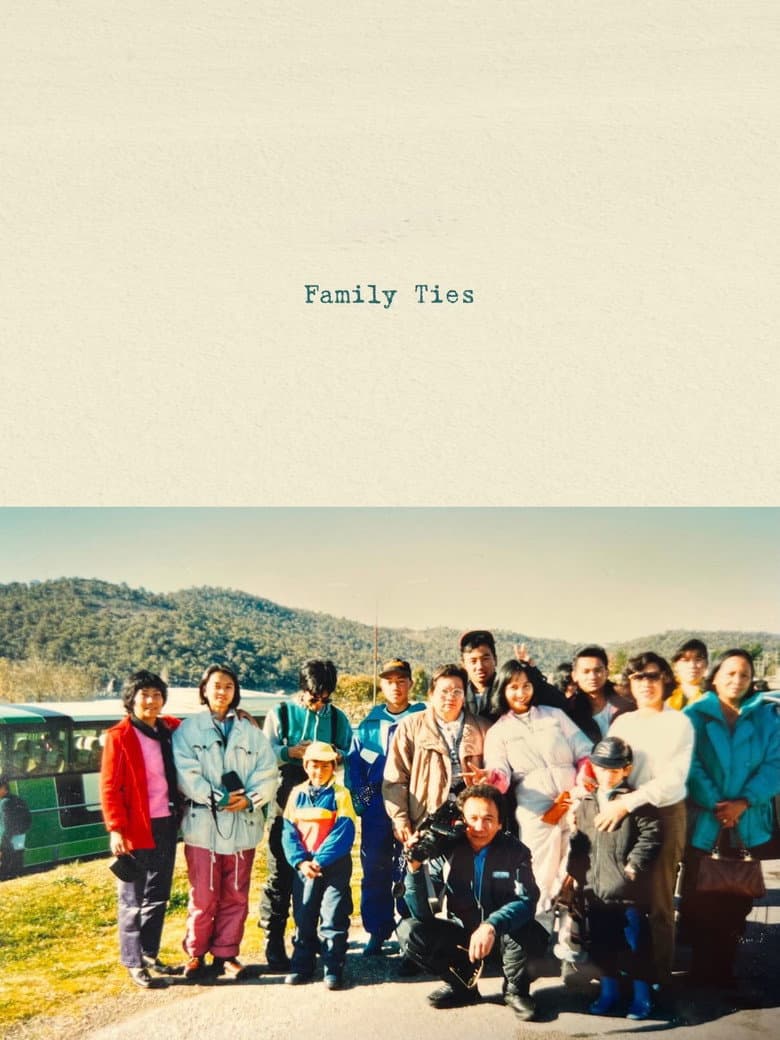
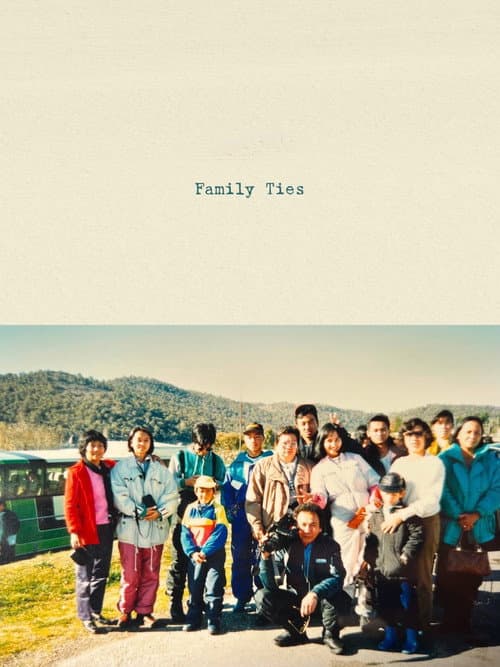
Some documentaries aim for spectacle. Others aim for truth. And then there are those rare, intimate films that feel less like a movie and more like a sitting down at the kitchen table with someone else’s family - and leaving with a piece of your own history suddenly made clearer. Family Ties, a compact but emotionally expansive 10-minute documentary from first-time director Tigerlily Henderson-Smith, lands today, August 20, 2026, and it arrives with the quiet force of a generational hand reaching across time. It is not a film about grand battles or political maneuvering. It is a film about memory, survival, and the stubborn love that carries a family through decades of displacement.
Release Date & Where to Watch
Family Ties officially premieres today, August 20, 2026. Given its brief runtime and deeply personal nature, the film is not heading to multiplexes. Instead, it will be available for streaming on major VOD platforms, including Apple TV, Amazon Prime Video, and Google Play, with a simultaneous rollout on select independent arthouse streaming services like MUBI and Kanopy. For those who prefer the festival circuit experience, the film also begins a limited run at the Los Angeles Asian Pacific Film Festival later this week, followed by screenings at the Melbourne International Film Festival in September. It’s a short film, so catching it in a theater may require seeking out a curated shorts program - but it’s worth the effort. The 10-minute runtime makes it an ideal pairing with a feature-length documentary, and several theaters are already scheduling it as a pre-feature bonus. Check local listings for arthouse venues; the film’s distributor is emphasizing community screenings, particularly in Filipino-Australian cultural centers.
Cast & Crew
The creative team behind Family Ties is a family affair in the truest sense. At the helm is Tigerlily Henderson-Smith, a debut filmmaker whose background is in visual journalism rather than narrative cinema. She directs and appears on camera as herself, guiding the conversation with gentle, probing questions. Her mother, Ellen Henderson-Smith, also appears as herself, serving as a bridge between generations - a grounding presence who watches her own mother and father recount stories with a mixture of familiarity and fresh grief. The heart of the film, however, belongs to Elenea and Manuel Papelera, the director’s grandparents, referred to throughout as Lola and Lolo. They are not actors; they are witnesses.
The production is lean, with Henderson-Smith handling cinematography and editing herself, a decision that lends the film a raw, home-movie texture that suits its subject matter. There is no swelling orchestral score, no manipulative lighting. Just a camera, a quiet room, and two people who lived through the end of World War II in the Philippines under Japanese occupation. The film’s technical credits are minimal, but that is precisely the point. This is a work of preservation, not polish.
Story & What to Expect
The film opens with a deceptively simple premise: Henderson-Smith sits down with her grandparents in their Australian home, a modest suburban setting that feels worlds away from the rural Philippines of their youth. She asks them what they remember. What follows is a fragmented, nonlinear tapestry of memory. Elenea and Manuel speak of their childhoods at the tail end of the Japanese occupation - rationing, fear, the ever-present hum of uncertainty. They speak of the war’s end with a strange relief that is still tinged with caution, as if the peace never fully settled in their bones.
But Family Ties is not a history lesson. It is a meditation on how survival shapes parenting. The couple walks viewers through their decision to immigrate to Australia, leaving behind everything they knew for a country with a different language and unfamiliar customs. They describe laborious jobs - factory shifts, cleaning work, manual labor - undertaken not for ambition but for the simple, profound goal of giving their children a safer life. Henderson-Smith does not rush these stories. She lets silence breathe. At times, her grandparents pause, look at each other, and correct one another’s recollections with the easy intimacy of a sixty-year marriage.
The film’s second half pivots toward the present. We see the Papelera family gathered around a Mahjong table, laughing, arguing over tiles, the sound of clicking pieces providing a rhythmic counterpoint to the weight of their stories. It is here that Henderson-Smith realizes her own connection to her Filipino heritage - not through artifacts or language, but through the resilience that her Lola and Lolo modeled for three generations. The final scene is quietly devastating in its simplicity: a close-up of Elenea’s hands, worn from work, resting on the table, her wedding ring catching the light. No narration. No explanation. Just an image that says everything.
Why It's Worth Watching
In an era of bloated runtimes and self-important epics, Family Ties reminds us that sometimes the most profound stories fit in the span of a coffee break. At 10 minutes, it is a masterclass in economy - every frame, every pause, every unspoken glance carries weight. This is not a film that lectures you about history; it invites you to sit beside two remarkable people and simply listen. For anyone who has ever felt disconnected from their family’s past, or who has wondered how their parents became who they are, this film will resonate like a struck bell.
Henderson-Smith’s direction is remarkably assured for a first effort. She resists the urge to over-explain, trusting her subjects and her audience in equal measure. The result is a documentary that feels less like a film and more like a heirloom - something to be passed down, watched again at family gatherings, and remembered long after the credits roll. The TMDb rating sits at a neutral 0/10 currently, which is simply a reflection of its fresh release status. But don’t let that deter you. This is a small film with a large heart, and it deserves to be found. Whether you’re Filipino, Australian, or simply someone who believes that every family has a story worth telling, Family Ties is a quiet gem of 2026 - one that proves the most universal language is the one spoken between generations, over a game of Mahjong, on a lazy afternoon.