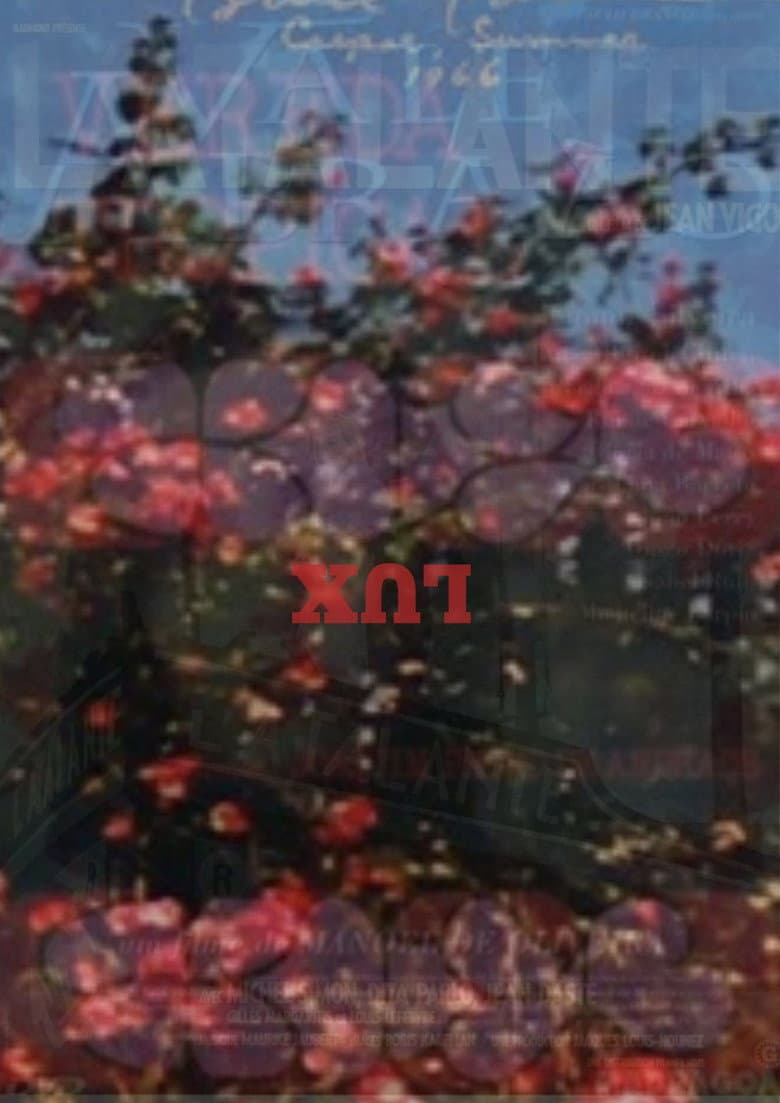
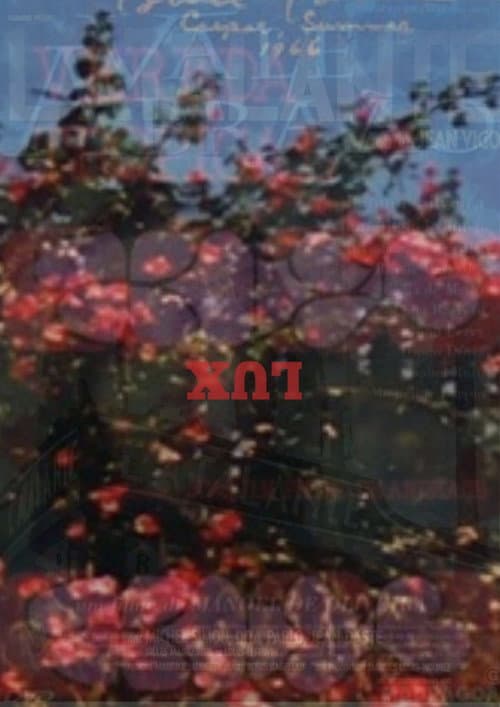
The experimental film landscape of 2026 has been quietly but insistently reshaping itself, and at the center of that quiet revolution sits “Lux,” a ten-minute meditation that refuses to play by the rules of narrative cinema. Arriving in theaters (and likely a few gallery spaces) on August 20, 2026, this new work from director Nicolas Thomé Zetune isn’t here to tell you a story so much as it is to dismantle the very machinery that makes stories possible. For audiences accustomed to three-act structures and character arcs, “Lux” will be a bracing slap of cold light - and that’s precisely the point.
Release Date & Where to Watch
“Lux” officially premieres today, August 20, 2026, as a limited theatrical release. Given its abstract nature and short runtime, don’t expect a sprawling multiplex rollout. Instead, this is a film destined for repertory cinemas, arthouse venues, and film festivals with a taste for the avant-garde. The release strategy feels deliberately boutique, mirroring the film’s intimate scale. While no streaming deal has been announced as of yet, the festival circuit - from Rotterdam to Oberhausen - will likely pick it up in the coming months. For now, the only way to experience “Lux” is on a big screen, which, given the film’s subject matter, is arguably the only way it should be seen. The projector’s flicker and the physical hum of the booth are not background noise here; they’re part of the conversation.
Cast & Crew
The creative force behind “Lux” is singular: director Nicolas Thomé Zetune, a name that may not yet be a household staple but one that cinephiles have been tracking with increasing urgency. Zetune’s approach here is less about directing actors - there are none credited - and more about directing apparatus. The cast list is officially unknown, and that’s not a marketing gimmick. The true performers in “Lux” are the projector, the celluloid, and the light bulbs themselves, each given equal weight as Zetune’s collaborators. There’s no cinematographer credited either, which feels intentional; the lens isn’t capturing a world so much as it’s documenting its own conditions of existence. One could argue the crew is the machine itself, and the machine is the subject. It’s a radical gesture, but one that fits within a longer lineage of structural filmmaking, where the artist positions themselves as a facilitator rather than a puppeteer. Zetune’s previous shorts, if you’ve been lucky enough to see them, have dealt with materiality and duration, but “Lux” feels like a thesis statement - a stripped-down, almost clinical digest of his obsessions.
Story & What to Expect
To ask “what happens” in “Lux” is almost to miss the point, but here’s a attempt at a map. The film presents a system: projectors running, film loops spinning, and light fixtures positioned in various configurations. These elements are subjected to repetition, wear, and continuous observation. The camera - or rather, the recording eye - doesn’t flinch. It watches as the celluloid degrades, as the lamp flickers, as dust settles on the gate. The title, “Lux,” refers to the SI unit of illuminance, and it’s a fitting name for a work that treats light not as a transparent medium for storytelling but as physical matter. Light here has weight, texture, and a memory of its own. It’s an index of the cinematic device, a vestige left behind by the very act of projection.
There is no plot, no dialogue, no conventional sound design. Instead, you’re likely to hear the rhythmic clatter of the projector mechanism, the occasional hiss of a lamp overheating, and the oppressive silence of a room where nothing is meant to be comfortable. That discomfort is deliberate. Zetune is not interested in offering easy answers or a soothing visual poem. The film’s official synopsis states that “the investigation remains open, rejecting any definitive diagnosis.” In other words, don’t walk in expecting a revelation. Walk in expecting a question that refuses to be closed. The repetition is hypnotic, but it’s also a pressure test. Watching “Lux” feels like being in a laboratory where the experiment is being run on you as much as on the equipment. You are the observer, but you are also observed. The film’s 10-minute runtime is brief enough to keep the experience from becoming a endurance test, but dense enough to feel like a full volume of theory compressed into a single session.
Why It’s Worth Watching
If the idea of a movie without characters, story, or even a credited cast sounds like a tedious academic exercise, you’re not entirely wrong - but you’d be missing the frisson of what “Lux” actually achieves. This is a work that asks a radical question: what is the cinema when you strip away everything we mistake for cinema? For too long, we’ve treated light as merely a tool - something that illuminates a face or sets a mood. Zetune treats it as a protagonist. The wear on the film stock becomes a kind of biography. The flicker of the projector becomes a heartbeat. The continuous observation turns into a form of care, or perhaps a form of surveillance. The ambiguity is the feature, not the bug.
Watching “Lux” is not escapism; it’s a reset. In an era of bloated blockbusters and endless IP, there’s something bracing about a film that lasts only ten minutes and has no commercial ambition beyond existing. It reminds us that cinema is, at its core, a physical phenomenon - a beam of light passing through a strip of plastic, casting shadows that we agree to read as reality. Zetune forces us to stop reading and start looking. The film doesn’t judge you for being confused; it simply holds a mirror up to the apparatus and, by extension, to your own role as a spectator. You might exit the theater with more questions than you entered with, but those questions are worth carrying. “Lux” is a reminder that the most profound cinema often doesn’t tell us anything new - it just shows us what we’ve been overlooking all along. For anyone who loves the medium, that’s a rare and valuable gift.