The great irony of the modern film festival circuit is that the noisiest premieres often shout the loudest about nothing, while the quietest screenings whisper secrets that linger for years. On August 24, 2026, a film that fits squarely into the latter category unspools for audiences, and it demands a different kind of attention. PERSONAL DOCUMENTATION I is not a movie you watch so much as a movie you experience in the space between heartbeats. It arrives without hype, without a star-studded red carpet, and without the usual studio engines churning behind it. All it has is a beach, a sky, a single human figure, and twenty-three minutes of patient, almost unbearable tension. That is more than enough.
Release Date & Where to Watch
Today marks the official release of PERSONAL DOCUMENTATION I, with its world premiere rolling out across select arthouse cinemas and, more prominently, on a handful of boutique streaming platforms that cater to slow cinema and experimental nonfiction. Given the film’s modest runtime and its refusal to conform to conventional narrative pacing, this is not a title you will find dominating multiplex screens or competing for IMAX real estate. Instead, look for it on services like MUBI, the Criterion Channel, or any regional platform that prides itself on showcasing films that demand patience. For those in major metropolitan areas, a few independent theaters - particularly those known for hosting retrospective series or avant-garde showcases - will screen it as a mid-program gem, often paired with a short or a Q&A session with the filmmaker. The release is intentionally understated, a strategic choice that aligns with the film’s stripped-back aesthetic. Do not expect a wide rollout; expect to hunt for it, and that hunt is part of the experience.
Cast & Crew
At the helm is Farsin Khronos, a name that may not be familiar to mainstream audiences but carries weight among those who track the fringes of visual poetry. Khronos serves as both director and the sole on-screen presence, credited simply as “Observer.” This is a piece of pure auteurism - no writer, no cinematographer credit beyond Khronos himself, no crew listed in the official metadata. It is a one-person operation, which makes the work feel less like a collaborative production and more like a transmission from a singular consciousness. The decision to credit himself as an actor rather than a performer is telling; there is no performance in the traditional sense. He is a body in space, a figure that the camera regards with the same neutrality as the wet sand and the accumulating clouds. The lack of a supporting cast is not a limitation but a thesis: observation, in its purest form, requires solitude. Khronos, whose previous experiments in found footage and durational installations have earned him a cult following, seems to be stripping away all cinematic apparatus to ask a fundamental question about what remains when everything else is removed.
Story & What to Expect
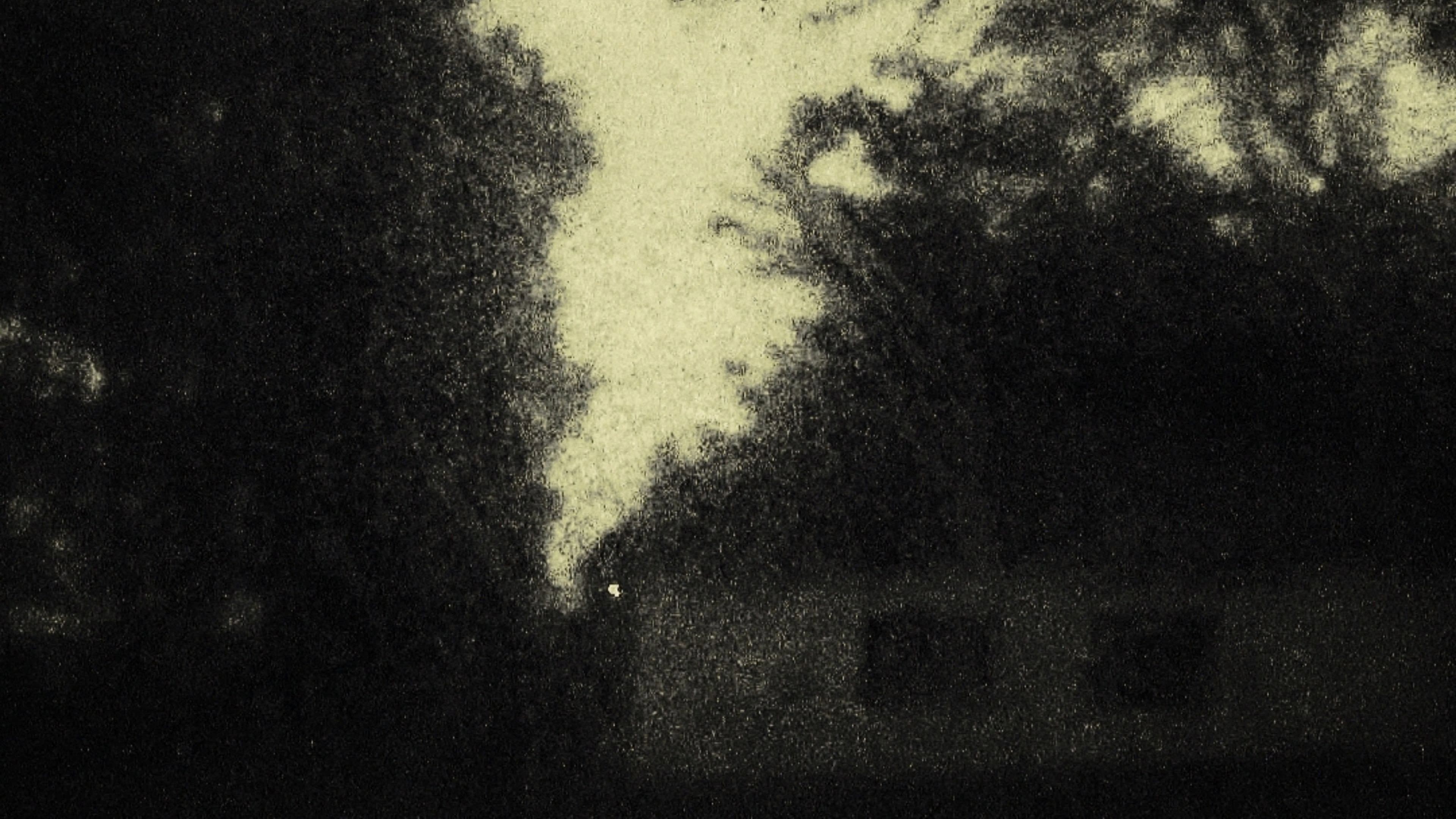
Do not come to PERSONAL DOCUMENTATION I expecting a plot. There is no inciting incident, no conflict, no resolution. What unfolds is a solitary observation of an abandoned beach beneath a sky that is slowly closing in, moments before the rain. The entire film is an exercise in waiting. The camera, likely locked off on a tripod or held with preternatural stillness, captures the shoreline in long, unbroken takes. The water advances and retreats. The wind stirs the dry sand into thin ribbons. The Observer - dressed in plain, nondescript clothing - stands at varying distances from the lens, sometimes facing the sea, sometimes looking up at the roiling clouds, but never acknowledging the camera. He is a part of the landscape, as inert as the driftwood and the scattered shells. The drama, such as it is, lives in the sky. The film’s title suggests a diary, but this is not a diary of events; it is a diary of atmospheric pressure. The light shifts from pale gray to a bruised, heavy lavender. The temperature in the image seems to drop. You begin to feel the humidity, the stillness of the air before a storm, the way the horizon line blurs into the advancing weather front. The rain does not fall until the final moments, and when it does, it arrives not as a climax but as a quiet release, a sigh of relief from a world holding its breath. Expect long stretches of silence punctuated only by natural sound - lapping water, distant gull cries, the infinitesimal hiss of wind across sand. The experience is meditative, but not passive; Khronos forces the viewer into an active role, scanning the frame for micro-changes, finding narrative in the slow creep of shadows.
Why It's Worth Watching
In an era of algorithmic recuts and hyperactive editing, PERSONAL DOCUMENTATION I is a radical act of resistance. It is a film that trusts its audience to slow down, to surrender to a temporal logic that runs counter to everything modern attention spans demand. For those willing to meet it on its own terms, there is a profound payoff. The film functions as a kind of secular prayer, a reminder that the world does not owe us constant stimulation. Watching the Observer stand still as the sky darkens, you are invited to consider your own relationship with change, with the unwanted approaching, with the moments of quiet dread before an inevitable shift. The TMDb rating of zero is not a mark of failure but a blank slate, a testament to the fact that it has not yet found its audience - and perhaps that it will only truly be appreciated by those who stumble upon it with the right mindset. Khronos has crafted a work that is both achingly specific and universally resonant. It is a film about the last moment of dry calm, the final seconds before everything gets wet. It is also, strangely, a film about hope, because the rain always ends, and the beach remains. For twenty-three minutes, you will sit in that liminal space, and you will leave with the sensation of having been cleansed. That is a rare gift, and it makes PERSONAL DOCUMENTATION I an essential watch for anyone who believes that cinema can still be a form of deep, personal documentation - not of events, but of feeling.