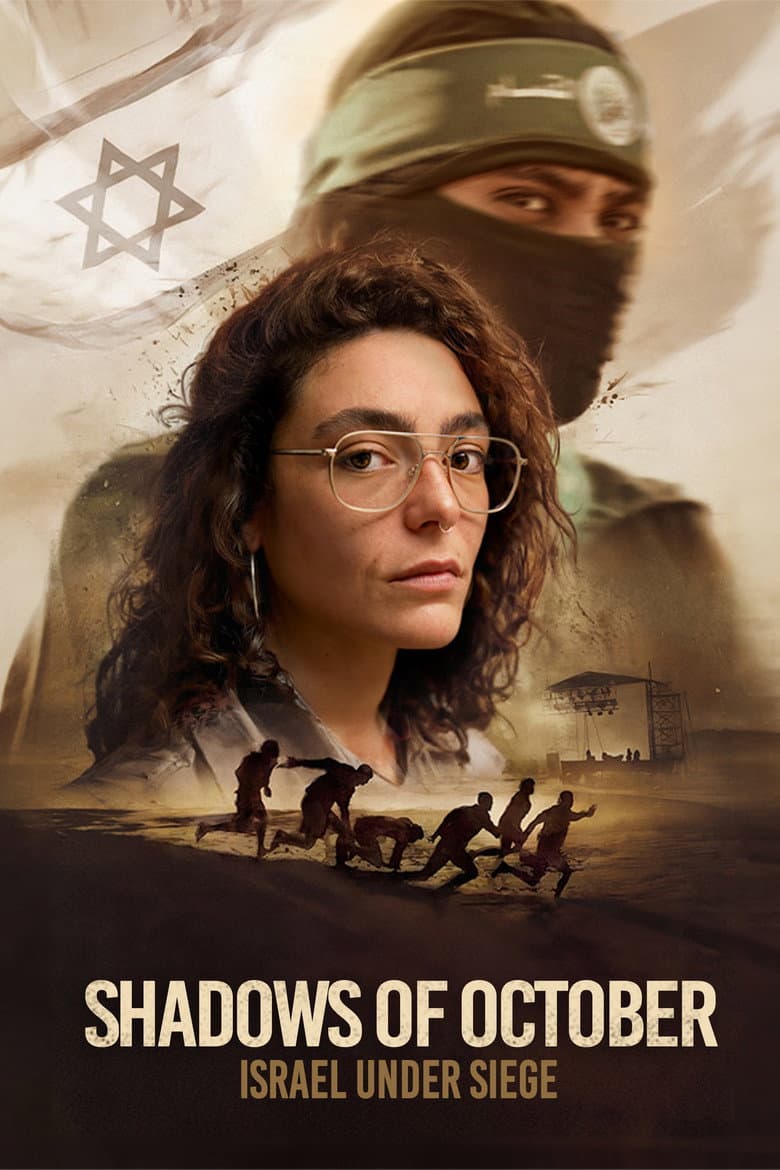
It arrives with a weight that feels both urgent and unbearable. On August 21, 2026, USA Film News is proud to spotlight Shadows of October: Israel Under Siege, a documentary that does not flinch from the darkest chapter in recent Israeli history, nor from the questions that still haunt the global conscience nearly three years later. Directed by Beau Lee, this 113-minute examination lands in theaters nationwide today, and it is not an easy watch. It is not meant to be.
Release Date & Where to Watch
Shadows of October: Israel Under Siege officially opens in theaters across the United States on August 21, 2026. For those who prefer the intimacy of a small screen, the film will also be available on major digital platforms, including Apple TV, Amazon Prime Video, and Vudu, starting the same day. Given the subject matter, expect limited but passionate theatrical engagements in major metropolitan areas - particularly in cities with large Jewish and Israeli communities. A wider streaming release is slated for early September, but for the full immersive experience, Lee and his team have crafted a sound design and visual palette that demands a cinema’s darkness. Check local listings; this is not a film to stream on a phone while multitasking.
Cast & Crew
Lee, a filmmaker known for his immersive, vérité-style approach to conflict documentaries, has assembled a remarkable ensemble of voices. The film does not rely on actors or reenactments; instead, it places real people at the center of the narrative. Noam Ben David and Shalev Biton, both survivors of the October 7 attack, offer harrowing firsthand accounts of the kibbutzim and the Nova music festival massacre. Doron J Keidar, a reservist medic who treated the wounded under fire, provides a perspective that is both clinical and devastatingly personal. Anna Beth, an American-born immigrant, speaks to the experience of living through the sirens and the shelter lockdowns as a civilian mother.
Expert analysis comes from Itamar Marcus, director of Palestinian Media Watch, who contextualizes the ideological drivers behind the assault, and Raz Tahan, a former IDF intelligence officer, who dissects the security failures with sobering candor. Perhaps most striking is the inclusion of Saleem Shalash, an Israeli Arab journalist whose testimony complicates the binary narratives. Shalash’s presence underscores the film’s ambition: to present a mosaic, not a monologue. Levi Hazen serves as the film’s presenter, guiding viewers through the archival footage and expert commentary with a measured, somber tone. The result is a cast that feels less like talking heads and more like witnesses to an ongoing trauma.
Story & What to Expect
The film’s central question is bluntly posed in its opening minutes: “Where was God in the events of October 7?” It is a question that the documentary does not pretend to answer. Instead, Lee structures the film in three acts. The first is a chronological reconstruction of the attack - the 6:29 AM sirens, the breach of the Gaza border fence, the massacres at Kfar Aza, Be’eri, and the Re’im base. Using declassified footage, phone recordings, and survivor testimony, Lee reconstructs the chaos with a granularity that is almost unbearable. The second act shifts to the global aftermath, tracking the spike in antisemitic incidents from London to Los Angeles to university campuses. It is here that Marcus and Shalash engage in a tense but respectful dialogue about the conflation of anti-Zionism and antisemitism. The film does not shy away from ugly truths: the rise of denialism, the coordinated disinformation campaigns, and the silence from institutions that many Jews had considered allies.
The third act is where Shadows of October diverges from typical war documentaries. It becomes a spiritual inquiry. Interviews with rabbis, trauma psychologists, and even former atheists grapple with theodicy - the problem of evil in a world purportedly governed by a benevolent deity. One survivor, a young woman who lost her entire family, tells Lee: “I don’t know where God was. But I know where I wasn’t - I wasn’t alone. That has to be enough.” The film offers no neat theology, no false comfort. Instead, it presents a community in the process of rebuilding, arguing with itself about meaning, memory, and the possibility of faith after the abyss. Expect long, unbroken shots of faces in silence. Expect archival footage that is difficult to process. Expect a film that respects your intelligence and your emotional limits - barely.
Why It's Worth Watching
This is a documentary that will be referenced for years, not because it is flashy, but because it is necessary. In an era of 24-hour news cycles and hot takes, Shadows of October dares to slow down. It gives its subjects room to breathe, to cry, to contradict themselves. Lee’s direction is restrained - no musical swells, no manipulative editing tricks. The power comes from the material itself, and he trusts it.
For American audiences, the film serves as a crucial bridge. Many watched the events of October 7 from a distance, filtered through social media algorithms and partisan spin. This film forces a confrontation with the raw human cost, but it does so without descending into propaganda. It is critical of the Israeli government’s failures, yet it never loses sight of the brutality that necessitated the inquiry. The inclusion of Shalash is key; his perspective reminds us that the conflict is not a simple morality play, and that empathy can exist alongside anger.
Moreover, the film’s timing - released in the lead-up to the Jewish High Holidays - is deliberate. It asks viewers to sit with discomfort, to ask the same questions that have haunted theologians for millennia. You will not leave the theater with answers. You will leave with a heavier heart, a clearer understanding of the stakes, and perhaps a renewed commitment to the messy, necessary work of bearing witness. In a culture that often prefers evasion, Shadows of October: Israel Under Siege is a defiant act of remembrance. It is not entertainment. It is testimony. And it demands to be seen.