
August 24, 2026 - In an era where blockbuster budgets balloon into the nine-figure stratosphere, it takes a certain kind of audacity to strip cinema back to its raw, handheld essence. Yet that is precisely the gamble Portuguese filmmaker Francisco dos Santos takes with Summer’s Sunsong, a five-minute genre-blurring meditation on memory, light, and the peculiar physics of holiday time. Releasing today, this micro-feature isn’t just a film; it’s a diptych of archival sensation, a formalist experiment that asks its audience to feel the heat through the grain of two wildly different recording mediums.
Release Date & Where to Watch
Summer’s Sunsong arrives today, August 24, 2026, as a standalone digital release. Given its ultra-short runtime and art-house pedigree, don’t expect a traditional theatrical rollout. Instead, the film will be available exclusively via the director’s official Vimeo channel and a limited streaming partnership with MUBI’s "Short Film Corner" library, where it will be accessible for subscribers starting at 12:01 AM EST. For those in the U.S., it’s a pay-what-you-want digital download via Bandcamp-style film distribution platform VHX, marking a deliberately anti-corporate launch strategy. There is no physical media planned, aligning with the film’s DIY aesthetic. Check the director’s social feeds for a 24-hour "sunrise premiere" watch party, a nod to the film’s thematic obsession with diurnal cycles.
Cast & Crew
The credits for Summer’s Sunsong are refreshingly sparse, featuring no named cast members - a deliberate choice that positions the landscapes and the light as the true protagonists. At the helm is Francisco dos Santos, a Lisbon-based artist known for his interstitial, essayistic work that blurs the line between home movie and high concept. His previous short, Towards the Night, explored similar interpolation techniques, and Summer’s Sunsong openly acknowledges that lineage.
Technically, the crew is a one-man operation: dos Santos serves as writer, director, cinematographer, and editor. The film’s "dual-camera" approach is its defining credit - the first half captured on a modern smartphone (leaning into the crisp, hyper-saturated digital look), the second on a vintage camcorder (rife with tracking errors, chromatic aberration, and the warm, unstable white balance of magnetic tape). The sound design, uncredited but palpable, combines field recordings with a barely-there synth hum, engineered to mimic the auditory hallucination of a sun-soaked afternoon. There is no distributor attached, no festival premiere status; it’s a pure, unfiltered transmission from artist to viewer.
Story & What to Expect
Narratively, Summer’s Sunsong is less a story and more a sensory thesis. The structure is explicit: a strict bifurcation. The opening half unfolds in Mallorca, Spain, shot via the director’s phone. These images are almost painfully clear - the turquoise shallows of Cala Llombards, the chalky whitewashed walls of Deià, the frantic flitting of swifts against a cloudless sky. The phone’s HDR processing makes the sun feel like a strobing lamp, flattening shadows into a blazing, postcard-like lucidity.
Then, without warning, the second half shifts to Bodrum, Turkey, and the visual grammar collapses into beautiful decay via the old camcorder. Here, the frame becomes hazy, the contrast crushing. Aegean terraces bleed into overexposed whiteouts; the coastline flickers with interlacing artifacts. The interpolation dos Santos speaks of isn’t just a technical process - it’s a thematic excavation. The film contrasts the memory of a holiday (the phone, representing the hyper-real present) with the nostalgia of a holiday (the camcorder, representing the flawed, emotional past). It’s a conversation between the father who records everything and the son who remembers only the feelings.
The editing mirrors "the energetic nature of the sun" - cutting on rhythmic beats of waves, the shutter of an umbrella, the syncopated blinking of a ferry’s port light. Expect no dialogue, no talking heads, just a raw, propulsive montage of sea, stone, and skin. The "fantasy" genre tag is apt: the film suggests that holidays themselves are fictions we construct, and the two different video formats are the competing narrators. The final thirty seconds, where a Mallorcan sunset is cross-faded into a Bodrum sunrise, offers a quiet, non-verbal resolution: all light is the same light, regardless of which lens catches it.
Why It’s Worth Watching
In a landscape of content, Summer’s Sunsong is a pure object of contemplation. At five minutes, it demands less time than a commuter’s coffee stop but rewards with a density of feeling that most features can’t muster. For cinephiles obsessed with the materiality of film, this is a masterclass in texture - the juxtaposition of the phone’s clinical sharpness against the camcorder’s wobbly analog soul is a visceral lesson in how the medium shapes the memory. It’s a bold, avant-garde rebuttal to the idea that video resolution equals emotional fidelity.
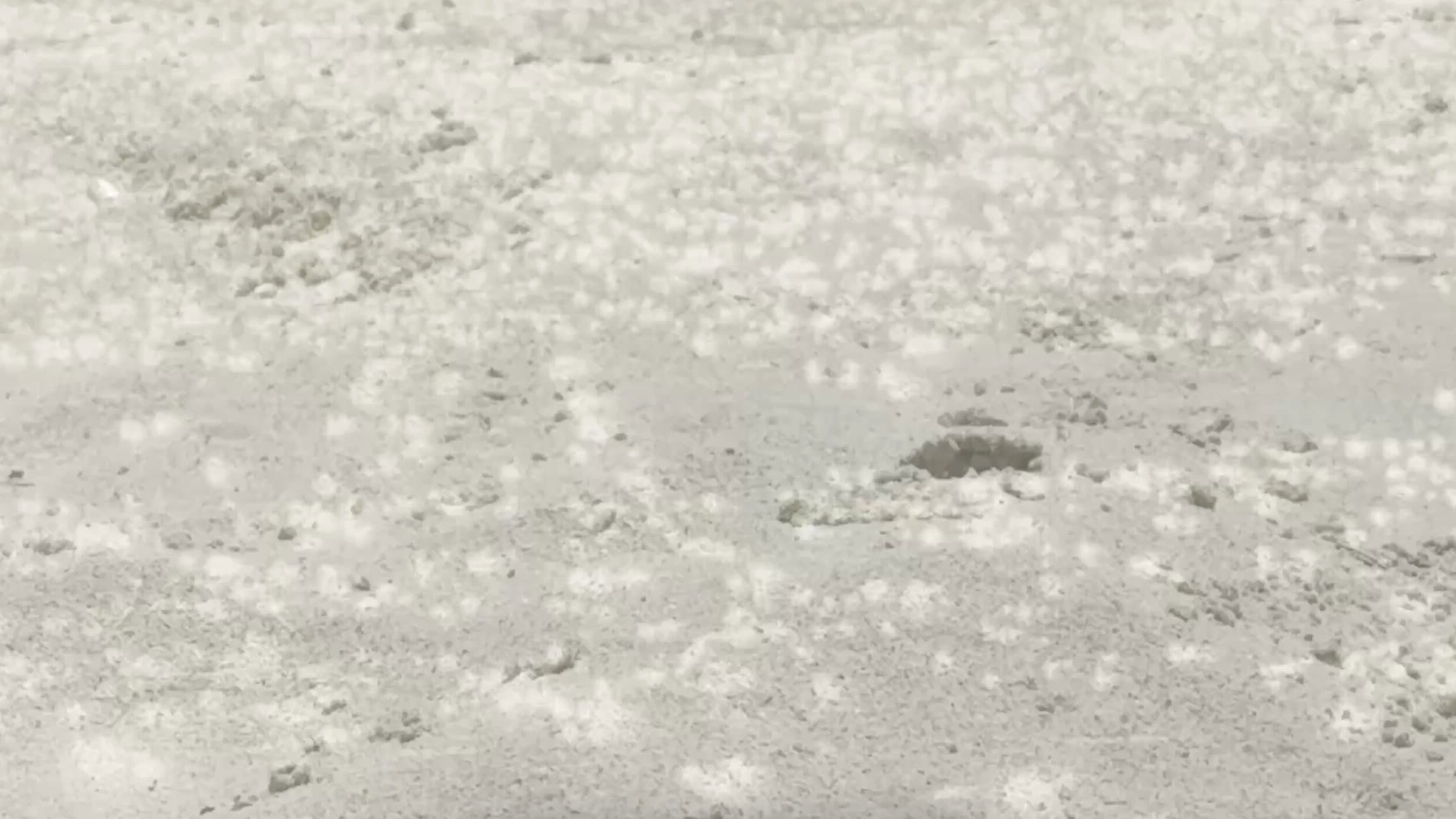
For the casual viewer, it’s a passport to two of the Mediterranean’s most stunning coastlines, distilled to their purest, most abstracted forms. Dos Santos isn’t showing you a travelogue; he’s giving you the sensation of being there - the gritty warmth of beach sand through a lens, the headache of too much sun, the melancholic ache of a trip already ending. It feels live, unvarnished, and honest.
Moreover, the film’s release date - the very last gasp of August - is a cruel, beautiful joke. As summer officially wanes, Summer’s Sunsong serves as a cinematic sun-dial, capturing the season’s final blast of heat before autumn’s chill. It’s a fleeting, ephemeral gift, much like the holidays it depicts. Whether you’re a hardened critic or a casual scroller, this is a rare chance to see a filmmaker playing with the edges of perception, challenging you to feel the sun on your back from a screen. Don’t blink; you’ll miss it, but the warmth will linger far longer than the runtime.