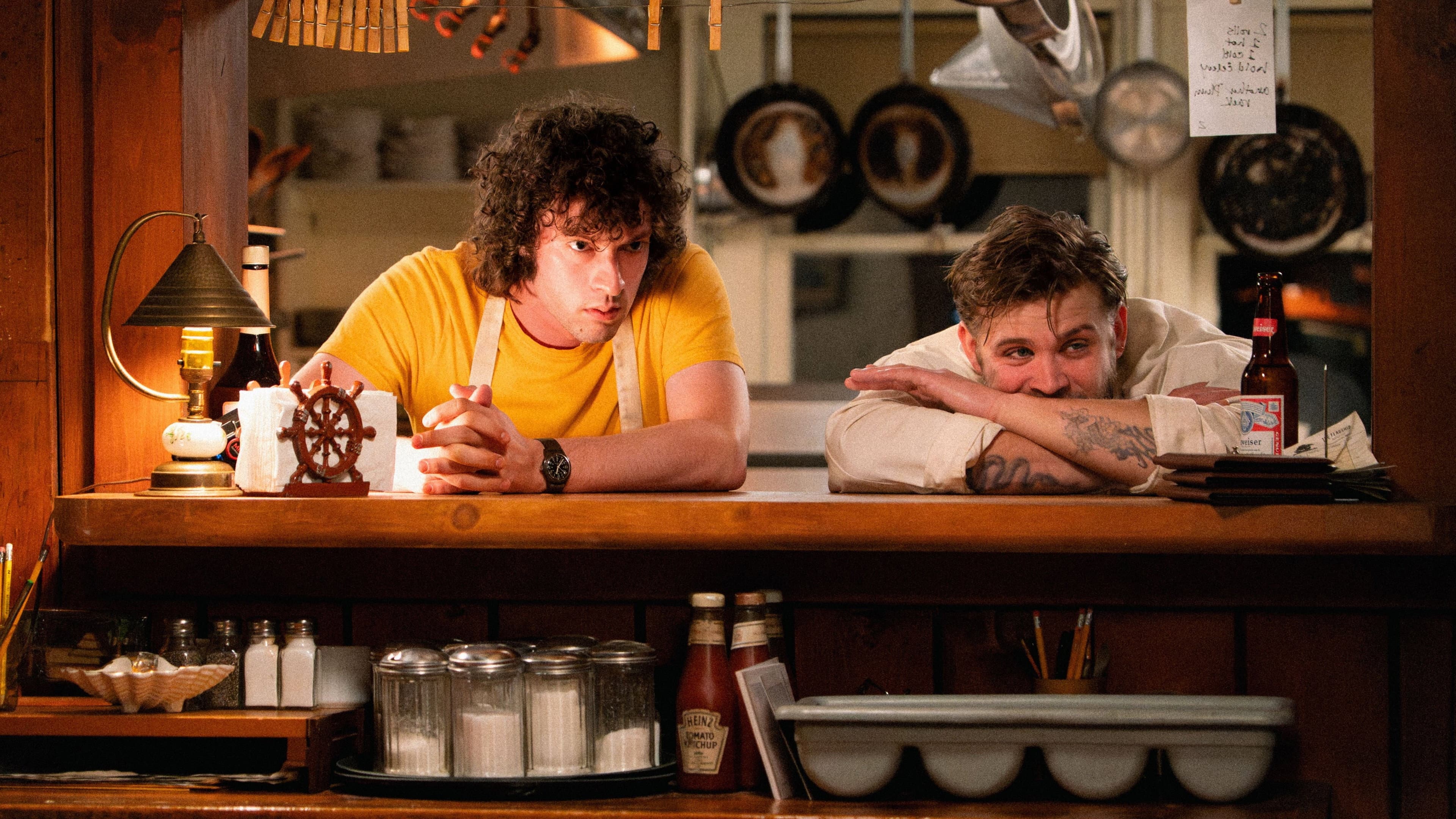
There is a specific, undeniable romance to a kitchen in the summertime. It is a place of brutal heat, shattered plates, and the peculiar camaraderie that forms when a group of misfits is forced to work within inches of each other for twelve hours straight. It is a world where你把 your ego on the line every single night. This chaotic, seductive energy is the beating heart of Tony, a film that arrives in theaters with the confidence of a perfectly executed service.
Directed by Matt Johnson, Tony is not a biopic in the traditional sense. It does not attempt to cram a lifetime of excess, travel, and televised glory into a neat two-hour package. Instead, it zooms in on a single, pivotal summer in 1972. The narrative follows 19-year-old Anthony Bourdain (Dominic Sessa), a young man adrift and possessing a vague, unformed snobbery about food, who finds himself in the artistic enclave of Provincetown. It is here, in the sweaty, profane crucible of a local restaurant, that the legend begins.
The film is a brisk 107 minutes, a runtime that feels both generous and remarkably tight given the density of the experience. It is a summer movie in the best sense - a seasonal coming-of-age story that trades sandy beaches for the particular hell of a dish pit.
At the center of this storm is Dominic Sessa. Following his breakout role in The Holdovers, Sessa proves he is not a one-trick pony. He captures the nascent Bourdain not as the world-weary icon we remember, but as a raw, unpolished youth. He is intelligent but aimless, possessing an ego that is both a shield and a liability. Sessa plays him with a coiled energy, a young man looking for a fight or a purpose, often confusing the two.
The element that elevates Tony from a standard coming-of-age narrative is the presence of Antonio Banderas as the enigmatic Chef. Banderas, in a performance that crackles with menace and magnetism, serves as the film’s gravity. He is not a cartoonish tyrant, but rather a man who demands excellence as a form of respect. The interplay between Banderas and Sessa is the film’s engine. The dialogue between them is often a duel, a clash of old-world discipline against youthful impudence.
The supporting cast is a rogues' gallery of kitchen archetypes, brought to life by a perfectly assembled ensemble. Leo Woodall plays Sal, the charismatic line cook who seems to know the secret rhythm of the restaurant. Emilia Jones brings a grounded, weary intelligence to Nancy, offering a counterpoint to the testosterone-fueled chaos. Then there is Stavros Halkias as Stavros, providing a necessary comedic release valve that feels authentic to the way kitchen staff use humor to survive the burn. The ensemble works together like a well-oiled machine, each member crucial to the final product.
Matt Johnson directs with a kinetic energy that eschews the glossy food-porn aesthetic that dominates modern culinary media. There are no slow-motion shots of truffle oil being drizzled here. Johnson’s camera is handheld, intimate, and often overwhelmed by the steam and noise. He captures the tactile reality of the work: the weight of a stockpot, the sting of a burn, the ringing of the ticket printer. It is a sensory assault that puts the audience squarely in the weeds.
What makes Tony work as well as it does is its refusal to sentimentalize the labor. The kitchen is described as a meritocracy. It doesn't matter who you are or where you came from; all that matters is whether you can keep up. This philosophy is the film's thematic anchor. We see Tony transform not because he wants to be a chef, but because he discovers a place where he belongs. The film suggests that finding your place in the world is less about finding your passion and more about finding the people who demand the best version of you.
Tony is a comedy, but a dark one. It is a drama about the birth of an artist. The film is rated well by audiences, and it is easy to see why. It possesses a rewatchable, hang-out quality, even as it explores the darker edges of obsession and ambition. It is a film about food, yes, but it is mostly a film about finding a family in the most unlikely of places.
In a summer movie landscape often filled with CGI spectacle, Tony offers something different: a grounded, dirty, and ultimately life-affirming look at the making of a man. It is a journey worth taking, even if you can almost smell the grease and the cigarettes through the screen. The film is a reminder that sometimes, the most important meals of our lives are the ones we have to fight through to make.