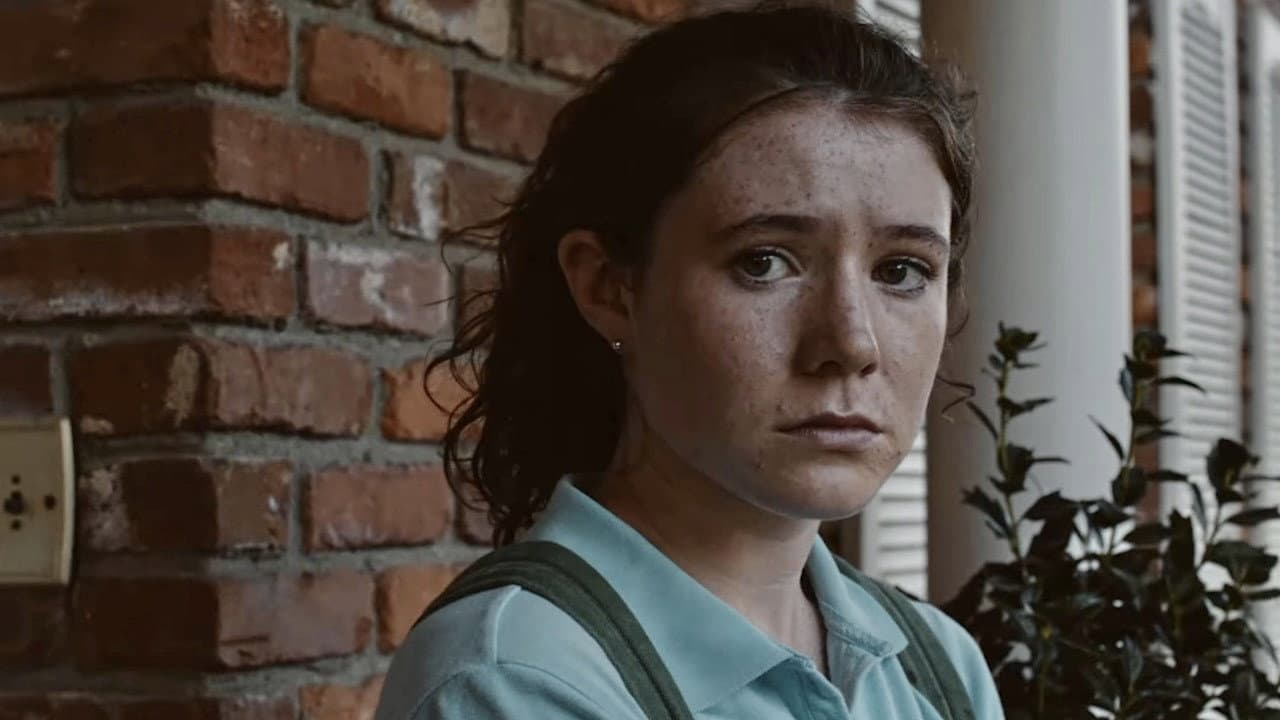
The last weeks of summer in small-town Arkansas are supposed to be a slow, sticky blur of swimming holes and last-minute adventures before senior year. For Minnie Dunn, however, the summer of 2002 becomes something else entirely - a season of rupture, reinvention, and an unlikely alliance that no one, least of all Minnie, saw coming. That's the tender, complicated territory charted by "Mouse," the new drama from director Alex Thompson, which opened in theaters on November 6 and has spent the two weeks since quietly building the kind of word-of-mouth that studios dream about.
The film centers on Minnie, played by Katherine Mallen Kupferer, whose friendship with Callie Bell, portrayed by Chloe Coleman, is suddenly upended the summer before their senior year of high school. The cause of the fracture is left for audiences to discover, but its effect is immediate: Minnie is left rudderless, adrift in a town where everyone knows everyone and where a teenage girl without her best friend feels painfully visible and invisible at once. What follows is the film's real engine - Minnie forming a complicated bond with Callie's mother, Helen Bell, brought to life by Sophie Okonedo in a performance that has already become the subject of considerable conversation.
Thompson, whose previous work has shown an affinity for characters on the cusp of change, approaches the material with a light touch that belies its emotional depth. The film carries a dual Drama and Comedy classification, and that balance is essential to its identity. Thompson lets the humor arise naturally from the specificity of the setting and the people in it - the awkward rhythms of a small town, the way adults and teenagers talk past each other - without ever using levity to dodge the harder truths at the film's center. The 120-minute runtime gives the story room to breathe, allowing the relationship between Minnie and Helen to develop with the unhurried patience it demands.
Okonedo's Helen is not a stand-in for the friend Minnie has lost, nor is she a simple surrogate parent. The bond between them is more textured than that, and much of the film's tension comes from watching two people navigate a connection that neither can fully explain to the world around them. Mallen Kupferer, meanwhile, carries Minnie's loneliness and curiosity with a restraint that makes her moments of openness land all the harder. The supporting ensemble fleshes out the town with care: David Hyde Pierce as Mr. Murdaugh, Tara Mallen as Barbara Dunn, Iman Vellani as Kat, Beck Nolan as Brad Hugg, and Addisyn Grace Cain as Brandi Combs all contribute to a portrait of a community where everyone's lives are quietly entangled.
The response has been striking. On TMDb, "Mouse" currently sits at a 10/10 rating, while IMDb users have logged an 8/10 - numbers that suggest the film is connecting with viewers well beyond the art-house circuit. Early audiences have gravitated toward the film's willingness to sit with ambiguity, to let a relationship be messy and unresolved rather than tidy. It's the sort of reception that tends to follow movies built on performance and atmosphere rather than plot mechanics.
What distinguishes "Mouse" most is its sense of place and time. The film is set in 2002, a detail that matters less for nostalgia than for the particular texture it gives the story - the era of landline calls and limited internet, when a teenager's social world was small enough that a single falling-out could rearrange everything. Thompson treats that insularity with affection and honesty, never condescending to his characters or their corner of Arkansas.
In a release landscape crowded with spectacle, "Mouse" has positioned itself as something rarer: a character-driven drama with comic undertones that trusts its audience to sit with discomfort and recognize themselves in it. Thompson has assembled a cast capable of that delicate work, and in Okonedo and Mallen Kupferer he has found a pairing that anchors the film's most fragile moments. For filmgoers drawn to stories about the strange, formative connections that shape us, "Mouse" is quietly making its case in theaters now.